JOINT UNITED NATIONS PROGRAMME ON HIV/AIDS , GENEVA
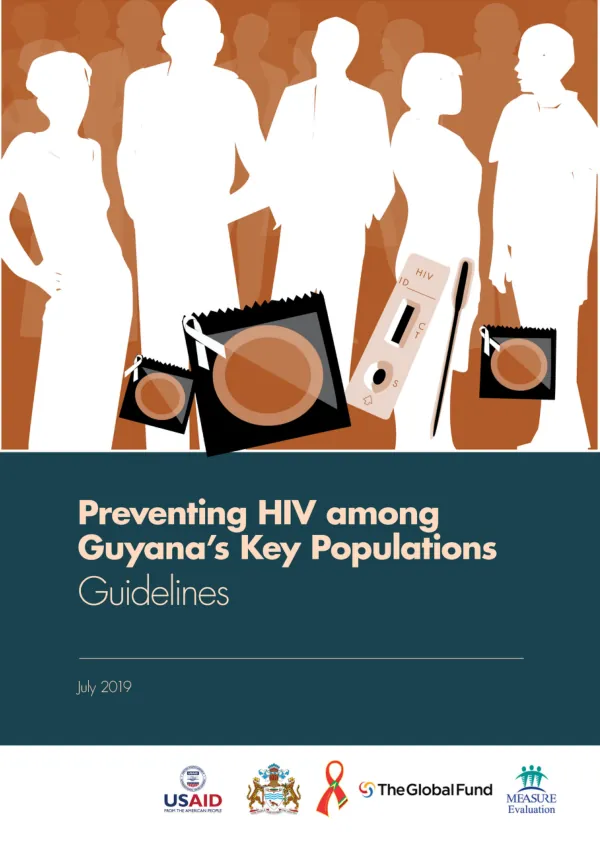
Preventing HIV among Guyana’s Key Populations: Guidelines
The National AIDS Programme Secretariat (NAPS) in Guyana has identified key populations (KPs) as a priority in the country's HIV program due to their higher burden of disease.
2019 · 72 pages
Sign in to readA free account is required to download.
Abstract
Key populations include men who have sex with men (MSM), female sex workers (FSWs), and transgender individuals. According to the Guyana Biobehavioral Surveillance Survey of 2013/14, MSM had an HIV prevalence rate of 1.1%, while FSWs had a rate of 2.0%. Although these rates are lower than those reported in previous studies, KPs continue to exhibit elevated risk behaviors, including engaging in sex work and unprotected sex, and reporting larger numbers of sexual partners. The National HIV Strategic Plan (2013-2020), also known as HIVision 2020, emphasizes the need to address the HIV epidemic among KPs. The plan aims to reduce sexual transmission among these populations through behavior change, condom use, and other interventions. To achieve this goal, the plan identifies several key objectives, including increasing access to HIV testing and counseling, providing antiretroviral therapy (ART) to those in need, and promoting the use of pre-exposure prophylaxis (PrEP) and post-exposure prophylaxis (PEP). Combination prevention services are a critical component of the HIV prevention strategy for KPs in Guyana. These services include behavioral interventions, such as peer education and outreach, as well as biomedical interventions, such as HIV testing and counseling, ART, and PrEP. Critical enabler/structural interventions, such as addressing stigma and discrimination, and promoting access to healthcare services, are also essential to supporting the prevention efforts. The guidelines for preventing HIV among KPs in Guyana emphasize the importance of a comprehensive approach that addresses the unique needs and challenges of these populations. The guidelines provide detailed information on the development of combination prevention services, including the roles of stakeholders, capacity building, and programme management. They also outline the importance of strategic information, including monitoring and evaluation, to inform programme planning and decision-making. The guidelines are intended for use by programme managers, implementers, and stakeholders working with KPs in Guyana. They provide a framework for developing and implementing effective HIV prevention programmes that address the specific needs and challenges of these populations. By following these guidelines, programme implementers can help to reduce the burden of HIV among KPs in Guyana and contribute to the achievement of the country's HIV prevention goals.
Related documents