USAID DEC
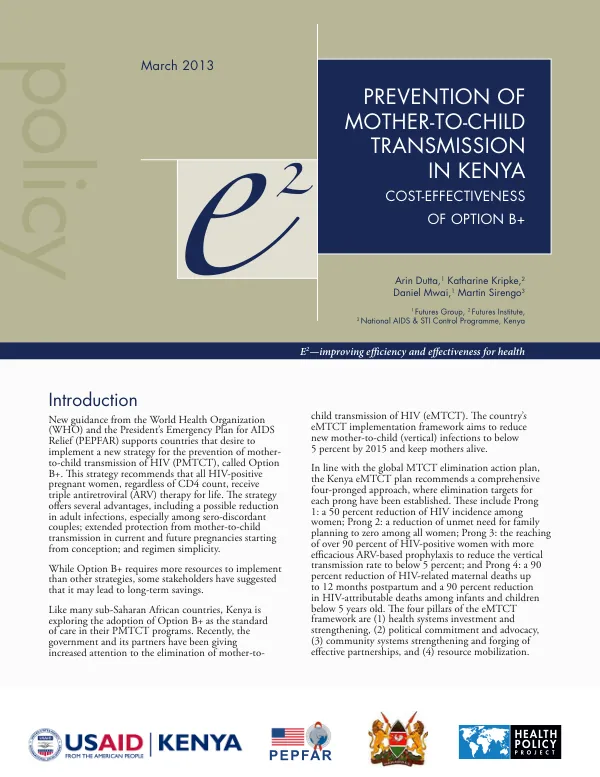
Prevention of Mother-to-Child Transmission in Kenya: Cost-Effectiveness of Option B+
Sign inFUTURES GROUP INTERNATIONAL, LLC
Prevention of Mother-to-Child Transmission in Kenya: Cost-Effectiveness of Option B+
The Kenyan government, in partnership with the National AIDS and STI Control Programme (NASCOP) and the Health Policy Project (HPP), has been exploring the adoption of Option B+ as the standard of care in their Prevention of Mother-to-Child Transmission (PMTCT) programs.
2013 · 4 pages
Sign in to readA free account is required to download.
Abstract
This strategy, recommended by the World Health Organization (WHO) and the President's Emergency Plan for AIDS Relief (PEPFAR), involves initiating all HIV-positive pregnant women on triple antiretroviral (ARV) therapy for life, regardless of their CD4 count. The current PMTCT program in Kenya has been in place since 2002, with over 5,000 health facilities offering PMTCT services. In 2011, 80 percent of HIV-positive pregnant women received some form of ARV prophylaxis, and 63 percent of HIV-exposed infants received ARV prophylaxis. However, the current strategy, known as Option A, has limitations, and the government is considering alternative approaches to achieve the goal of reducing mother-to-child transmission of HIV to below 5 percent by 2015. Option B+ requires more resources to implement than other strategies, but some stakeholders have suggested that it may lead to long-term savings. The strategy involves several advantages, including a possible reduction in adult infections, especially among sero-discordant couples, and extended protection from mother-to-child transmission in current and future pregnancies starting from conception. The regimen simplicity of Option B+ is also a significant advantage. The National AIDS and STI Control Programme, in partnership with HPP, has embarked on an exercise to compare the cost-effectiveness of Option B+ to other PMTCT strategies. The analysis examined alternative implementation scenarios in Kenya over the period 2012-2016 and compared infections averted and total cost. The study used the AIDS Impact Model (AIM) to estimate the potential infections averted under each of the five scenarios, including the current strategy of Option A, and the gradual implementation of Option B or Option B+. The analysis revealed that the total cost per year over 2012-2016 of adopting Option B or Option B+ in Kenya is significantly higher than the current strategy of Option A. However, the study also found that the total number of infant and adult HIV infections averted over 2012-2016 under Option B and Option B+ is substantial, with Option B+ showing the highest number of infections averted. The study's findings suggest that the implementation of Option B+ in Kenya would require significant resources, but it could lead to long-term savings and a substantial reduction in mother-to-child transmission of HIV. The government and its partners should consider the cost-effectiveness of Option B+ and weigh the benefits against the costs to determine the best approach for their PMTCT programs. The analysis also highlighted the importance of strengthening the health systems investment and infrastructure in Kenya to support the implementation of Option B+. The government should invest in the training of healthcare workers, the procurement of essential medicines and equipment, and the development of effective partnerships to ensure the successful implementation of Option B+. In conclusion, the adoption of Option B+ as the standard of care in Kenya's PMTCT programs has the potential to significantly reduce mother-to-child transmission of HIV and improve the health outcomes of HIV-positive pregnant women and their infants. However, the implementation of Option B+ requires significant resources, and the government and its partners should carefully consider the cost-effectiveness of this strategy before making a decision.
Related documents
Documents in this collection
 2013
2013USAID DEC
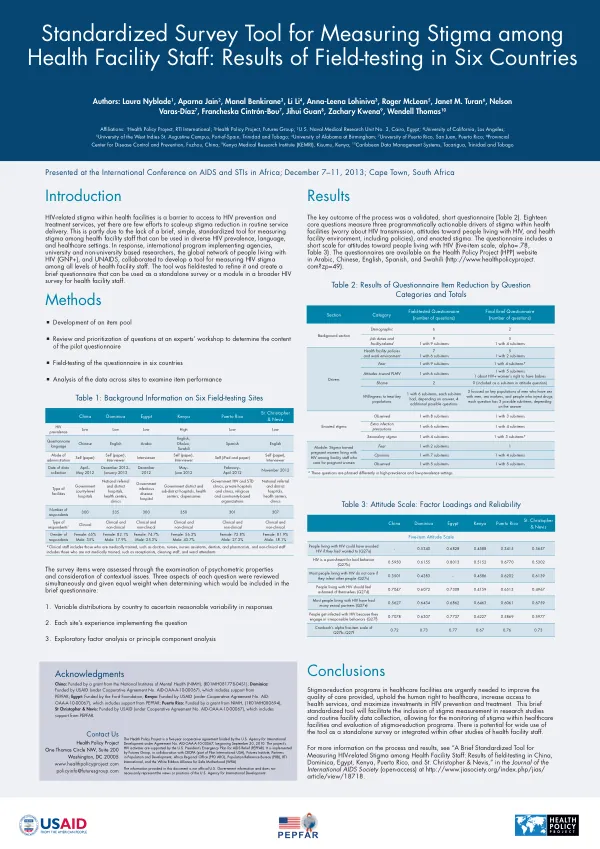
A Brief Standardized Tool for Measuring HIV-related Stigma among Health Facility Staff: Results of field-testing in Six Countries
Open record 2014
2014USAID DEC