USAID DEC
Private Sector Health Project (PSHP) Final Report for the First Year of Implementation
Sign inABT ASSOCIATES
Private Sector Health Project (PSHP) Final Report for the First Year of Implementation
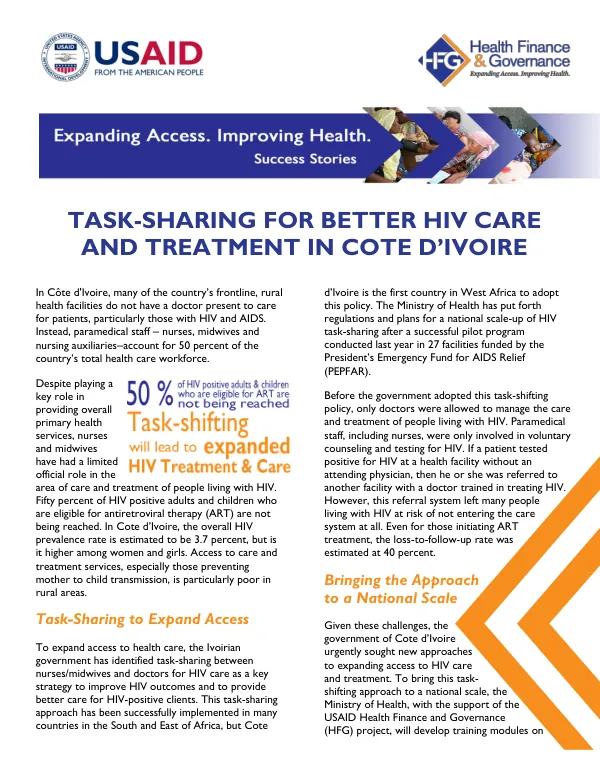
The Private Sector Health Project (PSHP) in Cote d'Ivoire aims to expand access to and provision of high-quality, integrated HIV and family planning (FP) services in the private sector.
2016 · 14 pages
Sign in to readA free account is required to download.
Abstract
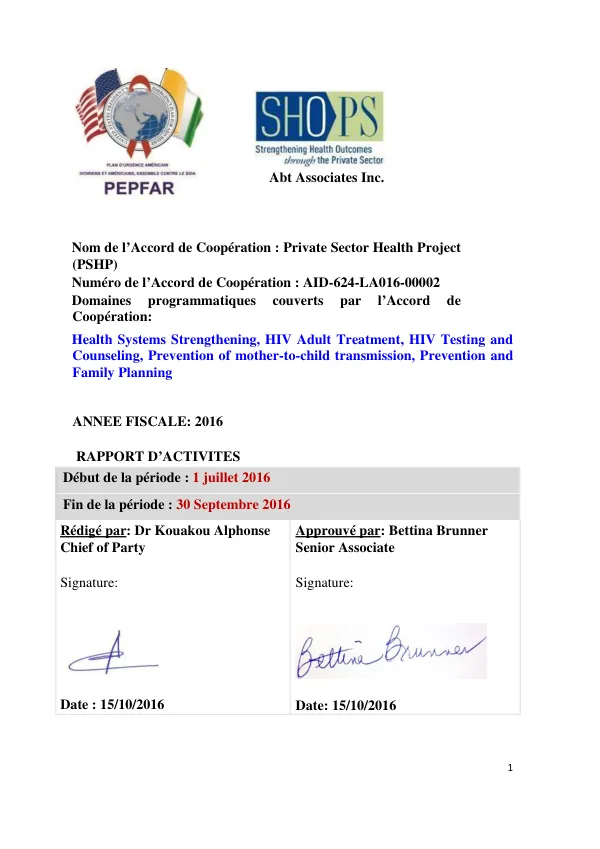
The project is being implemented within 33 clinics in Abidjan and Yamoussoukro, with a focus on HIV prevention and care and treatment. PSHP is a collaborative effort between Abt Associates and the Association of Private Clinics of Cote d'Ivoire (ACPCI), with funding from the United States Agency for International Development (USAID). During the last quarter of the reporting period (July 1 - September 30, 2016), PSHP carried out various activities to support the expansion of HIV services in the private sector. These activities included training of private network care providers on task-shifting and HIV care and treatment, technical assistance to clinic staff through supervision and coaching, and organization of platform meetings at the district level for public and private HIV services coordination. Additionally, PSHP conducted data collection within network clinics and organized on-site data verification to ensure quality data reporting. The project's results show significant progress in the expansion of HIV services in the private sector. As of September 30, 2016, 1,069 people living with HIV (PLHIV) were enrolled on antiretroviral therapy (ART) as part of the "file active". The number of people tested for HIV and received counseling increased to 4,733, with 297 testing HIV positive. The number of pregnant women attending at least the first antenatal care (ANC) visit also increased to 980, with 31 HIV-positive pregnant women identified in the reporting period. PSHP's progress on PEPFAR key indicators in year one of implementation is also notable. The number of people tested and counseled in HIV increased to 27,420, with 1,954 testing HIV positive. The number of adults and children newly enrolled on ART treatment increased to 935, with 1,069 receiving antiretroviral therapy (ART) as of September 30, 2016. The project's component 1, which aims to scale up the model for provision of essential and comprehensive prevention care and treatment services for those seeking HIV and AIDS services in the private for-profit sector, has made significant progress. A rapid assessment was conducted to select and begin integrating 11 new clinics into the network, with six clinics selected in Bouake and five new clinics in Abidjan. Refresher training on care and treatment was organized for all 33 network sites, with 57 care providers trained during the reporting period. PSHP also provided on-site and in-service mentoring for ACPCI network clinics, with technical staff providing regular coaching and mentoring to private care providers in all 33 ACPCI network clinics. Monitoring and data management support was also provided to ACPCI network clinics, with PSHP's M&E Coordinators supporting clinic data managers in all ACPCI network clinics through on-site coaching. Additionally, PSHP participated in PEPFAR-organized activities for the Site Improvement Monitoring System (SIMS), with SIMS sessions successfully conducted at five sites in Abidjan. Overall, the PSHP project has made significant progress in expanding access to and provision of high-quality, integrated HIV and FP services in the private sector in Cote d'Ivoire. The project's results demonstrate the importance of USAID/PEPFAR's investment in the private sector HIV network in the fight against HIV in Cote d'Ivoire.