USAID DEC
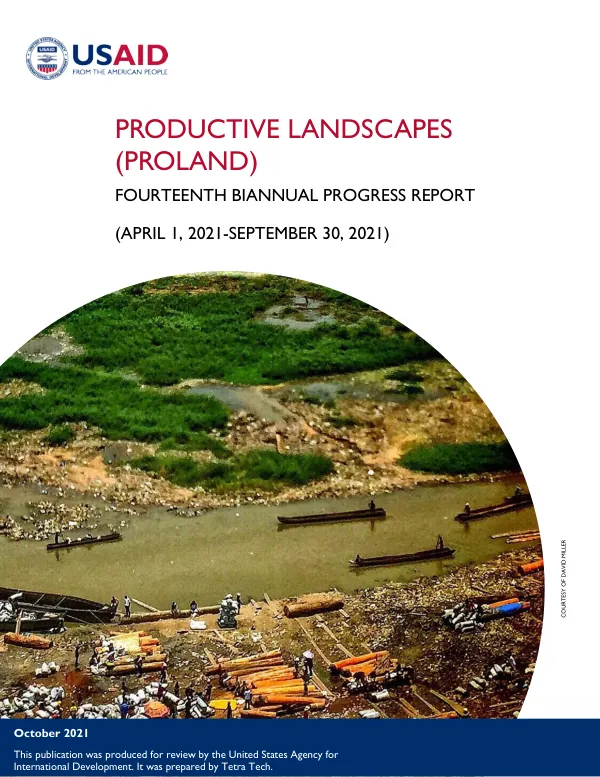
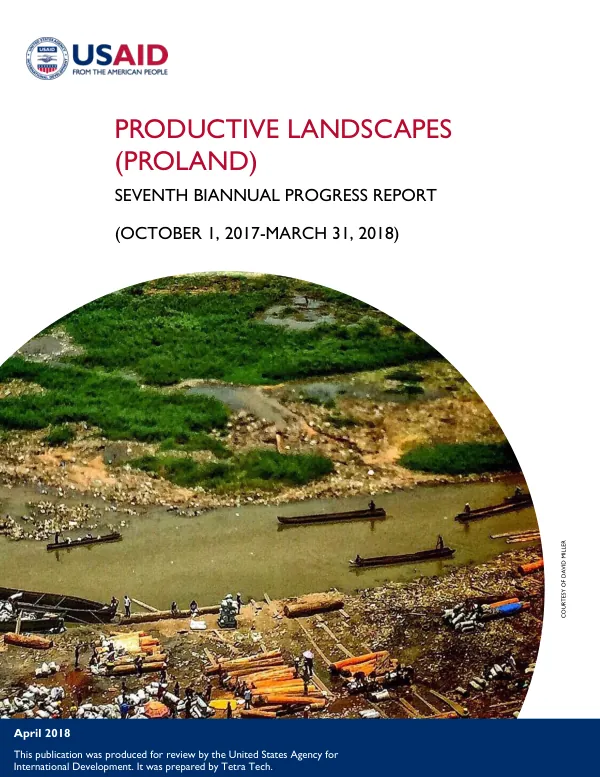
Productive Landscapes (ProLand) Seventh Biannual Progress Report (October 1, 2017-March 31, 2018)
Sign inACDI/VOCA
Productive Landscapes (ProLand) Seventh Biannual Progress Report (October 1, 2017-March 31, 2018)
The Productive Landscapes (ProLand) project is a 60-month task order under the Restoring the Environment through Prosperity, Livelihoods, and Conserving Ecosystems (REPLACE) Indefinite Delivery Indefinite Quantity Contract (IDIQ).
2018 · 10 pages
Sign in to readA free account is required to download.
Abstract
It is implemented by Tetra Tech in association with two subcontractors, World Resources Institute (WRI) and ACDI/VOCA. The project is currently managed by the Office of Global Climate Change (GCC) in the Bureau of Economic Growth, Education, and the Environment (E3). The purpose of the ProLand project is to provide assistance to USAID to catalyze change in land management systems so that people and institutions in developing countries can make informed, actionable, and effective development decisions. The goal of this task order is to develop tools and evidence to demonstrate that by sustainably intensifying land uses with best management practices, it is possible to achieve multiple gains simultaneously, including increased food production, reduced biodiversity loss, reduced greenhouse gas emissions, enhanced adaptation to climate changes, and increased inclusive broad-based economic growth. The specific objectives of the project are to demonstrate by the end of the contract that multiple benefits from sustainable intensification have been achieved using best management approaches that: increase agricultural production while also increasing carbon sequestration above and/or below ground on farming and grazing lands; increase biodiversity, for instance by reducing deforestation rates, increasing natural forests and rangelands, providing ecologically sustainable benefits to local communities, and enhancing ecosystem services; and increase resilience of rural household livelihoods to climate change via increased rainwater capture/groundwater infiltration, diversification and integration of farm production systems, enhanced ecosystem service provision, and greater adoption of community-based natural resource management governance structures. During the reporting period, ProLand received approval to replace the vacant Deputy Chief of Party (DCOP) position with Dr. Benjamin Caldwell. Proposed text for developing a ProLand page on ClimateLinks was also drafted and shared with USAID for their review. The ProLand team and USAID finalized Scopes of Work (SOWs) for sustainable woodfuel production systems and equitable benefits and community forest management. Under Task 1, evidence collection from existing landscape productivity enhancement approaches, the ProLand team finalized the research approach for reviewing the experience gained through interventions designed to support sustainable woodfuel production systems and the evidence base related to their success and positive impacts. The analysis will examine the potential benefits from the sustainable production and improved management of woodfuels from key sources and identify the most promising approaches, along with the associated enabling conditions. Under Task 3, assist missions with preparation of evidence baseline for new integrated productive landscapes programs, ProLand initiated the USAID/DRC Mission CARPE activity and began collecting data from desktop research to inform case study selection. The ProLand team worked with USAID to define the scope for an activity that will provide guidance to USAID Missions and the broader development community regarding methods and approaches to support decentralization of forest management in ways that avoid unintended outcomes and maximize the chance of reducing deforestation and degradation while equitably increasing economic growth and reducing poverty. The ProLand project aims to develop a Nature, Wealth, and Power (NWP) toolbox of methodologies and best practices for increasing landscape productivity and resilience. The project also aims to prepare the future evidence base for new success stories in productive landscapes management in programs under design in sites selected collaboratively with one to three key USAID Missions.