TETRA TECH
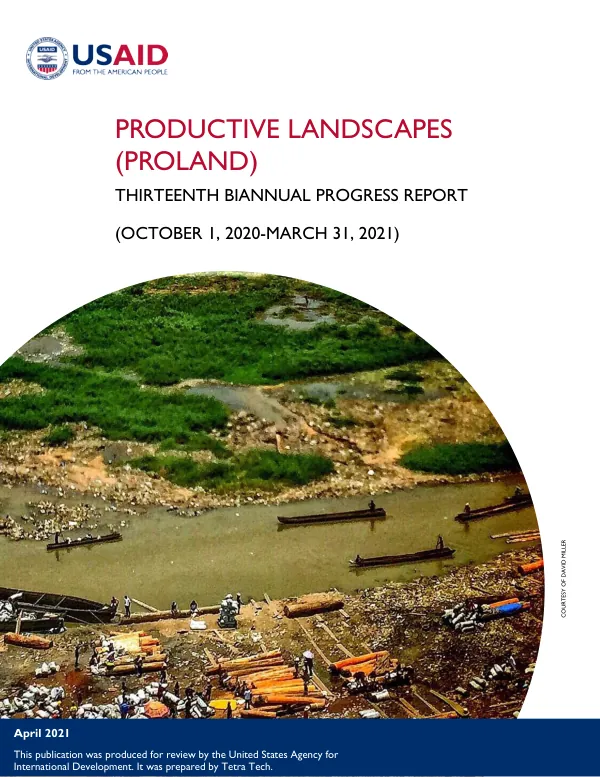
Productive Landscapes Thirteenth Biannual Progress Report
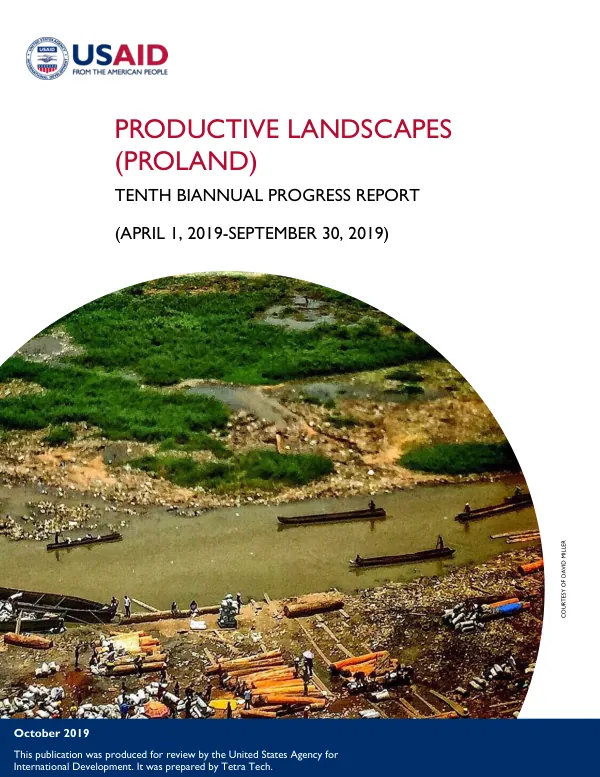
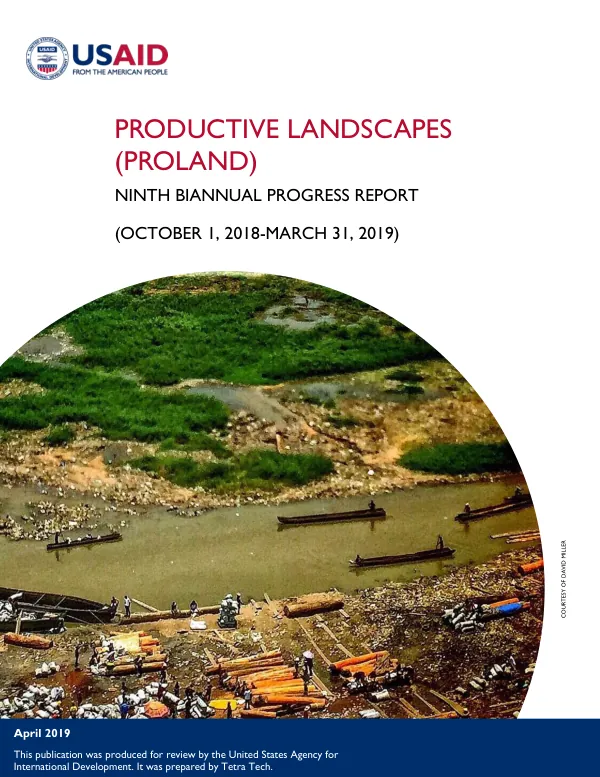
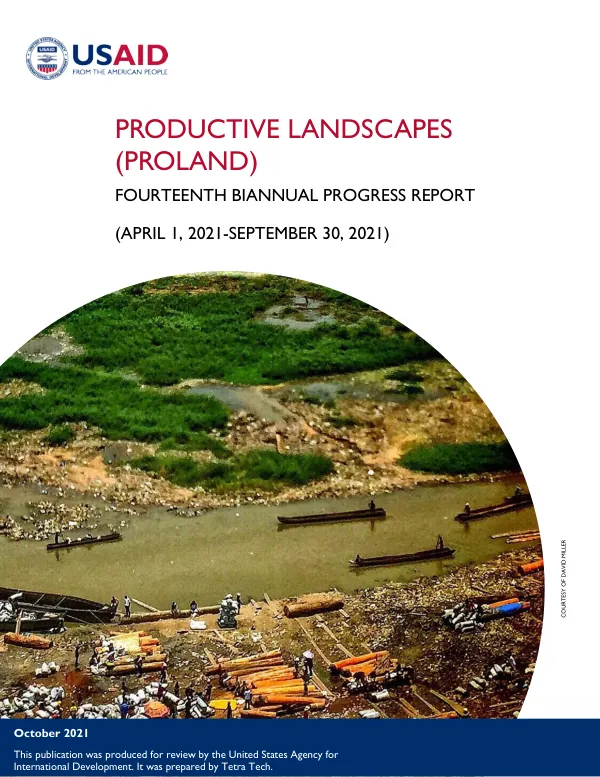
The Productive Landscapes (ProLand) Project is a 72-month task order under the Restoring the Environment through Prosperity, Livelihoods, and Conserving Ecosystems (REPLACE) Indefinite Delivery Indefinite Quantity Contract (IDIQ).
2021 · 12 pages
Sign in to readA free account is required to download.
Abstract
It is implemented by Tetra Tech in association with subcontractor ACDI/VOCA. The purpose of the ProLand project is to provide assistance to USAID to catalyze change in land management systems so that people and institutions in developing countries can make informed, actionable, and effective development decisions. The goal of this task order is to develop tools and evidence to demonstrate that by sustainably intensifying land uses with best management practices, it is possible to achieve multiple gains simultaneously, including increased food production, reduced biodiversity loss, reduced greenhouse gas emissions, enhanced adaptation to climate changes, and increased inclusive broad-based economic growth. The specific objectives are to demonstrate by the end of the contract that sustainable intensification using a suite of best management practices approaches can increase agricultural production and carbon sequestration, increase biodiversity, and increase resilience of rural household livelihoods to respond to and prepare for climate change. The specific tasks to be undertaken in support of these objectives include improving the evidence from existing successes, developing a Nature, Wealth & Power toolbox of methodologies and best practices, preparing the future evidence base for new success stories, and implementing a program of work to support the uptake of Community-Based Natural Resource Management best practices. During the reporting period, ProLand continued to be productive and advanced towards finalizing all pending work products. Together with USAID, three technical reports were finalized across the different workstreams, and two corresponding blogs were posted to ClimateLinks. Multiple engagement activities were held with USAID staff, and USAID referenced a ProLand report in a USAID solicitation as an important technical input for proposal design. ProLand made significant progress on global assessments of three promising landscape productivity enhancement approaches: sustainable agricultural intensification, sustainable woodfuel production systems, and community-based forestry enterprises. The sustainable agricultural intensification working paper highlights common intensification strategies employing improved technology and practices, and governance approaches to reduce the conversion of natural lands via incentive mechanisms and multi-institutional planning and policy. Case studies from the literature are being developed to highlight some of the strengths and weaknesses of these strategies and approaches. The ProLand project is currently managed by the Office of Global Climate Change (GCC) in the Bureau of Economic Growth, Education, and the Environment (E3). The project's progress is being monitored and evaluated to ensure that the objectives are being met and that the project is making a positive impact on the environment and the communities it serves. ProLand's financial summary for the reporting period shows that the project has made significant progress in achieving its objectives. The project has been able to develop and disseminate tools and evidence to demonstrate the effectiveness of sustainable intensification approaches, and has been able to support the uptake of Community-Based Natural Resource Management best practices. The project's financial performance is also being closely monitored to ensure that it is within budget and that the project is making efficient use of resources. Overall, the ProLand project is making significant progress in achieving its objectives and is having a positive impact on the environment and the communities it serves. The project's progress will continue to be monitored and evaluated to ensure that it remains on track to meet its objectives and to make a lasting impact on the environment and the communities it serves.