USAID DEC
Professional Skills Development Course for Women in the Energy Sector
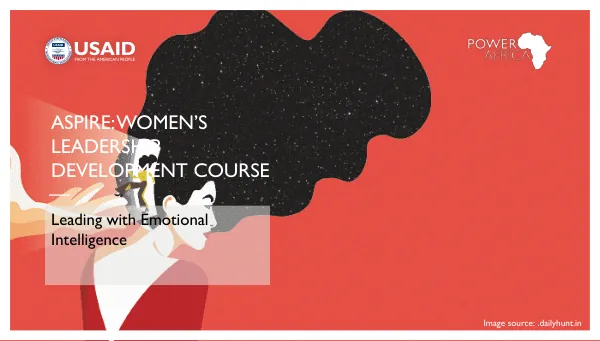
The Aspire: Women's Leadership Development Course is a training program focused on developing emotional intelligence in women leaders.
2022 · 40 pages
Sign in to readA free account is required to download.
Abstract
The course emphasizes the importance of emotional intelligence in enhancing reasoning, handling interpersonal relationships, and achieving personal and professional goals. Emotional intelligence is defined as the capacity to be aware of, control, and express one's emotions, as well as recognize emotions in others. The course outline highlights the key components of emotional intelligence, including self-awareness, self-regulation, self-motivation, empathy, and social skills. These skills are essential for building stronger relationships, succeeding at work, and achieving career and personal goals. Research suggests that emotional intelligence is a better predictor of success, quality of relationships, and overall happiness than intelligence quotient (IQ). Leaders with higher emotional intelligence tend to have happier employees who stay longer, reducing the costs of attrition, and try harder, increasing productivity. The course emphasizes the importance of emotional intelligence in the workplace, citing that more organizations are now testing for emotional intelligence as part of their hiring processes. The course includes a poll to gauge participants' understanding of emotional intelligence, as well as a class activity to explore ways and techniques to advance emotional intelligence. The lessons learned from the course will enable participants to develop self-awareness and self-management of their emotions, recognize emotions in others, and respond to those emotions to inspire better relationships and high performance. The course also provides handouts on spotting emotionally intelligent people at work, leadership styles, and EQ self-assessment. These resources will enable participants to apply the concepts learned in the course to their personal and professional lives. By the end of the module, participants will gain insight into emotional intelligence, assess their own level of emotional intelligence, and develop self-awareness and self-management of their emotions. The course highlights the importance of emotional intelligence in the workplace, citing that leaders with higher emotional intelligence tend to have happier employees who stay longer, reducing the costs of attrition, and try harder, increasing productivity. The course also emphasizes the importance of emotional intelligence in building stronger relationships, succeeding at work, and achieving career and personal goals. The course provides a comprehensive overview of emotional intelligence, including its definition, components, and importance in the workplace. The course also provides practical tools and resources for participants to apply the concepts learned in the course to their personal and professional lives. By the end of the module, participants will have a deeper understanding of emotional intelligence and its role in achieving success and happiness in their personal and professional lives.