USAID DEC
PROFESSIONAL SKILLS DEVELOPMENT COURSE FOR WOMEN IN THE ENERGY SECTOR
The ASPIRE Women's Leadership Development Course focuses on Performance Management, specifically Supervision and Coaching Skills.
2022 · 26 pages
Sign in to readA free account is required to download.

Abstract
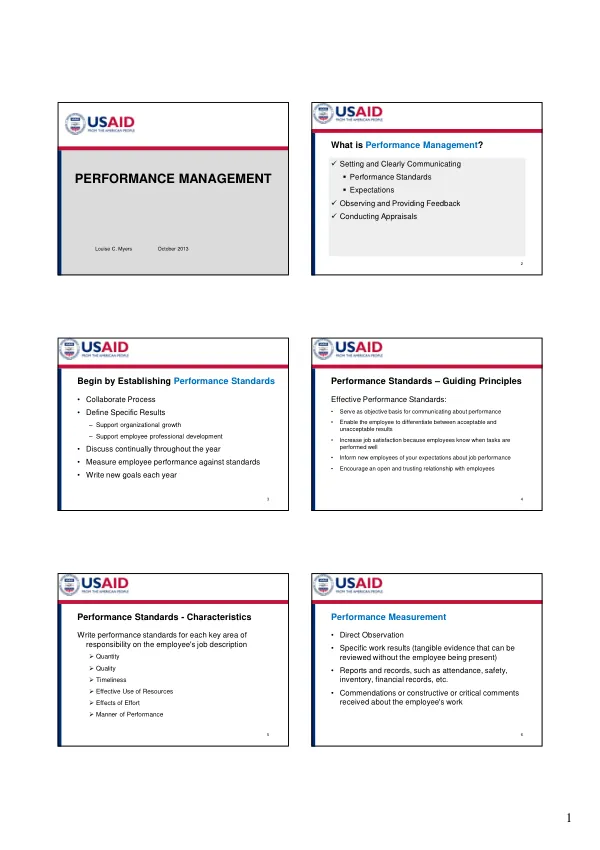
The course emphasizes the importance of performance management in driving organizational performance. Performance management involves setting performance expectations, providing resources for performance to happen, building capacity and capabilities for performance, providing feedback and performance support, and appraising and rewarding or sanctioning based on performance. Performance management is essential for providing clear expectations and direction, alignment, measuring, tracking, and improving along the way, and providing guidance and support to sustain performance. The course highlights the importance of essential skills in performance management, including goal setting, effective delegation, giving effective feedback, and coaching for performance. The four paradigms critical to driving organizational performance are discussed in the course. These paradigms are essential for understanding the underlying principles of performance management and for developing effective supervisory and coaching skills. The course provides hands-on activities and exercises to practice these skills, including creating a handle activity, feedback without tears activity, setting SMART goals activity, and coaching skills. The course also emphasizes the importance of supervisory and coaching skills in managing performance. Supervisors and coaches play a critical role in driving performance by setting clear expectations, providing guidance and support, and appraising and rewarding or sanctioning based on performance. The course provides guidance on how to develop these skills, including setting goals, giving effective feedback, delegating effectively, and coaching for high performance. The course is designed to be interactive, with participants encouraged to participate, speak one at a time, be present, be open to new ideas, and respect other views. The course also emphasizes the importance of being punctual and not being afraid to disagree. The facilitator encourages participants to type their questions, comments, contributions, and challenges in the chat so that they can be responded to directly. The course is structured around learning objectives, which include explaining the importance of performance management and the underlying supervisory and coaching skills required to drive performance, identifying and explaining four paradigms that are critical to driving organizational performance, and practicing the skills for setting goals, giving effective feedback, delegating effectively, and coaching for high performance.