JOHN SNOW INTERNATIONAL
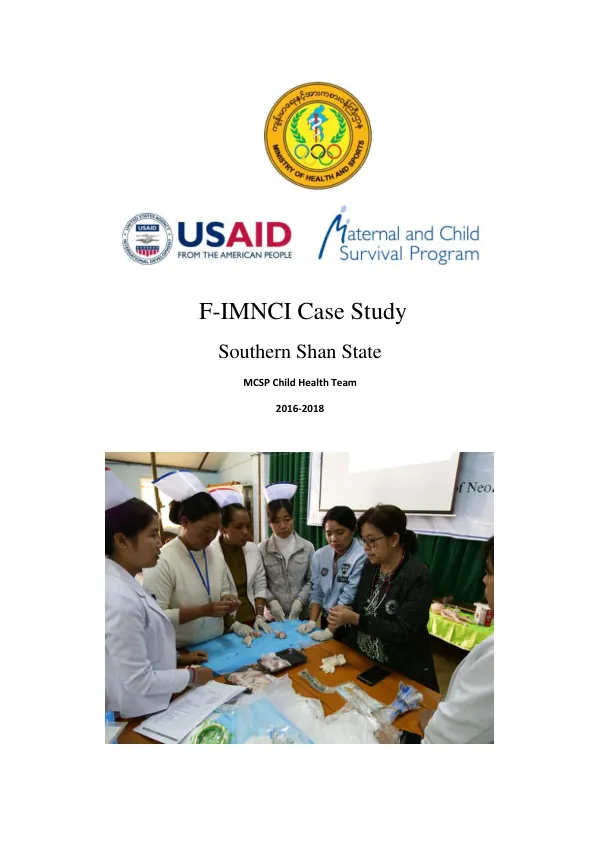
F-IMNCI Case Study Southern Shan State MCSP Child Health Team 2016-2018
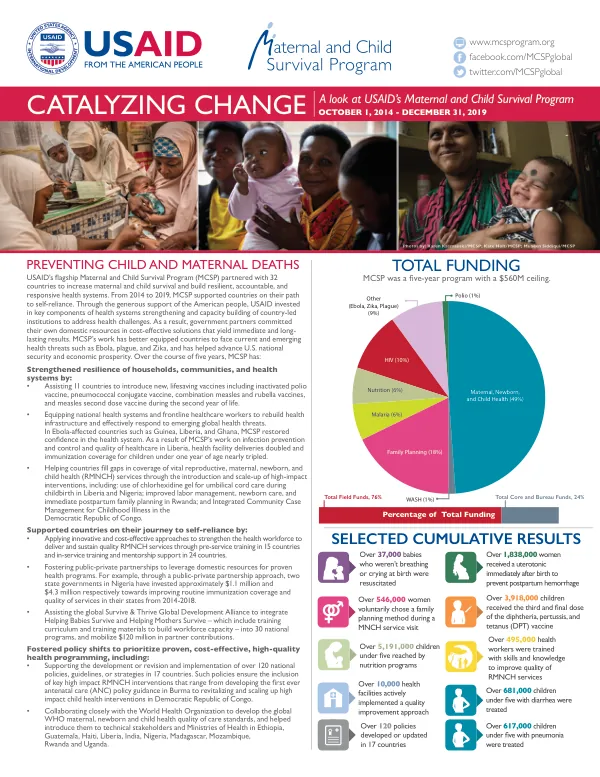
The Maternal and Child Survival Program (MCSP) is a global initiative to introduce and support high-impact health interventions in 25 priority countries to help prevent child and maternal deaths.
2018 · 98 pages
Sign in to readA free account is required to download.
Abstract
MCSP supports programming in maternal, newborn, and child health, immunization, family planning, and reproductive health, nutrition, health system strengthening, water/sanitation/hygiene, malaria control, prevention of mother-to-child transmission of HIV, and pediatric HIV care and treatment. In Myanmar, MCSP collaborated with the Ministry of Health and Sports (MOHS) and the Child Health Development Division (CHD) to implement the Family Integrated Newborn and Child Care (F-IMNCI) training program in Southern Shan State. The F-IMNCI training program aimed to improve the knowledge and skills of health staff in hospitals of Southern Shan State. The program was implemented in collaboration with the State Health Department and clinicians in Taunggyi Women and Children Hospital (WCH). The training program included coordination, training, learning and performance improvement center (L&PIC), post-training supervision, and end-of-project activities. The training program was conducted in November 2017, and post-training supervision visits were conducted in the following months. The results of the F-IMNCI training program showed significant improvements in the knowledge and skills of health staff. Pre- and post-test results indicated a significant increase in knowledge scores among participants. Post-training supervision visits revealed that 94 participants achieved high scores in six Objective Structured Clinical Examinations (OSCEs). The supervision visits also assessed the hospital infrastructure, including the emergency or outpatient department, labor room and postnatal ward, child ward, laboratory, equipment, human resources, drug and pharmacy, and clinical practice and guidelines. The analysis of the F-IMNCI training program revealed several challenges, including training and post-training supervision. However, the program also identified several lessons learned, best practices, and recommendations for future implementation. The program recommended planning, training, post-training supervision, hospital infrastructure, and future planning as key areas for improvement. The program also highlighted the importance of coordination, learning and performance improvement center, and supervision in achieving successful outcomes. The F-IMNCI training program in Southern Shan State achieved significant results, including improved knowledge and skills of health staff, increased scores in OSCEs, and improved hospital infrastructure. The program's success story highlights the importance of collaboration, coordination, and supervision in achieving successful outcomes in maternal and child health programs. The program's results and recommendations provide valuable insights for future implementation of similar programs in Myanmar and other countries.