INTERNATIONAL ALERT
Programming Effectively Against Conflict and Extremism (PEACE) IQC
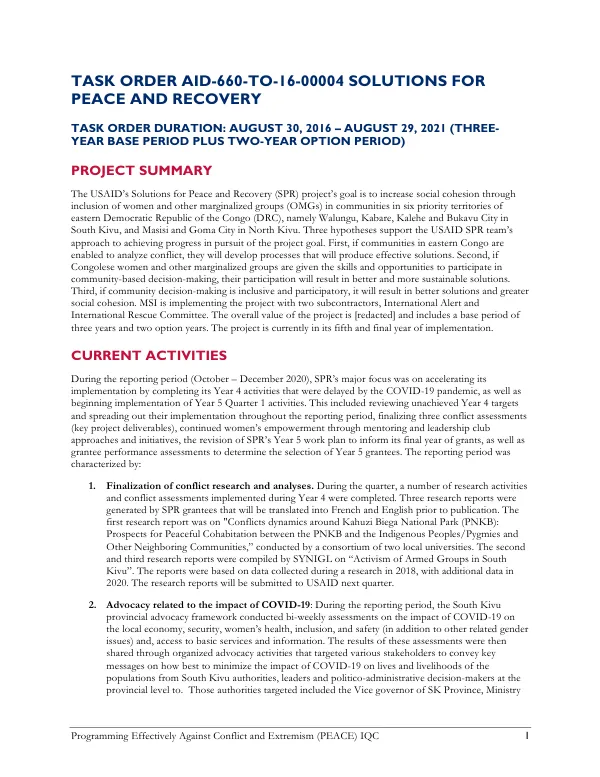
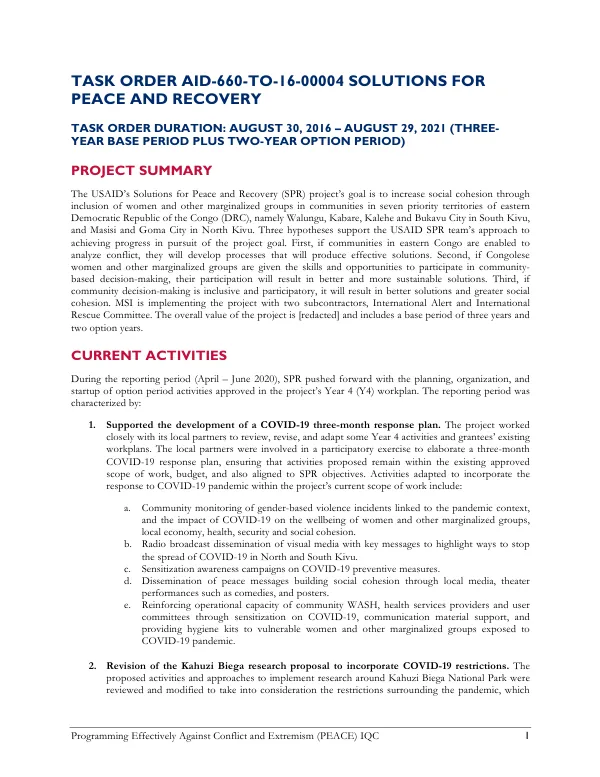
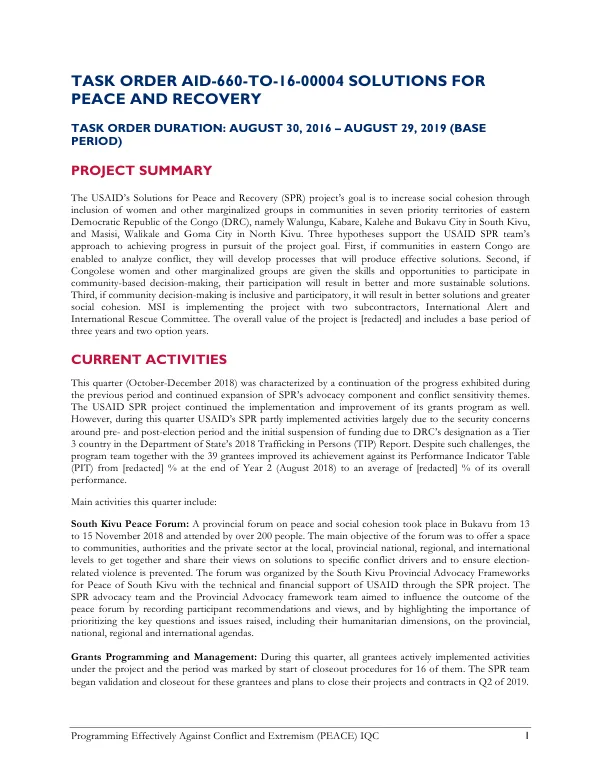
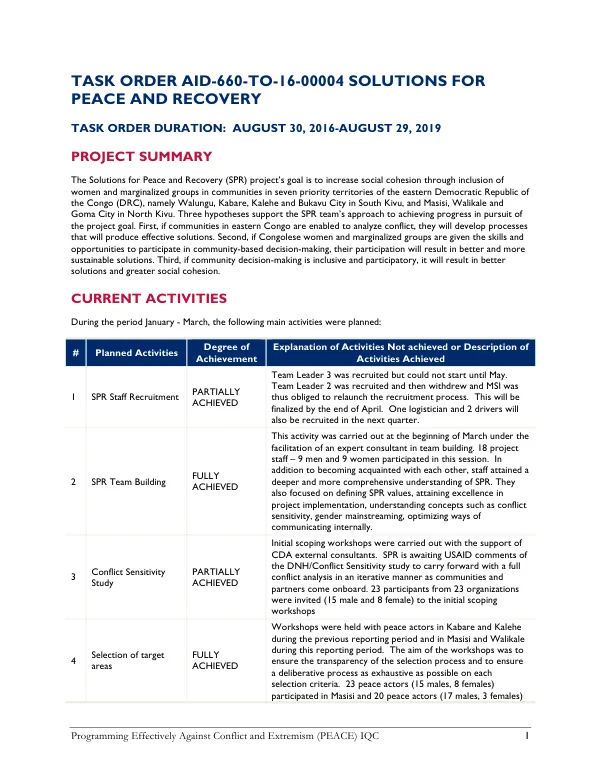
The Solutions for Peace and Recovery (SPR) project aims to increase social cohesion through the inclusion of women and other marginalized groups in communities in seven priority territories of eastern Democratic Republic of the Congo (DRC).
2020 · 4 pages
Sign in to readA free account is required to download.
Abstract
The project is implemented by MSI with two subcontractors, International Alert and International Rescue Committee, and has a total value of [redacted]. The project's goal is supported by three hypotheses: communities in eastern Congo can develop effective solutions to conflict through analysis, Congolese women and other marginalized groups can contribute to better and more sustainable solutions through participation in community-based decision-making, and inclusive community decision-making can lead to better solutions and greater social cohesion. During the reporting period (July – September 2020), the project adapted to a remote status due to the COVID-19 pandemic situation in-country. The project implemented its COVID-19 response plan, which included community monitoring of gender-based violence incidents, radio broadcasting and dissemination of visual media, sensitization awareness campaigns, and mitigation of COVID-19's impact on conflict. The project also collected data and raised awareness among local stakeholders and peace structures on the impacts of COVID-19. Additionally, the project conducted advocacy work using COVID-19 impact assessment evidence findings and researched the dynamics of the Kahuzi Biega National Park (KBNP) conflict. The project also trained implementing partners in the EA$E approach to enhance equitable access to livelihoods in target communities. The project supported women's leadership mentoring club (LMC) operations in North and South Kivu and introduced SPR approaches and new zones to new partners. The project awarded rapid response grants to local partners to address emerging land conflicts and expanded upon research on the dynamics between armed groups and local communities. The project's overall achievement against its revised performance indicator table rose from 90% to 94% at the end of Q4, with progress against performance targets at 99% for Objective 1, 110% for Objective 2, and 74% for Objective 3. The project faced various challenges, including the continued threat of COVID-19, which resulted in delayed implementation of Y4 project activities and achievement of targets. The project team and local implementing partners worked on solutions to address challenges and developed strategic approaches to maximize opportunities in favor of SPR's objectives. The project took several actions to mitigate the impact of COVID-19, including authorizing all-staff remote working, continuing communication with project staff, and complying with local Government COVID-19 preventive measures. The project's COVID-19 response plan had several notable achievements, including the development of a brochure called "Standardized Messages on COVID-19 in DRC," which informed all communication materials and awareness campaigns developed by local partners. The project also conducted a second COVID-19 impact assessment survey to understand community dynamics resulting from the pandemic and completed a review of the Y4 workplan and target achievement analysis, making adjustments to Year 5 activities. The project developed and implemented a series of grant modifications to accelerate Y4 remaining period activities.