USAID DEC
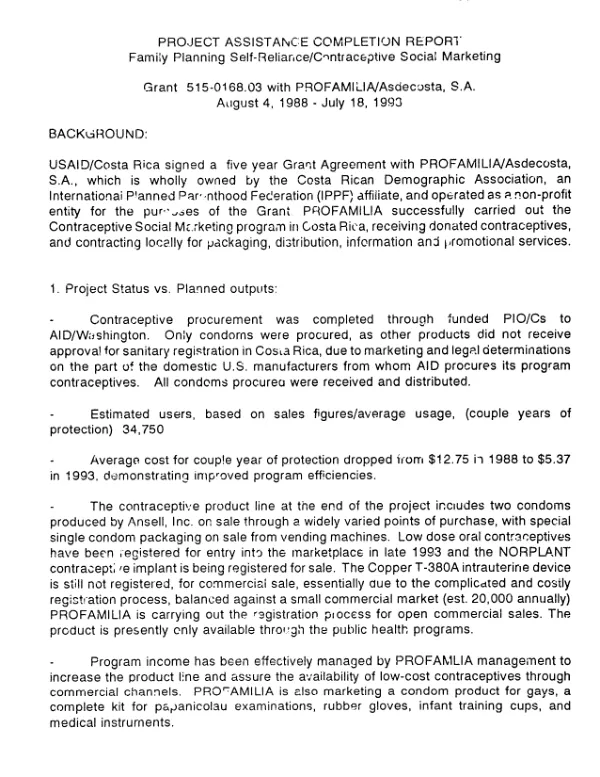
Project assistance completion report : family planning self-reliance/contraceptive social marketing -- grant 515-0168.03 with PROFAMILIA/Asdecosta, S.A., August 4, 1988-July 18, 1993
Sign inUSAID. MISSION TO COSTA RICA
Project assistance completion report : family planning self-reliance/contraceptive social marketing -- grant 515-0168.03 with PROFAMILIA/Asdecosta, S.A., August 4, 1988-July 18, 1993
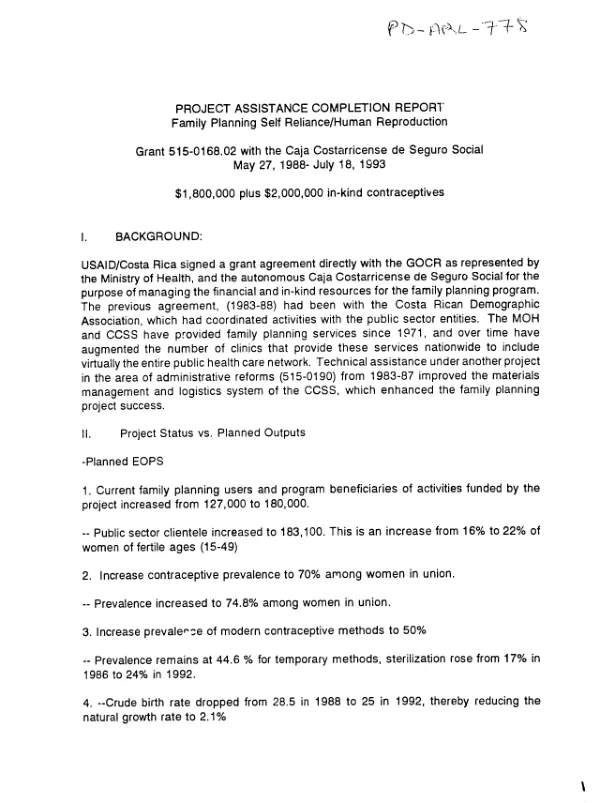
PACR of a project (8/88-7/93) to provide family planning services, primarily contraceptive distribution, through PROFAMILIA in Costa Rica.
1993
Sign in to readA free account is required to download.
Abstract
Only condoms were procured, as other products did not receive approval for sanitary registration in Costa Rica due to marketing and legal determinations by U.S. suppliers. All condoms procured were received and distributed. Based on sales figures and average usage (couple years of protection), 34,750 users were estimated. Improved program efficiency caused the average price per couple year to drop from $12.75 in 1988 to $5.37 in 1993. The contraceptive product line at the end of the project included two condoms, which were available in single condom packaging in vending machines. However, low dose oral contraceptives were registered for sale in late 1993 and NORPLANT contraceptive implants are currently being registered. The Copper T-380A IUD remains unregistered, since small market share does not justify the complicated and costly registration process. PROFAMILIA is also marketing a condom product for gays, a complete kit for papanicolaou examinations, rubber gloves, infant training cups, and medical instruments. PROFAMILIA has proven to be an effective and efficient means to augment the accessibility to contraceptive products, providing a low-cost, convenient alternative to public sector services and using innovative and culturally sensitive marketing techniques to break down taboos against the use of condoms. At the purpose level, the 1992 contraceptive prevalence survey indicates the use of temporary methods increasing from 17% to 26% among women of fertile age between 1986 and 1992, with PROFAMILIA accounting for 4% of that increase. Lessons learned include the following. (1) The primary lesson was the importance of hiring an effective manager; the second was the allowing the manager to innovate and break ground in untried terrain. (2) As a central procurement agent, A.I.D. cannot effectively deal with market needs. This project was able to achieve self-sufficiency only because the Mission received a policy determination from the Office of Population permitting the project manager to expand the contraceptive line beyond what A.I.D. provided through in-kind donations. The two-fold purpose of providing low-cost contraceptives and making the program self-sufficient requires a creativity, flexibility, and accountability which, while they may not exist in most countries where A.I.D. works, do exist in Costa Rica.
Related documents
Documents in this collection
 1995
1995USAID DEC
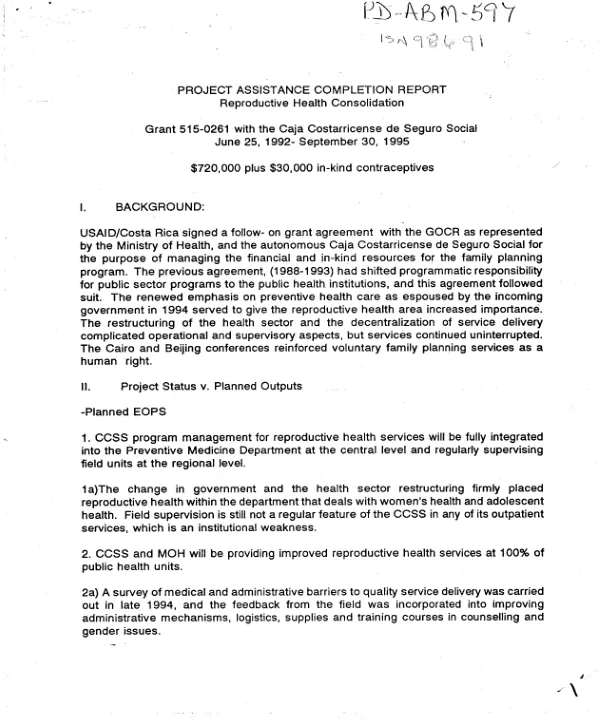
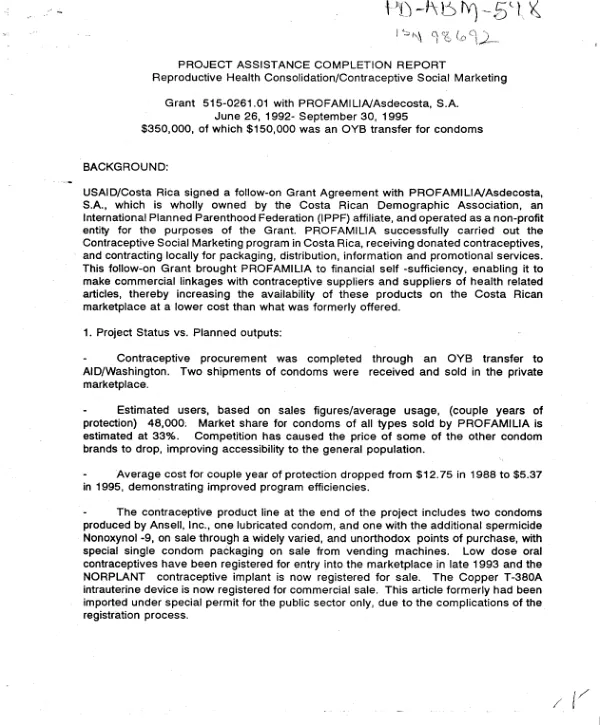
Project assistance completion report : reproductive health consolidation/contraceptive social marketing -- grant 515-0261.01 with PROFAMILIA/Asdecosta, S.A. -- June 26, 1992-September 30, 1995
Open record 1970
1970USAID DEC