USAID DEC
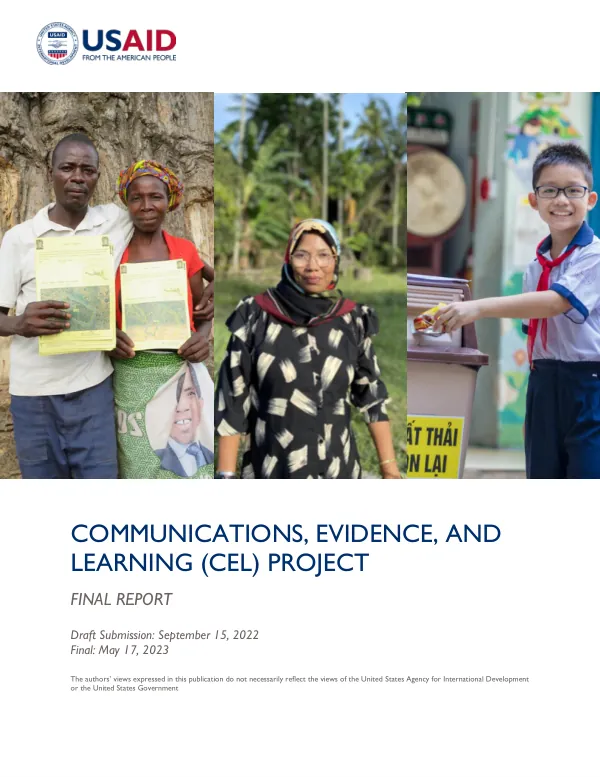
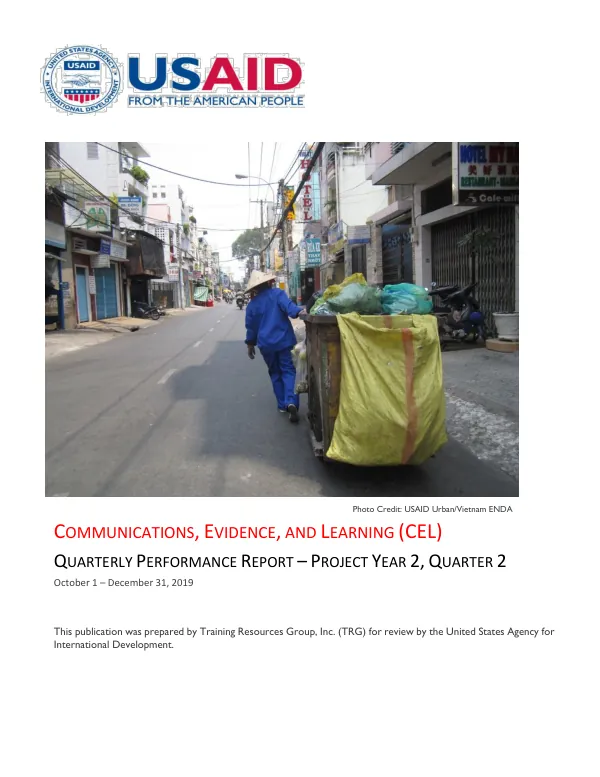
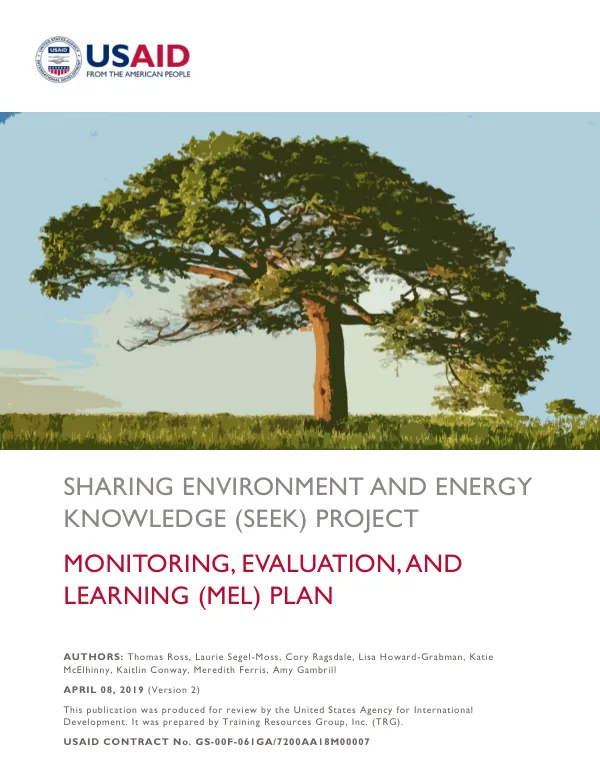
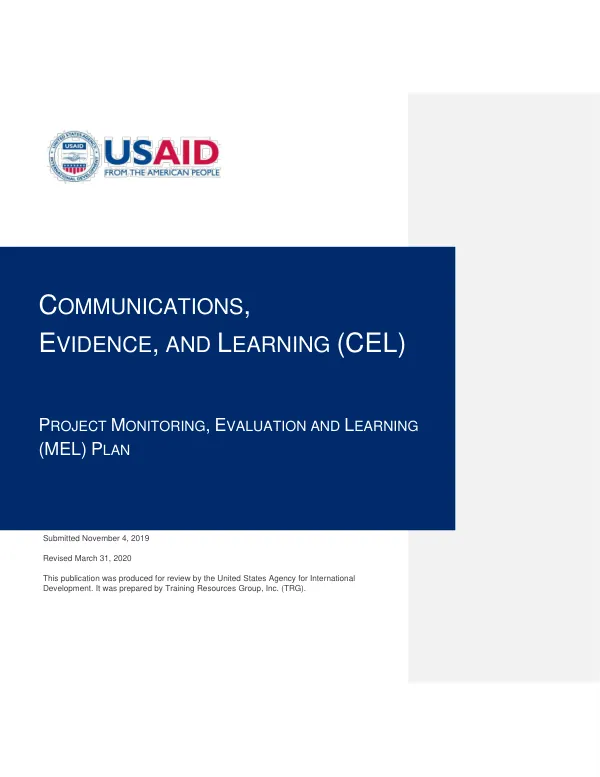
Project Monitoring, Evaluation and Learning (MEL) Plan for Communications, Evidence, and Learning (CEL)
Sign inECODIT, INC.
Project Monitoring, Evaluation and Learning (MEL) Plan for Communications, Evidence, and Learning (CEL)
The Communications, Evidence, and Learning (CEL) project is a five-year General Services Administration Multiple Award Schedule contract with a three-year base period and two option years, effective from May 23, 2018, to May 20, 2023.
2019 · 27 pages
Sign in to readA free account is required to download.
Abstract
The project was awarded to Training Resources Group, Inc. (TRG), along with subcontractors Landesa, NORC at the University of Chicago, Urban Institute, ECODIT, and Forum One Communications, on May 23, 2018. CEL provides USAID's Bureau of Economic Growth, Education and Environment (E3)/Land and Urban Office (LU) with an integrated approach across three primary functions: knowledge generation, knowledge dissemination, and knowledge application. The CEL project's primary objectives and services include building upon and expanding the body of evidence-based knowledge through rigorous impact and performance evaluations, research and analysis, and possibly through targeted pilot activities in selected countries. CEL also provides multi-year support for the Office of Local Sustainability (LS) and conducts land and gender work under the USAID's Women's Global Development and Prosperity (W-GDP) Initiative Fund. This work fits with CEL's primary objectives and services and supports some but not all task areas. The CEL project is designed to respond to the need to create, expand, disseminate, and support the application of evidence-based knowledge in USAID activities related to land tenure, property rights and resource governance, urban development, urban-based programming, sustainable cities, and locally led development. With the addition of work under W-GDP Initiative, there is a further defined need to enhance evidence-based knowledge in USAID activities related to gender and its intersection with land issues. The CEL project's Monitoring, Evaluation, and Learning (MEL) approach reflects systematic and intentional learning to measure project progress and effectiveness and is guided by the following principles: fostering evidence-based application of research and evaluations, creating time to learn and adapt, incorporating a range of integrated interventions, using systems thinking and cross-sectoral approaches, and working collaboratively within CEL and with other implementing partners and USAID offices. The CEL MEL approach emphasizes compliance and accountability while approaching MEL as an opportunity to develop the tools, processes, activities, and infrastructure that enable evidence-based project-level learning, collaboration, and adaptive management. A key component of the MEL Plan is effective capture, sharing, and management of knowledge across (and within) task areas and offices to better enable learning and inform decision-making for USAID program strategy and design. This implies the need to be strategic in data sharing processes to identify the best potential audience and methods of dissemination. The CEL project currently works with the Land and Urban teams within LU, with LS, and several Missions, each with a unique set of needs and requirements. The project's MEL Plan is designed to document how CEL will collect, organize, analyze, and apply learning gained from monitoring and evaluation data and processes. This information will be used to inform adaptive project management, review progress towards achievement of the CEL project objectives and goals, and to learn about systems required to ensure evidence application. The project MEL plan can be shared externally to provide a crucial link between the project's strategy and implementation, while also serving as an internal tracking tool to guide the project's direction and assess whether methodologies should be adjusted.
Related documents