USAID DEC
Project Monitoring, Evaluation & Learning Plan for USAID | Guatemala Creating Economic Opportunities Project
Sign inPALLADIUM INTERNATIONAL, LLC
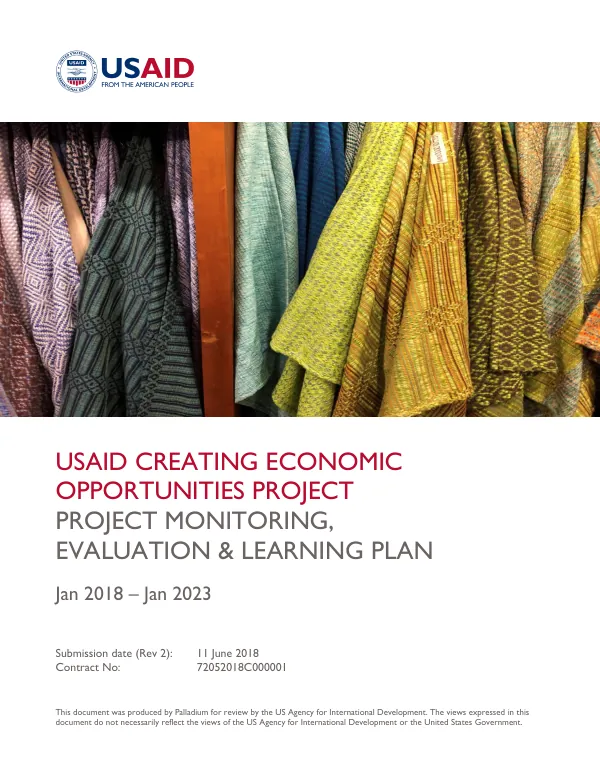
Project Monitoring, Evaluation & Learning Plan for USAID | Guatemala Creating Economic Opportunities Project
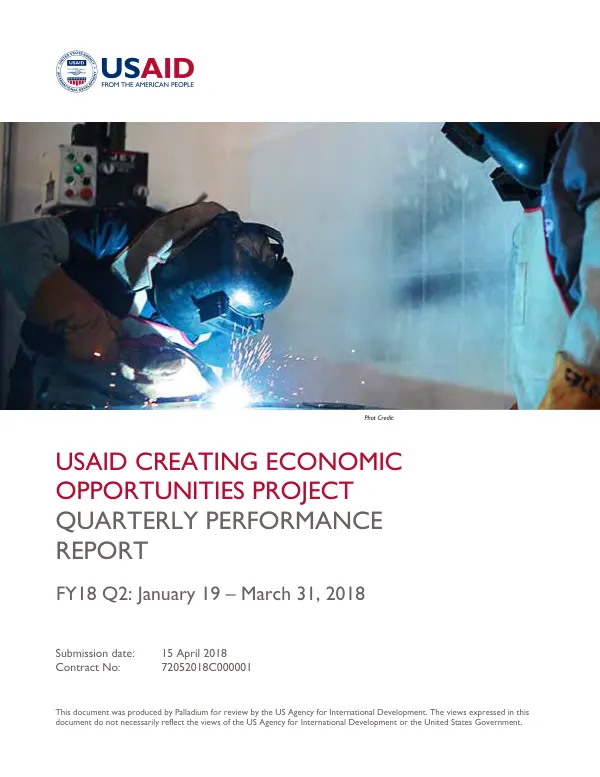
The USAID | Guatemala Creating Economic Opportunities Project, also known as the CEO Project, was designed to generate economic opportunity and reduce economic migration in Guatemala.
2018 · 73 pages
Sign in to readA free account is required to download.
Abstract
The project was awarded to Palladium International LLC on January 19, 2018, and will run for five years. The CEO Project aims to strengthen the promotion of investment and trade, stimulate access to financing in the private sector, catalyze the development of productive infrastructure, and improve the competitiveness of Guatemala's productive sector. The project is focused on five Departments in Guatemala's Western Highlands, including Quetzaltenango, Huehuetenango, Totonicapán, Quiché, and San Marcos, as well as the capital Department of Guatemala. By actively including Guatemala's secondary cities as platforms for investment and growth and implementing an economic corridor approach, the CEO Project aims to generate 50,000 new jobs and facilitate $75 million of foreign and domestic investment. The project's strategic approach emphasizes gender equality and female empowerment, with a focus on improving the economic opportunities and livelihoods of women and girls in Guatemala. The project also aims to improve the expected life of activity performance, with a focus on increasing the productivity and competitiveness of Guatemala's productive sector. The CEO Project is guided by a strategic framework that links its activities to USAID/Guatemala's Country Development Cooperation Strategy (CDCS). The project's theory of change and project results framework outline the expected outcomes and impact of the project, including the creation of new jobs, increased investment, and improved competitiveness. The project's evaluation plan is designed to assess its progress and impact, with a focus on learning questions and collaborating, learning, and adapting (CLA). The plan includes a data management plan, which outlines the roles and responsibilities for data collection, processing, and analysis, as well as data quality assurance and control. The project's indicator reference sheets (PIRS) outline the specific indicators that will be used to measure its progress and impact, including employment, foreign direct investment, domestic direct investment, and financing provided to small and medium-sized enterprises (SMEs). The PIRS also include indicators related to infrastructure development, information and communications technology (ICT), and workforce development initiatives. Overall, the CEO Project aims to create economic opportunities and reduce economic migration in Guatemala by strengthening the promotion of investment and trade, stimulating access to financing in the private sector, catalyzing the development of productive infrastructure, and improving the competitiveness of Guatemala's productive sector.