SAVE THE CHILDREN FUND
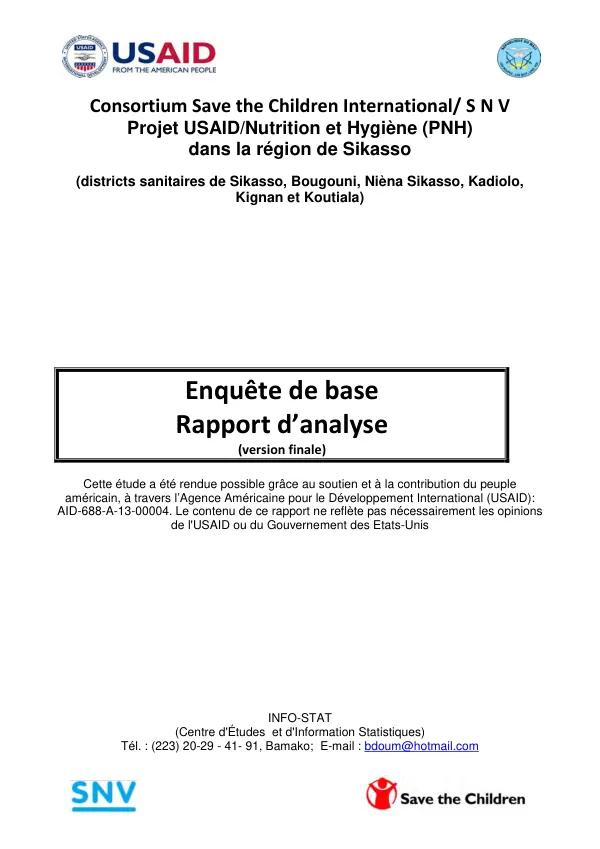
Projet USAID - Nutrition et Hygiène - Sikasso/Enquête de base
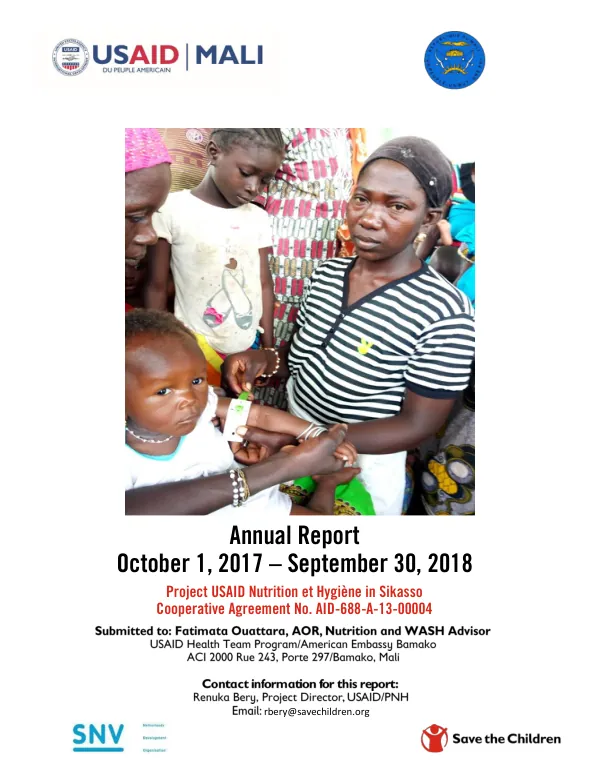
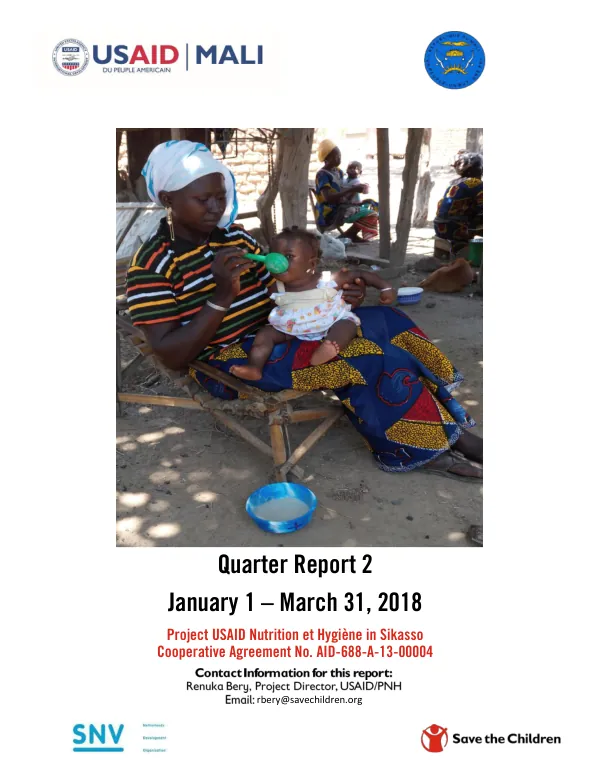
In the Sikasso region of Mali, a project titled "USAID/Nutrition et Hygiène" was initiated in 2014 by Save the Children International in partnership with SNV.
2014 · 57 pages
Sign in to readA free account is required to download.
Abstract
The project aimed to improve the nutritional status of pregnant women, breastfeeding women, and children under two years old in six health districts (Bougouni, Nièna, Sikasso, Koutiala, Kignan, and Kadiolo). The project focused on three strategic objectives: increasing the adoption of optimal behaviors supporting nutrition, health, sanitation, and hygiene; increasing the production and access to nutrient-rich foods; and improving the nutritional status of women and children. The project's methodology involved conducting a baseline survey to gather data on the nutritional status of women and children, as well as their knowledge and practices related to nutrition, health, sanitation, and hygiene. The survey collected data on various indicators, including the consumption of nutrient-rich foods, the use of sanitation facilities, and the prevalence of malnutrition among children. The baseline survey revealed that the majority of households in the Sikasso region relied on subsistence farming as their primary source of income. The survey also found that the majority of women in the region had limited access to education and healthcare services. In terms of nutrition, the survey found that the majority of households in the region consumed a diet that was low in nutrient-rich foods, and that the prevalence of malnutrition among children was high. The project's findings highlighted the need for interventions that would improve the nutritional status of women and children in the Sikasso region. The project's implementation plan included the establishment of community-based nutrition programs, the provision of training and support to farmers, and the distribution of nutrient-rich foods to vulnerable populations. The project's geographic focus was on the six health districts in the Sikasso region, which were identified as having the highest levels of malnutrition among children. The project's timeframes were not specified in the document, but it is likely that the project was implemented over a period of several years. The project's recommendations included the need for increased investment in agriculture and nutrition programs, as well as the need for improved access to education and healthcare services for women and children in the region. The project also recommended the establishment of a monitoring and evaluation system to track progress and identify areas for improvement.