USAID DEC
PU-AMI Chad – Quarterly Report n°4 (Fiscal year 2014) / June - September 2014
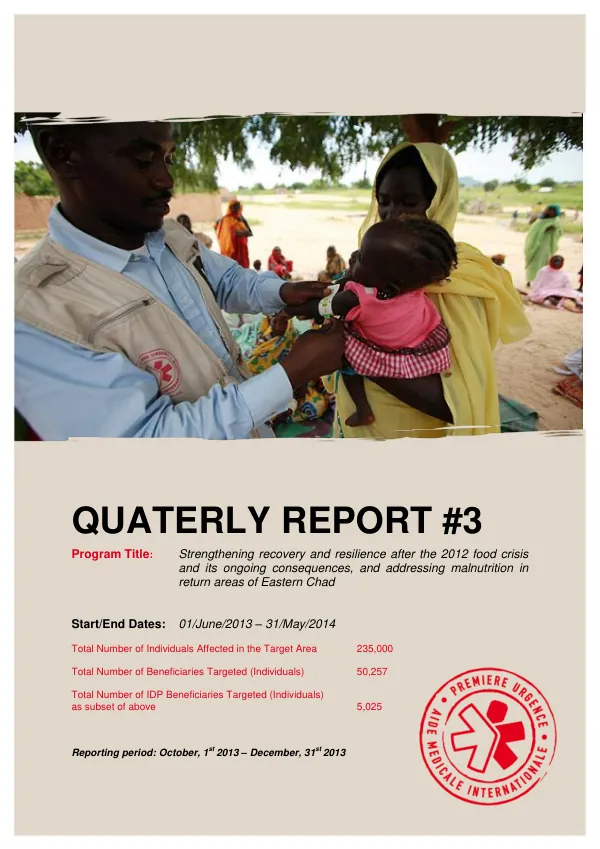
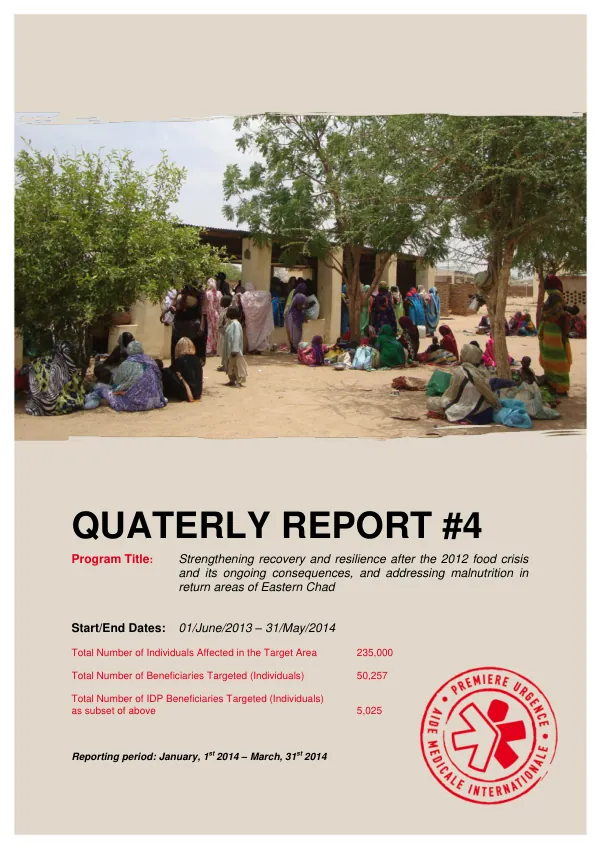
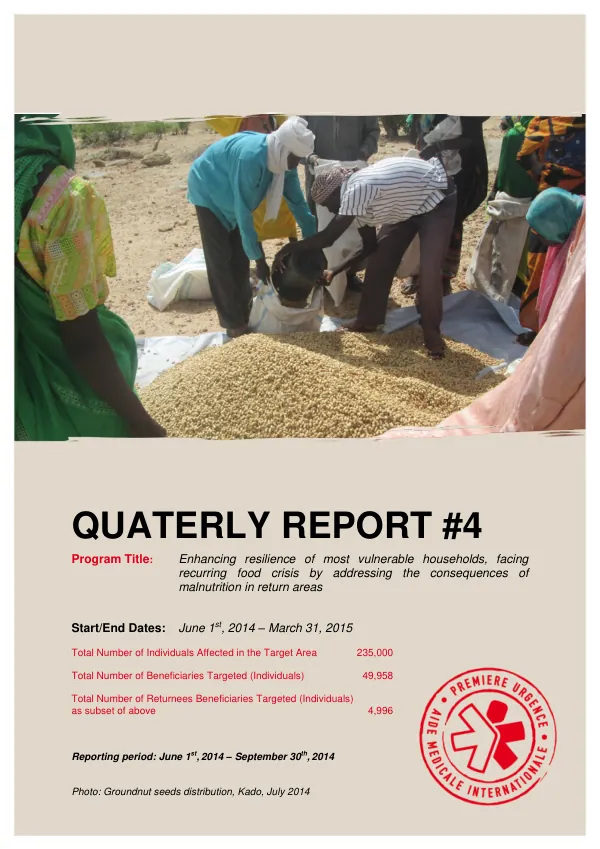
The Enhancing Resilience of Most Vulnerable Households program in Chad, implemented by Première Urgence – Aide Médicale Internationale (PU-AMI), aimed to address the consequences of malnutrition in return areas.
2014 · 11 pages
Sign in to readA free account is required to download.
Abstract
The program targeted 18,958 people, including 1,896 returnees, with a focus on nutrition, agriculture, and food security. The geographic area of focus was Chad's Ouaddai Region, specifically the Assoungha Department, Adre Prefecture, and surrounding sub-prefectures and cantons. The nutrition sector, with a budget of 489,808 USD, focused on managing moderate acute malnutrition (MAM) and severe acute malnutrition (SAM). Key achievements in the MAM sub-sector included the establishment of 20 sites managing MAM services, with 2,731 people admitted to these services by September 30, 2014. However, this represented only 27% of the target. Training of healthcare providers and volunteers in MAM prevention and management reached 144 people, or 76% of the target. In the SAM sub-sector, one site was established for inpatient care, and 313 people were treated for SAM. However, this represented only 31% of the target. The cure rate for SAM was 87.2%, while the default rate was 3.2% and the death rate was 9.2%. Supplies distributed for SAM treatment reached 105, or 33% of the target. The infant and young child feeding and behavior change sub-sector aimed to promote exclusive breastfeeding among infants 0-<6 months of age. However, this indicator was not applicable at this stage of the project. The agriculture and food security sector, with a budget of 360,192 USD, focused on helping beneficiaries recover from past crises through a reinforcement of household agricultural resources. Key achievements included the targeting of 23,970 persons, or 77% of the target, with 2,400 returnees. The geographic area of focus was the same as the nutrition sector. The program's overall goal was to contribute to reducing morbidity and mortality due to malnutrition among children under 5 and pregnant and lactating women. The program's achievements in the first quarter of 2014-2015 were mixed, with some indicators exceeding targets while others fell short. However, the program continued to make progress in addressing the consequences of malnutrition in return areas. The geographic area of focus for the program was Chad's Ouaddai Region, specifically the Assoungha Department, Adre Prefecture, and surrounding sub-prefectures and cantons. The program's achievements in this region were significant, with a focus on improving the resilience of most vulnerable households. The program's budget for the nutrition sector was 489,808 USD, with a focus on managing moderate acute malnutrition (MAM) and severe acute malnutrition (SAM). The program's achievements in the MAM sub-sector included the establishment of 20 sites managing MAM services, with 2,731 people admitted to these services by September 30, 2014. The program's achievements in the SAM sub-sector included the establishment of one site for inpatient care, with 313 people treated for SAM. However, this represented only 31% of the target. The cure rate for SAM was 87.2%, while the default rate was 3.2% and the death rate was 9.2%. The program's achievements in the agriculture and food security sector included the targeting of 23,970 persons, or 77% of the target, with 2,400 returnees. The geographic area of focus was the same as the nutrition sector.
Related documents