UNICEF
PU-AMI Chad – Quarterly Report n°3 – January 2014
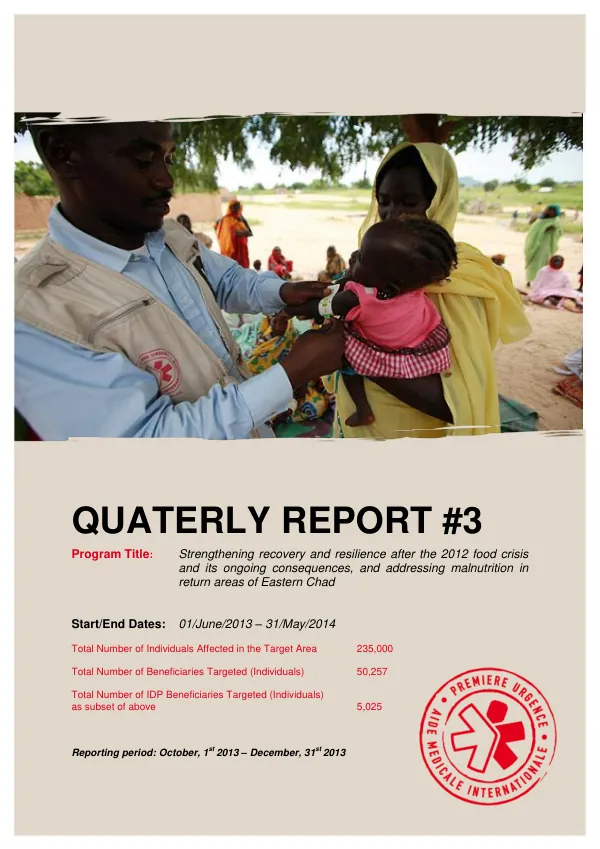
The agricultural development initiative in Chad, implemented by PU-AMI, aimed to strengthen recovery and resilience after the 2012 food crisis and its ongoing consequences, as well as address malnutrition in return areas of Eastern Chad.
2014 · 9 pages
Sign in to readA free account is required to download.
Abstract
The program, which began in June 2013 and ended in May 2014, targeted 27,000 persons, with a focus on 4,500 households and 450 households of returnees. The program's objective was to help beneficiaries recover from past crises through a reinforcement of household agricultural resources. The agricultural sector received a total of 402,037 USD, with a focus on improving agricultural production and food security. The program achieved a 97% target in distributing seed systems and agricultural inputs to 20,982 persons, with 56% of beneficiaries being women. In the livestock sector, vaccination campaigns improved the sanitary conditions of livestock, protecting cattle against endemic diseases such as anthrax and pasteurellosis. However, the consequences of the short monsoon season were still to be expected, and livestock did not suffer from a lack of pasture and water. The nutrition sector received a total of 297,963 USD, with a focus on reducing morbidity and mortality due to malnutrition among children under 5 and pregnant and lactating women. The program achieved a 157% target in admitting patients for severe acute malnutrition, with a cumulative period of 412 cases. The security situation in the region remained calm during the reporting period, but tensions between settled farmers and nomadic livestock farmers occurred in November and December 2013. The low rainfall during June and July 2013 caused a delay in cereal area and crop development, resulting in a 14% shortage in cereal harvests compared to 2012. The program's achievements in the agriculture sector included networking between producers and chain operators, which improved the distribution of seed systems and agricultural inputs. In the nutrition sector, the program achieved a high rate of admission for severe acute malnutrition, with a coverage rate of 218% in rural areas. The program's geographic focus was on the Ouaddai Region, specifically the Assoungha Department, Adre Prefecture, and Hadjer-Hadid and Borota Sub-Prefectures. The program's timeframes were from June 2013 to May 2014, with a quarterly reporting period from October 2013 to December 2013. The program's implementation details included the distribution of seed systems and agricultural inputs, vaccination campaigns for livestock, and management of severe acute malnutrition. The program's recommendations included continued support for the agriculture and nutrition sectors, as well as monitoring of the security situation in the region. The program's geographic context was characterized by a fragile agricultural sector, with households still vulnerable to climatic shocks. The program's timeframes coincided with the lean season, which posed a significant challenge to food security in the region. The program's achievements and recommendations were critical to addressing the ongoing consequences of the 2012 food crisis and improving food security and nutrition in Eastern Chad.
Related documents
Documents in this collection
 2014
2014USAID DEC
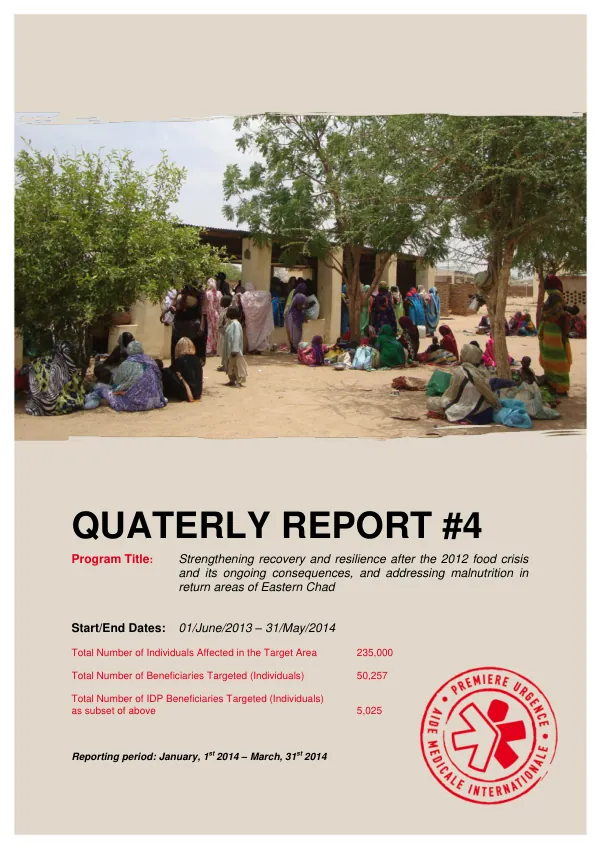
Quarterly Report #4: Strengthening Recovery and Resilience after the 2012 Food Crisis and its Ongoing Consequences, and Addressing Malnutrition in Return Areas of Eastern Chad
Open record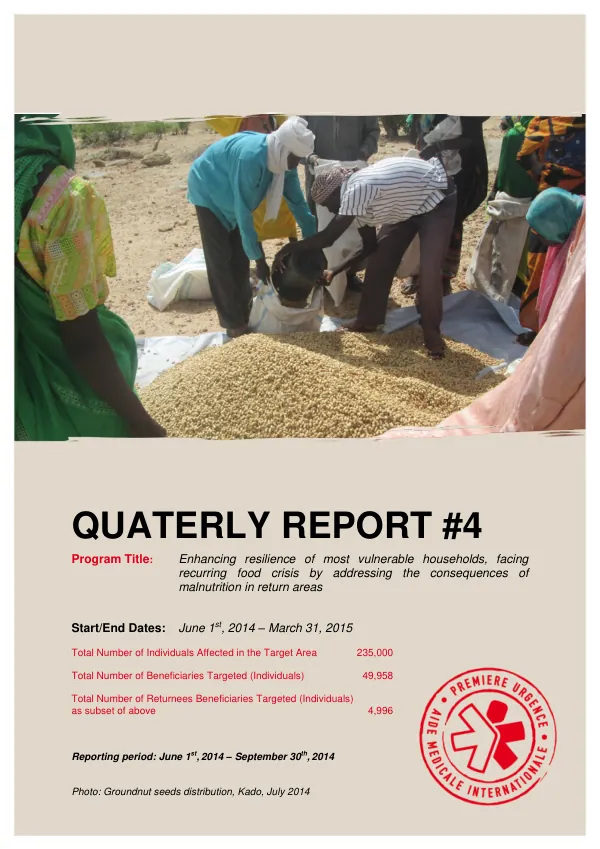 2014
2014USAID DEC
PU-AMI Chad – Quarterly Report n°4 (Fiscal year 2014) / June - September 2014
Open record