USAID DEC
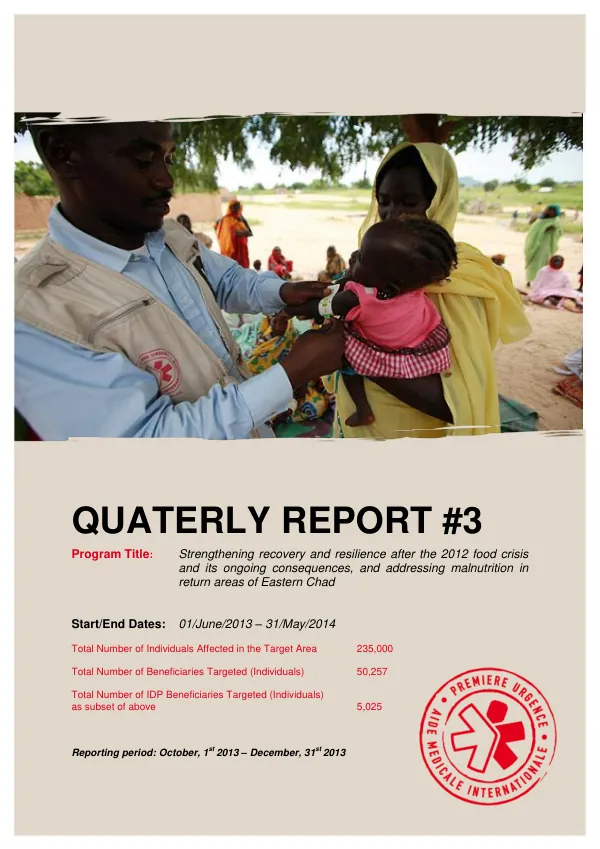
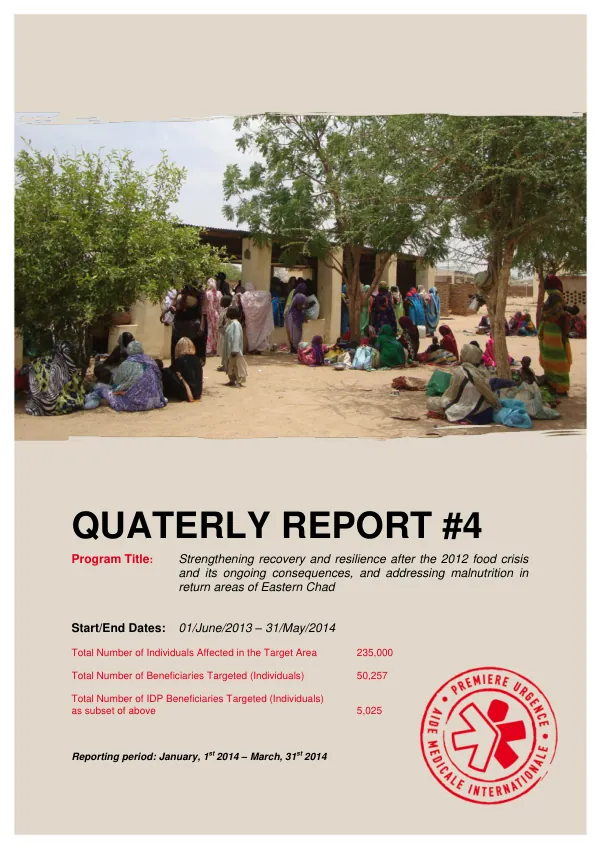
Quarterly Report #4: Strengthening Recovery and Resilience after the 2012 Food Crisis and its Ongoing Consequences, and Addressing Malnutrition in Return Areas of Eastern Chad
Sign inMINISTRY OF PUBLIC HEALTH
Quarterly Report #4: Strengthening Recovery and Resilience after the 2012 Food Crisis and its Ongoing Consequences, and Addressing Malnutrition in Return Areas of Eastern Chad
The agricultural development initiative in Eastern Chad began in June 2013 with funding from USAID's Food Security Program.
2014 · 9 pages
Sign in to readA free account is required to download.
Abstract
The program aimed to help beneficiaries recover from past crises through a reinforcement of household agricultural resources. The geographic area of focus was the Ouaddai Region, specifically the Assoungha Department, Adre Prefecture, and Hadjer-Hadid and Borota Sub-Prefectures. The program's objective was to improve agricultural production and food security, with a focus on seed systems and agricultural inputs. The target population was 27,000 persons, with 4,500 households and 450 returnee households. The program achieved a significant increase in the number of months of food self-sufficiency due to distributed seed systems and agricultural inputs, with a projected increase of 3.8 months. The program also focused on livestock, with a target of 2,922 beneficiaries. However, the actual number of beneficiaries was 3,764, with 3,594 breeders and 170 veterinary auxiliaries. The program also achieved a significant increase in veterinary interventions, with 103,226 treatments and/or vaccinations, exceeding the target of 60,000. In the nutrition sector, the program aimed to contribute to reducing the morbidity and mortality due to malnutrition of children under 5 and pregnant and lactating women. The target population was 23,257 children under 5 years, with 252 patients expected. The program achieved a significant increase in the number of health care providers and volunteers trained in the prevention and management of Severe Acute Malnutrition, with 13 persons trained, exceeding the target of 8. The program also established and rehabilitated one site for inpatient care, exceeding the target of one site. The program treated 88 cases of Severe Acute Malnutrition during the reporting period, with a cumulative total of 500 cases, exceeding the target of 252 cases. The program achieved a high rate of cure, with 93.8% of cases cured during the reporting period. The security situation in the region remained calm during the reporting period, but the close collaboration with authorities and between NGOs facilitated the transmission of information and security management. The program also monitored the tensions in neighboring Darfur, which had increased for the past few months, with recurrent fights between militias. The post-harvest survey conducted in January 2014 showed that the 2013 rainy season was marked by low rainfall, which had a negative impact on grain yields. The survey estimated that a household lost an average amount of one moukhama (0.54 ha) or 123.27 kg of grain production under the effect of water deficit in the area. The results showed a groundnut yield of 0.54 tons per hectare, which was lower than the expected yield of 1.2 tons per hectare. The program's achievements were significant, with a projected increase in the number of months of food self-sufficiency due to distributed seed systems and agricultural inputs, exceeding the target. The program also achieved a significant increase in veterinary interventions, with 103,226 treatments and/or vaccinations, exceeding the target of 60,000. The program's efforts in the nutrition sector also showed significant results, with a high rate of cure and a significant increase in the number of health care providers and volunteers trained in the prevention and management of Severe Acute Malnutrition.