USAID. MISSION TO DOMINICAN REPUBLIC
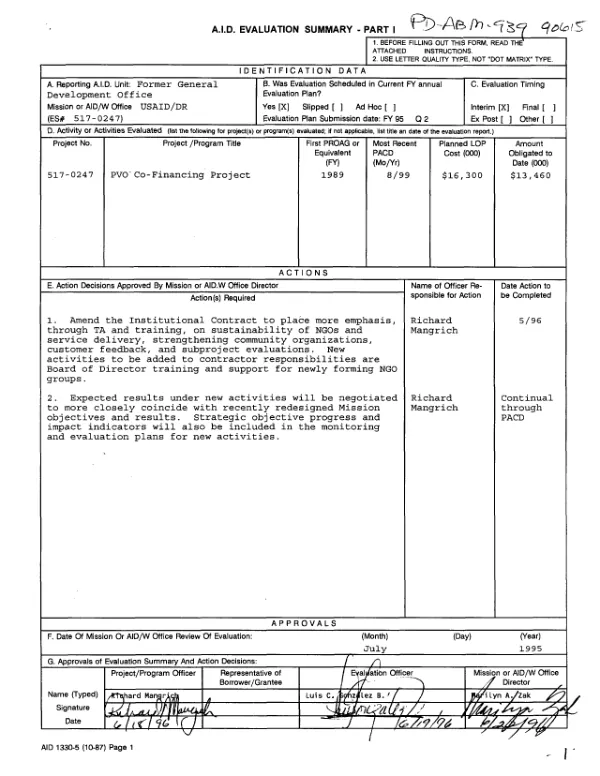
PVO co-financing project
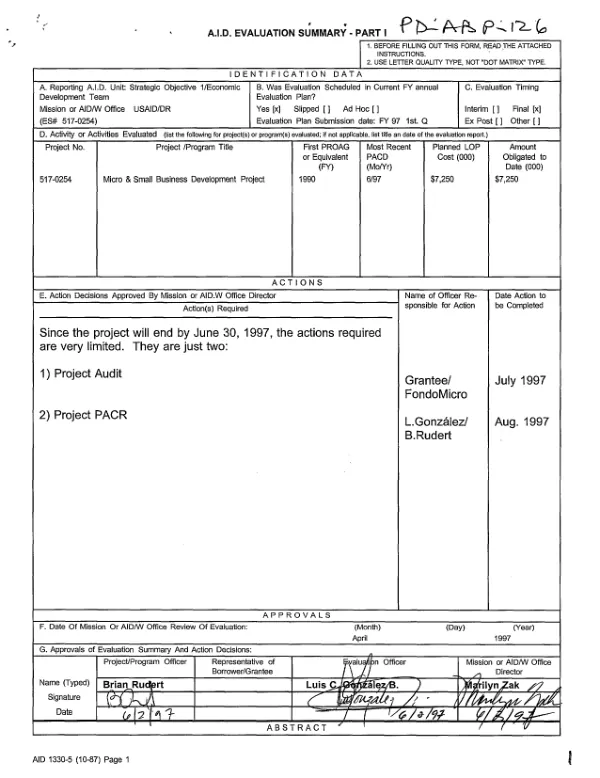
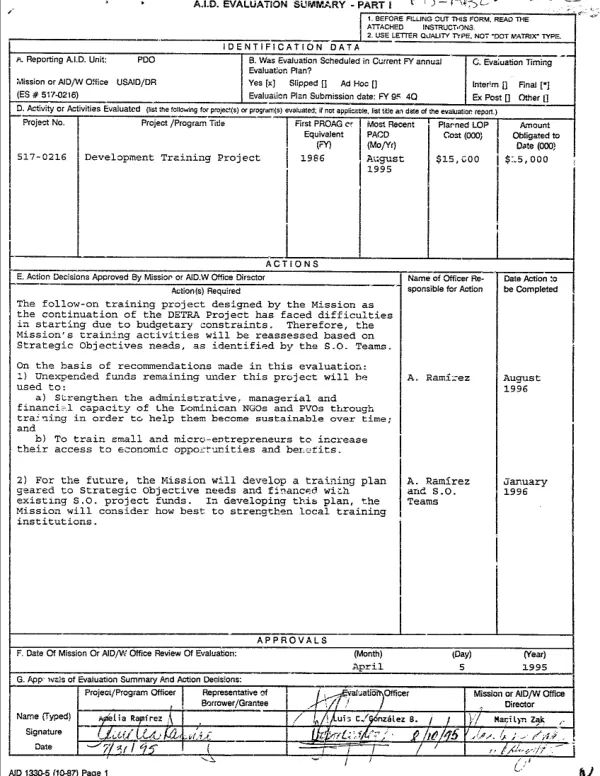
Summarizes mid-term evaluation (PD-ABM-018) of the PVO co-financing project in the Dominican Republic, covering the period 1989-4/95.
1996
Sign in to readA free account is required to download.
Abstract
Lessons learned are presented in this abstract; for the evaluation"s findings see abstract of PD-ABM-018. (1) All NGOs have some deficiencies and thus require some degree of handholding, TA, and training during project design and implementation. (2) Pre-award surveys can be very useful for discovering NGO management deficiencies early, if accompanied by appropriate corrective actions and if the NGOs perceive them as a benefit instead of a threat or another hurdle to obtaining funds. (3) Grant selection procedures should be applied impartially and transparently to generate trust from NGO partners. (4) Most NGOs consider the logframe a useful tool for designing projects and assimilate it readily after some training and TA. (5) Emphasis on sustainability of NGOs and service delivery at both NGO and community levels should begin at the idea stage of projects and continue throughout implementation; it is of paramount importance for success. Following are some criteria and concepts that have worked well in promoting sustainability. (i) Do not approve activities unless the service envisioned is such a priority to beneficiaries that they are willing to contribute their own resources for continuity. (ii) Do not approve projects unless beneficiaries are involved in project design and implementation. (iii) NGOs must diversify their funding base in order to survive. Requiring them to cover at least 50% of costs is an effective, though painful, way to force this issue. Beneficiaries" in-kind contributions should not be counted towards satisfying the NGO"s contribution. (iv) Encourage innovative ideas for income generation as long as they do not detract from the NGO"s main objectives. (v) Local financial resources are available if NGOs market themselves effectively following a clear vision and strategy. (vi) Boards of directors should get more involved in fundraising instead of burdening NGO directors with this difficult task that takes time away from project implementation and obtaining results. (6) "Tough love works." NGOs may scream at first but later appreciate the growth caused by strict grant selection criteria. It gives them a competitive edge and a reputation that "if they could qualify for USAID funds they must be good." (7) Community participation in design, implementation, and decision making is an essential ingredient for success but it takes time. (8) Close and consistent monitoring of subprojects is essential to keep projects moving in the right direction and on schedule. It also shows NGOs that the donor is concerned with obtaining results and that they have a partner who cares. Visiting projects at least once every 2 months has proven very effective, as has submission of field trip reports (with observations, feedback, and recommendations) to NGO directors. This has been very appreciated by NGOs and is an effective way to discover implementation problems and take corrective actions early on. (9) Having "rolling environmental assessments" performed by NGOs using USAID-approved environmental guidelines is an effective way of shifting the burden for designing and implementing environmentally sound projects to NGOs. However, the guidelines must be accompanied with sufficient TA and training in their application and appropriate use. NGOs also require assistance with evaluations. (10) The philosophy of "medio paso atras" (half a step behind) used in this project has helped NGOs to have ownership of their projects, since the initiatives are their own, rather than USAID"s. However, Mission objectives must also be met. Negotiations at the concept stage and selection criteria are effective ways to ensure that Mission objectives are included in subproject design. (11) Project implementation is more effective and expedited considerably by physically locating the project management unit with the institutional contractor.