USAID DEC
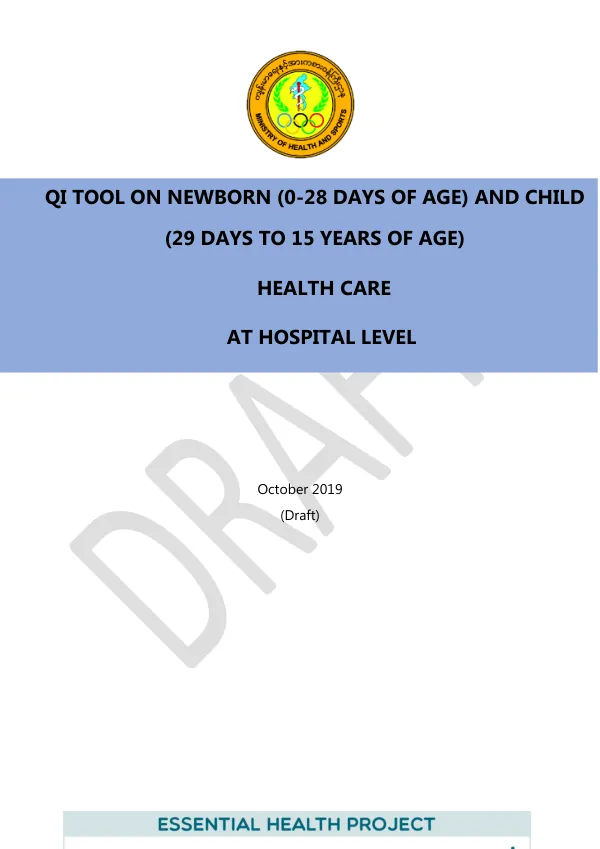
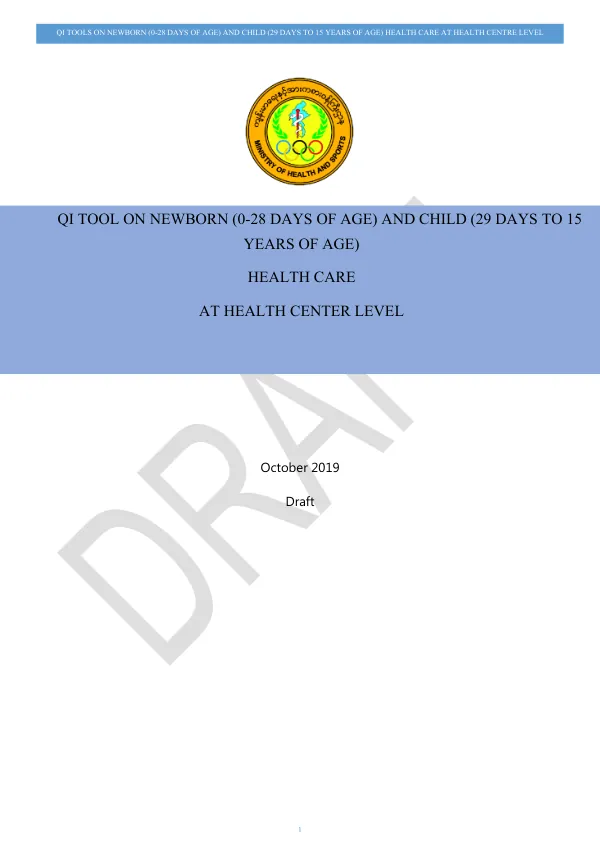
QI Tool on Newborn (0-28 Days of Age) and Child (29 Days to 15 Years of Age) Health Care at Hospital Level
Sign inUSAID
QI Tool on Newborn (0-28 Days of Age) and Child (29 Days to 15 Years of Age) Health Care at Hospital Level
The health facility has a designated area for triage and emergency care.
71 pages
Sign in to readA free account is required to download.
Abstract
This area is specifically designed for the initial assessment and treatment of patients, particularly those with life-threatening conditions. The triage area is equipped with necessary medical equipment and staffed by trained healthcare professionals who can provide immediate care and stabilization of patients. The facility also has a designated ward or area for admitting sick and unstable newborns and children. This ward is equipped with necessary medical equipment and staffed by trained healthcare professionals who can provide specialized care to these patients. The ward is designed to provide a safe and comfortable environment for patients to receive treatment and recover from their illnesses. In addition, the facility has designated areas for Kangaroo Mother Care, rooming-in, and management of child with surgical problems. These areas are designed to provide a safe and comfortable environment for patients to receive specialized care and treatment. The facility has a written protocol or guideline for early essential care of newborns, essential care for small babies, newborn resuscitation, breastfeeding, and safe storage of medicines. These protocols are consistent with national guidelines and are designed to ensure that patients receive high-quality care. The facility has a record review of medical stock for the last six months, which shows that the available drugs are in good condition and have not expired. The facility has a sufficient stock of analgesics, antipyretics, NSAIDs, anti-allergics, and medicines used in anaphylaxis. The facility also has a sufficient stock of medicines for CNS, anti-infective medicines, and blood products and plasma substitutes. The facility has a sufficient stock of dermatological medicines, including creams, ointments, and tablets. The facility also has a sufficient stock of medicines affecting the blood, including folic acid and iron supplements. The facility has a clean and well-maintained environment, with clean running water supply, energy infrastructure, and local buffer stock for all fuel needs. The facility has designated areas for hand washing, toilets, and emergency care. The facility also has a designated area for observation and monitoring of patients. The facility has a sufficient number of beds and adequate space for patients to receive treatment and recover from their illnesses. The facility also has a sufficient number of staff, including doctors, nurses, and other healthcare professionals, to provide high-quality care to patients. The facility has a system for managing and storing medical records, including patient charts, laboratory results, and medication lists. The facility also has a system for tracking and monitoring patient outcomes, including mortality rates, morbidity rates, and patient satisfaction surveys. The facility has a quality improvement program in place, which includes regular audits, quality control measures, and staff training programs. The facility also has a system for reporting and investigating adverse events, including medication errors, surgical complications, and patient complaints. The facility has a system for managing and storing medical supplies, including equipment, instruments, and consumables. The facility also has a system for tracking and monitoring inventory levels, including stock levels, expiration dates, and recall notices. The facility has a system for managing and storing medical waste, including hazardous waste, infectious waste, and non-infectious waste. The facility also has a system for tracking and monitoring waste disposal, including collection, transportation, and disposal methods. The facility has a system for managing and storing medical supplies, including equipment, instruments, and consumables. The facility also has a system for tracking and monitoring inventory levels, including

![Regional Disparities and Determinants of Anemia and Modern Contraceptive Use among Women in Myanmar [FA126]](https://covers.devme.ai/gen/143956.webp)