FHI 360
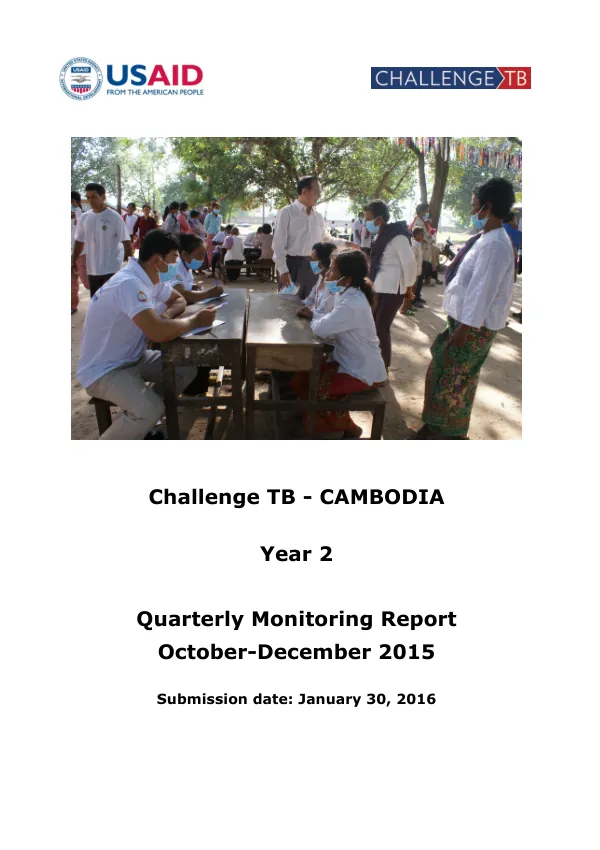
Quarterly Monitoring Report: Challenge TB - CAMBODIA Year 2 October-December 2015
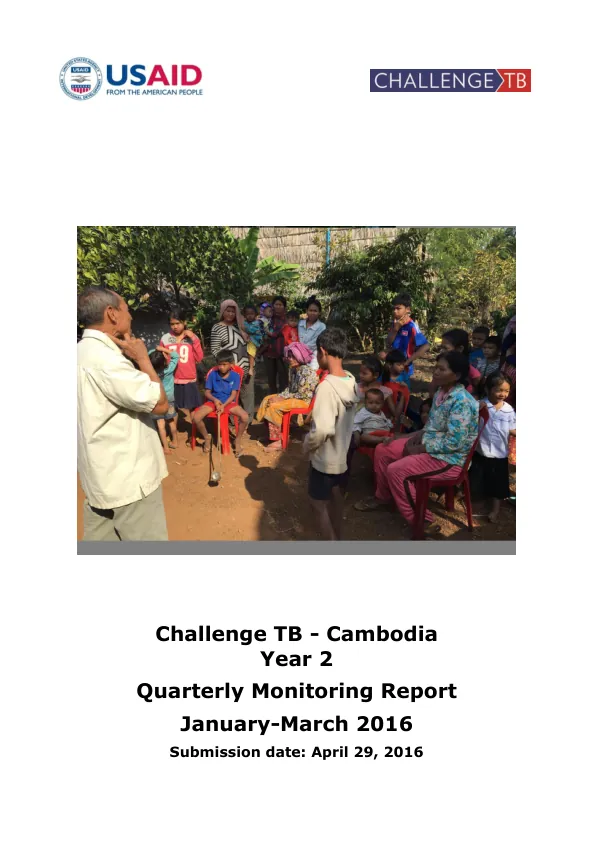
Cambodia's Challenge TB initiative, led by FHI 360, continued to make progress in Year 2, with a focus on improving childhood tuberculosis (TB) diagnosis and treatment, sub-grant development, and hospital engagement.
2016 · 32 pages
Sign in to readA free account is required to download.
Abstract
The initiative received funding from the United States Agency for International Development (USAID) under cooperative agreement number AID-OAA-A-14-00029. A cross-sectional study conducted by Challenge TB and the National Center for Anti-tuberculosis (CENAT) aimed to assess childhood TB diagnosis in referral hospitals and villages across 26 high-case-finding Operational Districts (ODs). The study found that 73% of clinicians could name 5 out of 7 main TB screening criteria for childhood TB, but parent/guardian data suggested that clinicians may have misdiagnosed childhood TB. The study recommended building clinical capacity, improving national guidelines, and expanding data collection instruments to promote evidence-based policy. Challenge TB also developed 14 In-Kind Grants with government counterparts in 14 provinces and two sub-grants with local organizations, Cambodia Anti-Tuberculosis Association (CATA) and Cambodia Health Committee (CHC). Planning meetings were held with Provincial Health Department Directors and staff to inform them about the CTB project and its mechanism of support. A numeration exercise was conducted to identify elderly individuals, defined as age 55 and above, in two ODs, Prey Chhor and Tbong Khmum. The exercise aimed to obtain a more accurate denominator for tracking TB services among elderly people. Approximately 41,311 elderly people were identified, accounting for approximately 10.7% of the total population. Challenge TB also developed two educational posters to instruct presumptive TB patients to collect good quality sputum and to increase knowledge and awareness of TB symptoms among the general population. The posters were pilot tested with CTB team members and will be field tested with the community. In collaboration with CENAT and the Preventive Medicine Department, Challenge TB provided technical assistance to five provincial referral hospitals. The number of TB case notifications increased by each quarter of 2015, with 37,782 clients presenting to outpatient and inpatient departments during the reporting period. Among those, 2,861 presumptive TB patients were identified and referred for diagnosis, of which 661 (25%) were diagnosed with TB. A cough triage strategy was developed and implemented within the five hospitals, and Challenge TB team discussed with Quality of Health Services to include TB symptoms in the triage medical form to remind physicians to screen every patient for TB. Technical and administrative challenges were identified, including local travel over land and development of National TB Laboratory Guidelines, which are still being discussed and not yet implemented.
Related documents