MANAGEMENT SCIENCES FOR HEALTH
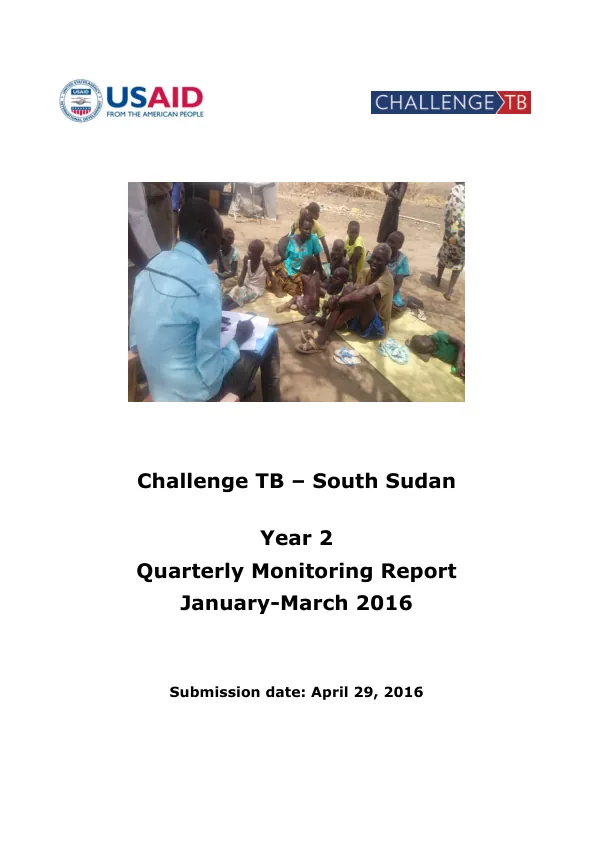
Quarterly Monitoring Report: Challenge TB – South Sudan Year 2 January-March 2016
South Sudan's TB case notification has increased by 26% from the 2014 baseline data, with 51% of TB case notifications contributed by Challenge TB intervention areas.
2016 · 38 pages
Sign in to readA free account is required to download.
Abstract
The case notification has risen from 1,870 cases to 2,573 cases, with 80% of health facilities reporting to the central level, up from 74% in the previous quarter. The Treatment Success Rate has improved from 74% to 82% in the CTB intervention area. Contact investigation has been initiated in Lainya, Yei River, and Morobo counties, with 203 smear-positive index cases identified and received home visits by trained community mobilizers. The contacts were screened using standard tools and forms, and presumptive TB patients were referred for diagnosis. Over 24% of contacts screened were referred for TB microscopy, out of which 8.4% were bacteriologically confirmed with TB through smear microscopy. Provision of services to displaced populations has been enhanced through Challenge TB support, with quality TB services more accessible to displaced populations. An assessment of health services was conducted in Juba Protection of Civilians and Mingkaman internally displaced persons camp to identify unmet needs. Through collaboration with partners and the National TB Program, 45 health care workers were trained on TB diagnosis and case management, and community health workers were trained on TB basics, identifying presumptive cases, referral for diagnosis, and follow-up care for TB patients. Technical and administrative challenges have been identified, including increased violence on the roads restricting movement, high turnover of trained TB community mobilizers, and phase-out of ISDP, the lead implementing partner in CTB intervention areas. Actions to overcome these challenges include maximizing the use of community-based organizations, strengthening community involvement and participation, and training new TB cadres at the health facility level.