ABT ASSOCIATES
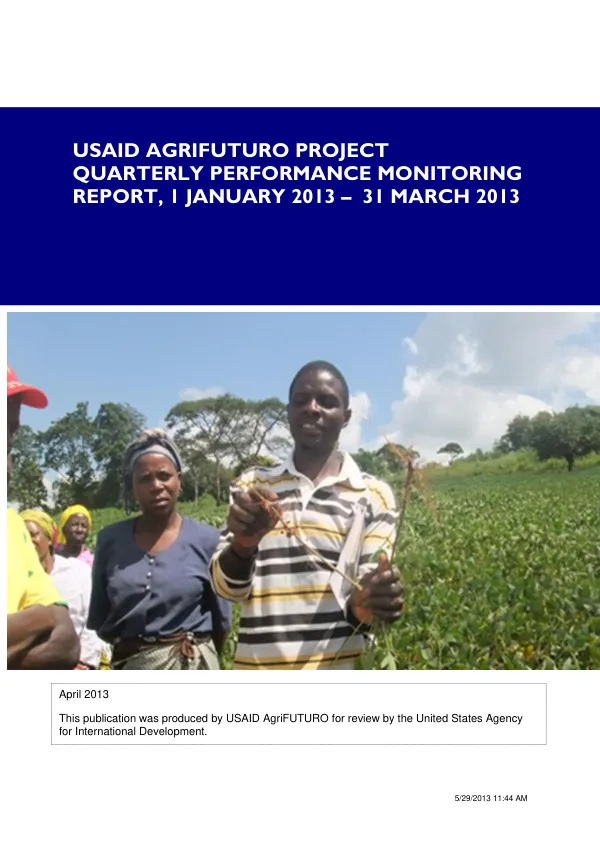
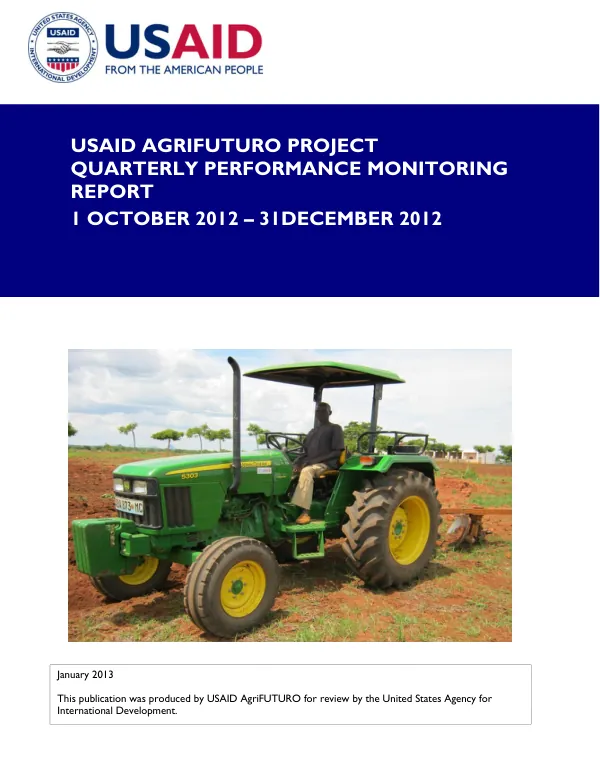
Quarterly Performance Monitoring Report: October 2012 – December 2012
The AgriFUTURO Program is a four-year initiative aimed at strengthening selected agricultural value chains in Mozambique.
2012 · 38 pages
Sign in to readA free account is required to download.
Abstract
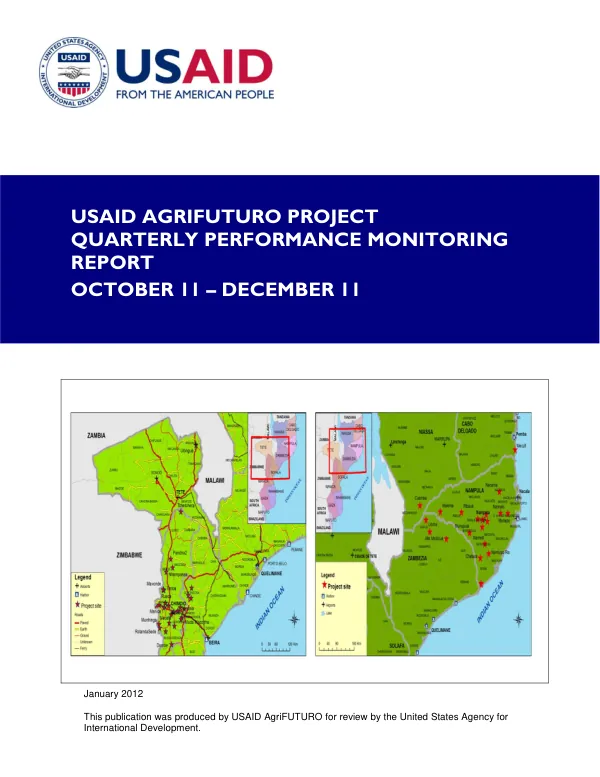
The program focuses on pulses, fruits and nuts, and oil seeds, with a primary objective of increasing the competitiveness of Mozambique's private agribusiness sector. The project includes four major components: improving the enabling environment for agribusiness, expanding and strengthening agribusiness development services, building linkages to financing services for agribusiness development, and increasing and strengthening public-private partnerships. The geographic focus of the program is on the Nacala and Beira corridors, with a total of 24 districts in Nampula and Zambezia provinces. The program aims to benefit 133,500 household families and generate 26,771 jobs during its lifespan. The AgriFUTURO Project uses an emerging farmer approach, with smaller units arrayed around a central hub operation in Agribusiness Service Clusters (ASCs) and Farmer Owned Service Centers (FOSCs). The program's objectives are to increase the competitiveness of Mozambique's private agribusiness sector through the development of competitive agricultural value chains. The project includes four major components: improving the enabling environment for agribusiness, expanding and strengthening agribusiness development services, building linkages to financing services for agribusiness development, and increasing and strengthening public-private partnerships. The AgriFUTURO Program has made significant progress in its implementation period, which spanned from May 1, 2009, to February 28, 2013. The program received $19,349,006 in funding during this period. The program's achievements include the establishment of ASCs and FOSCs, the provision of training and technical assistance to farmers, and the development of business plans and mobilization of finance. The program has also made progress in the development of value chains, including soybeans, groundnuts, sesame, and fruits and nuts. The program has established partnerships with various stakeholders, including the Government of Mozambique, private sector companies, and civil society organizations. The program has also provided support to emerging farmers, including training and technical assistance, and has helped to increase their access to inputs, capital, credit, markets, and know-how. The program's performance indicators show that it has made significant progress in achieving its objectives. The program has increased the competitiveness of Mozambique's private agribusiness sector, improved the enabling environment for agribusiness, and expanded and strengthened agribusiness development services. The program has also built linkages to financing services for agribusiness development and increased and strengthened public-private partnerships. The program's achievements are a result of the collaborative efforts of various stakeholders, including the Government of Mozambique, private sector companies, civil society organizations, and the project team. The program's success has demonstrated the potential of public-private partnerships in promoting agricultural development and improving the livelihoods of smallholder farmers in Mozambique. The AgriFUTURO Program has also identified several major implementation issues and lessons learned during its implementation period. These include the need for better coordination and communication among stakeholders, the importance of building strong partnerships with local organizations, and the need for more effective monitoring and evaluation systems. The program's achievements and lessons learned have important implications for future agricultural development initiatives in Mozambique. The program's success demonstrates the potential of public-private partnerships in promoting agricultural development and improving the livelihoods of smallholder farmers. The program's lessons learned highlight the importance of building strong partnerships with local organizations, improving coordination and communication among stakeholders, and developing more effective monitoring and evaluation systems.
Related documents