FHI360
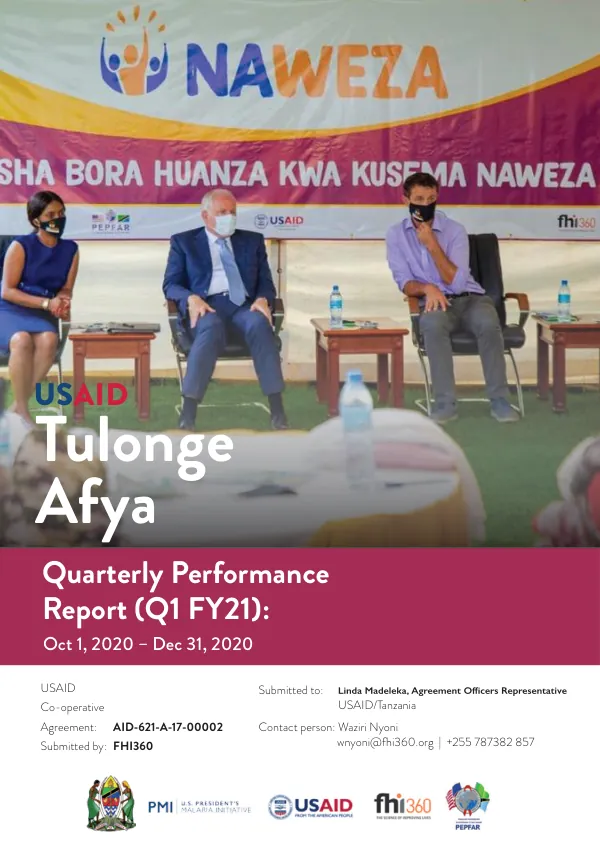
Quarterly Performance Report (Q1 FY21): Tulonge Afya
The USAID Co-operative Agreement AID-621-A-17-00002, submitted by FHI360, supports the Tulonge Afya project in Tanzania.
2021 · 62 pages
Sign in to readA free account is required to download.
Abstract
The project aims to improve the health and well-being of Tanzanians, particularly in the areas of HIV/AIDS, family planning, and malaria prevention. The project focuses on three key result areas: improving the ability of individuals to practice healthy behaviors, strengthening community support for healthy behaviors, and improving systems for coordination and implementation of SBC interventions. The project has made significant progress in the first quarter of FY21, with a total of 2,500 community health workers (CHWs) and community volunteers (CVs) trained to support community activities. The project has also reached a total of 1.3 million individuals through mass media, including radio and social media platforms. In addition, the project has trained 150 radio presenters to promote healthy behaviors and has installed 500 signboards and billboards across priority regions. The project has also made progress in the area of HIV/AIDS prevention, with a total of 10,000 individuals reached through community SBC activities. The project has also implemented a behavioral surveillance approach to guide routine SBC quality improvement in Enhanced Districts. Furthermore, the project has strengthened the capacity of local SBC interventions and promoted learning from best practices. The project has also made significant progress in the area of family planning, with a total of 5,000 individuals reached through community SBC activities. The project has also implemented a community-level grant program in 29 Enhanced Districts, which aims to improve access to family planning services. In addition, the project has strengthened the capacity of local SBC interventions and promoted learning from best practices. The project has also made significant progress in the area of digital health, with a total of 100,000 individuals accessing health information through the Elimu ya Afya digital platform in Q1. The project has also implemented a mobile health strategy to support project implementation and has digitalized NAWEZA, SITETEREKI, and FURAHA YANGU messages and materials. The project has also made significant progress in the area of community engagement, with a total of 500 community leaders trained to promote healthy behaviors. The project has also implemented a community-level grant program in 29 Enhanced Districts, which aims to improve access to health services. In addition, the project has strengthened the capacity of local SBC interventions and promoted learning from best practices. The project has also made significant progress in the area of institutional capacity, with a total of 100 institutions strengthened to design, implement, and sustain needs-based SBC interventions. The project has also implemented a technical SBC capacity strengthening program to support project implementation and has strengthened the capacity of local SBC interventions and promoted learning from best practices. Overall, the Tulonge Afya project has made significant progress in the first quarter of FY21, with a total of 2.5 million individuals reached through various project activities. The project has also strengthened the capacity of local SBC interventions and promoted learning from best practices.
Related documents