DAI GLOBAL, LLC
Quarterly Progress Report 1: June – September 2016
The IUWASH PLUS program is a collaborative effort between USAID, DAI Global LLC, and local stakeholders to improve water sanitation and hygiene in Indonesia.
2016 · 38 pages
Sign in to readA free account is required to download.
Abstract
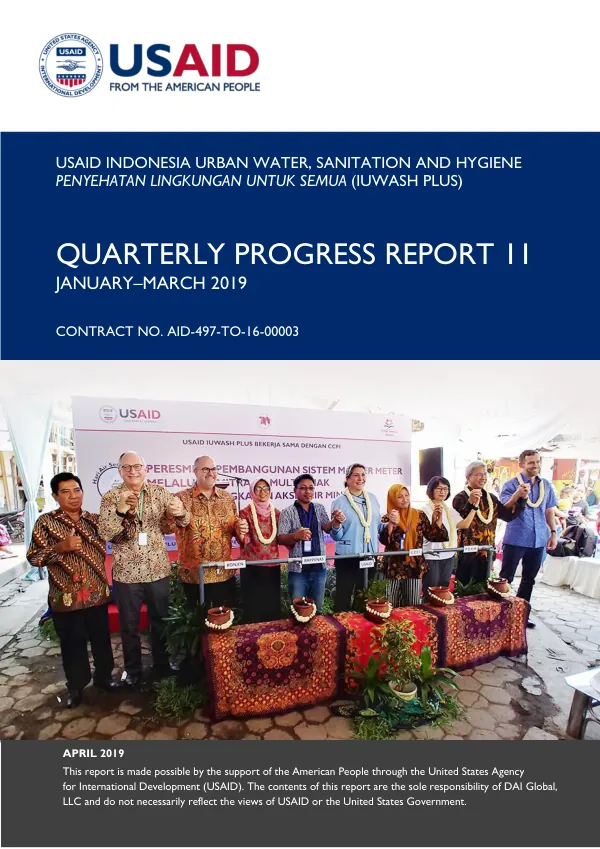
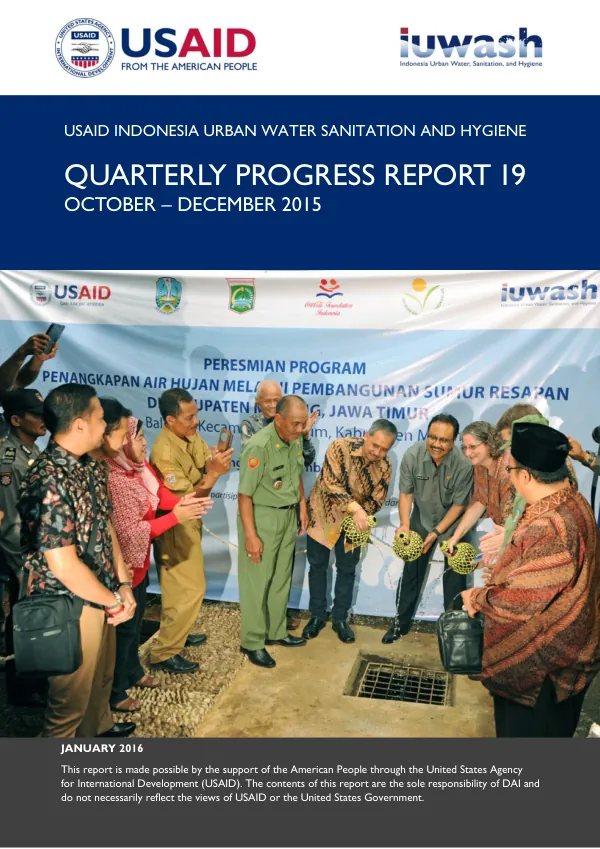
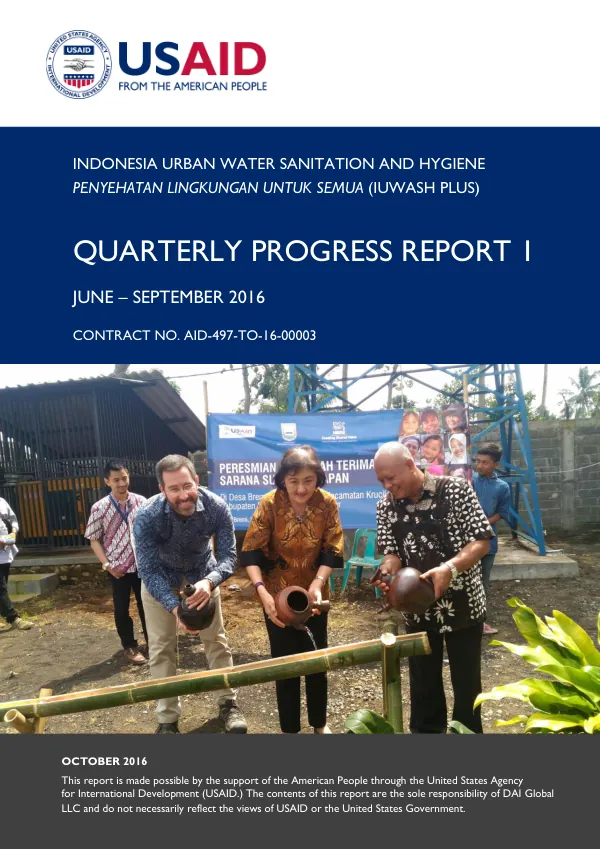
The program focuses on replenishing water to nature through the development of infiltration ponds in high-yielding milk production areas. The objective of the program is to recharge aquifers that feed into local springs, which are critical sources of raw water for dairy farmers. The program was established in two villages, Bermi and Krucil, in Probolinggo district, where Nestlé Indonesia has a significant presence. The program aimed to help recharge the aquifers that feed into five local springs, which are essential for supporting the livelihood of dairy farmers. To achieve this goal, 100 infiltration ponds were developed in the two villages. The ponds were designed to be simple and affordable, allowing communities to protect themselves from water shortages caused by climate change and rapid urbanization. The program was marked by a series of activities, including a result dissemination workshop, tree-planting activities, and an inauguration event. The inauguration event was attended by local government representatives, Nestlé Indonesia officials, and community members. The event was marked by the signing of a plaque and the planting of trees to protect the raw water source. The program was seen as an innovative effort to enhance water availability for the people of Probolinggo district, which is still heavily dependent on farming activities, including dairy farming. The Deputy Mission Director of USAID Indonesia, Patrick Wilson, highlighted the importance of maintaining the infiltration ponds to ensure water security for families and the community. He emphasized the need for a strong commitment from the community to maintain the ponds and ensure that children have access to clean water. The program was seen as a continuation of USAID Indonesia's support for the Government of Indonesia in the WASH sector, with the launch of a new WASH program called IUWASH PLUS. The program's progress was documented in a quarterly progress report, which provided an overview of the program's achievements and challenges. The report highlighted the program's success in mobilizing stakeholders and implementing quick start activities. The program's site selection process was also documented, which involved identifying hotspot areas and selecting sites for infiltration pond development. The report provided an update on the program's progress and highlighted the need for continued support to achieve the program's objectives.
Related documents