DAI GLOBAL, LLC
Quarterly Progress Report
USAID Biodiversity is a USD 32.9 million initiative with an effective contract date of November 4, 2022, to November 3, 2025, with option years extending the program to November 3, 2027.
2023 · 35 pages
Sign in to readA free account is required to download.
Abstract
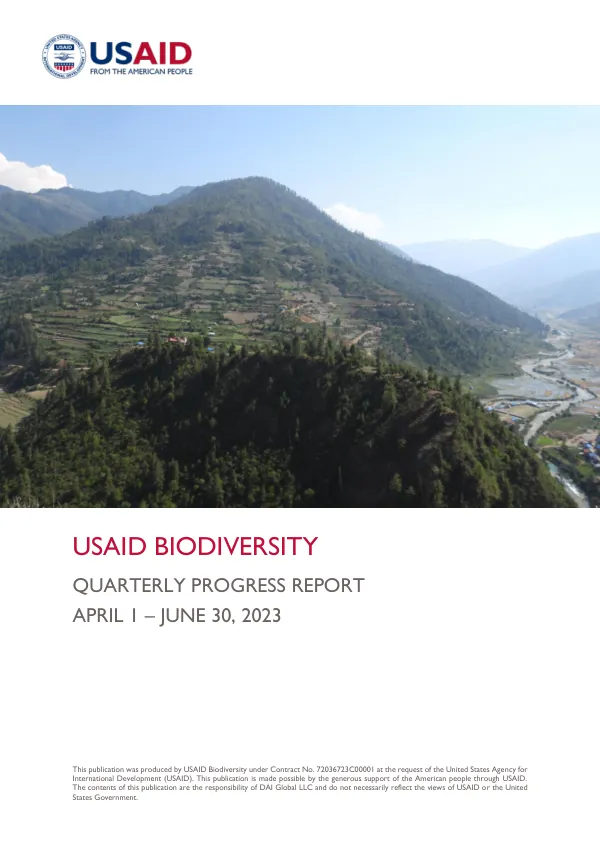
The primary purpose of USAID Biodiversity is to reduce multiple threats to ecosystems and wildlife species, enhance human well-being, and safeguard the future. The activity will be implemented in four landscapes: Chitwan Annapurna Conservation Landscape (CHAL), Terai Arc Landscape (TAL), Kailash Sacred Landscape (KSL), and the proposed Karnali Conservation Landscape (KCL). The activity will focus on three mutually interrelated objectives: improving the health of ecosystems, strengthening environmental crime control and natural resource safeguards, and enhancing the climate resilience of natural and human ecosystems. USAID Biodiversity will implement activities in these landscapes, with the primary office located in Kathmandu and field offices in Dhangadhi, Pokhara, and satellite offices in high mountain areas. Key technical activities in Q2 included convening a Project Steering Committee (PSC) and Project Working Group (PWG), facilitating co-design workshops and landscape work plans, and awarding ACTION FUND grants. The PSC and PWG were formed through a decision made by the Secretary of the Ministry of Forests and Environment on June 22, 2023. The PWG consisted of 20 members, co-chaired by the Director Generals of the Department of National Parks and Wildlife Conservation and the Department of Forests and Soils Conservation. The landscape team prepared a list of participants and created an event proposal, including the event's budget, for sub-national or provincial-level co-design workshops in Q3. The team also submitted the Annual Program Statement for review and awarded grants in Q4. Cross-cutting activities included submitting a GESI Analysis Report and GESI Action Plan, finalizing the GESI Action Plan, and incorporating activities into Y4 work planning. The activity also focused on foundational tasks, including convening the Project Steering Committee and facilitating co-design workshops and landscape work plans. The team completed preparatory work for sub-national or provincial-level co-design workshops in Q3 and organized co-design workshops in Q4. The team also submitted the Environmental Mitigation and Monitoring Plan (EMMP) for the Year 1 Annual Work Plan (AWP) activity. USAID Biodiversity engaged in stakeholder engagements to explore potential collaboration opportunities and understand local priorities and needs. The team also conducted two Multi-Stakeholders' Workshops in Annapurna and Rupa Rural Municipality on June 27 and 28, 2023. These events were coordinated with local governments to secure their support and align with their priorities. The activity also focused on improving the health of ecosystems, strengthening environmental crime control and natural resource safeguards, and enhancing the climate resilience of natural and human ecosystems. The team implemented activities in these landscapes, with the primary office located in Kathmandu and field offices in Dhangadhi, Pokhara, and satellite offices in high mountain areas. The activity will be implemented in four landscapes: Chitwan Annapurna Conservation Landscape (CHAL), Terai Arc Landscape (TAL), Kailash Sacred Landscape (KSL), and the proposed Karnali Conservation Landscape (KCL). The primary purpose of USAID Biodiversity is to reduce multiple threats to ecosystems and wildlife species, enhance human well-being, and safeguard the future.