DAI GLOBAL, LLC
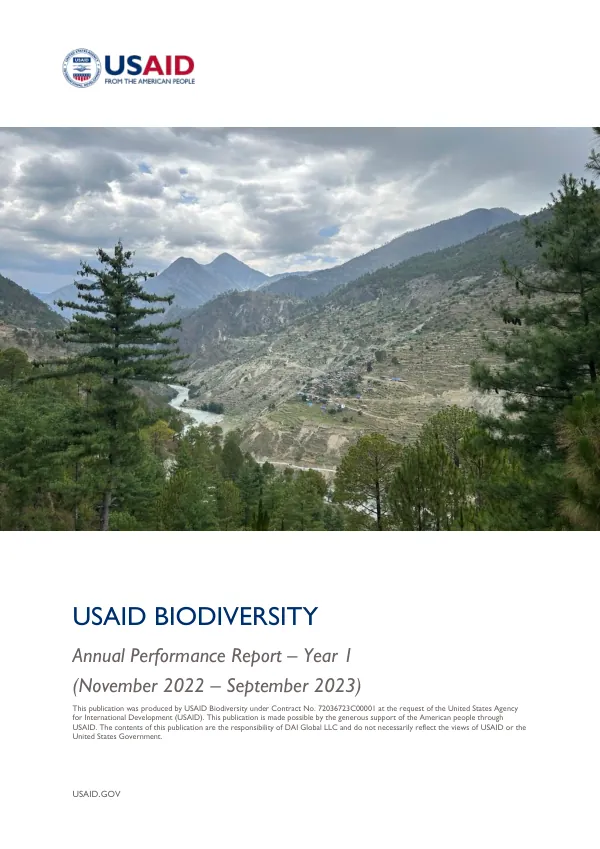
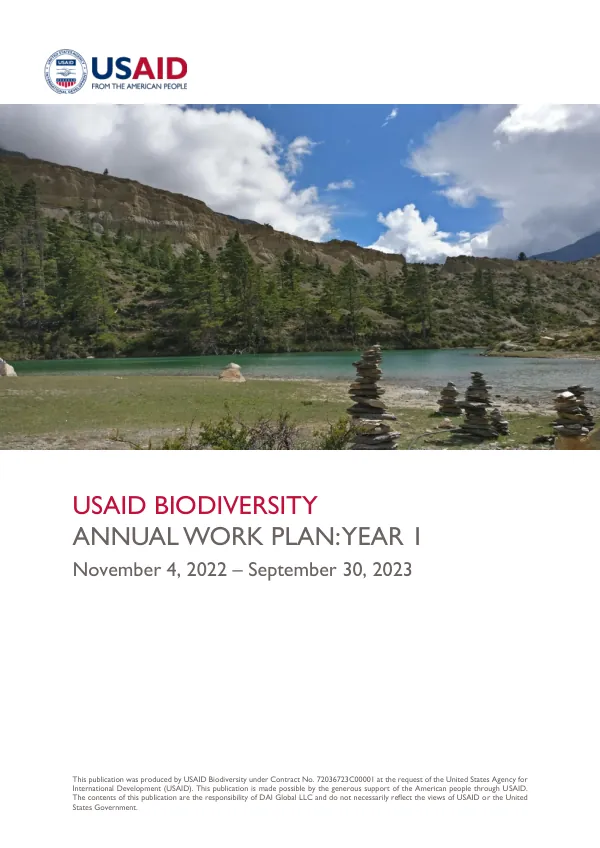
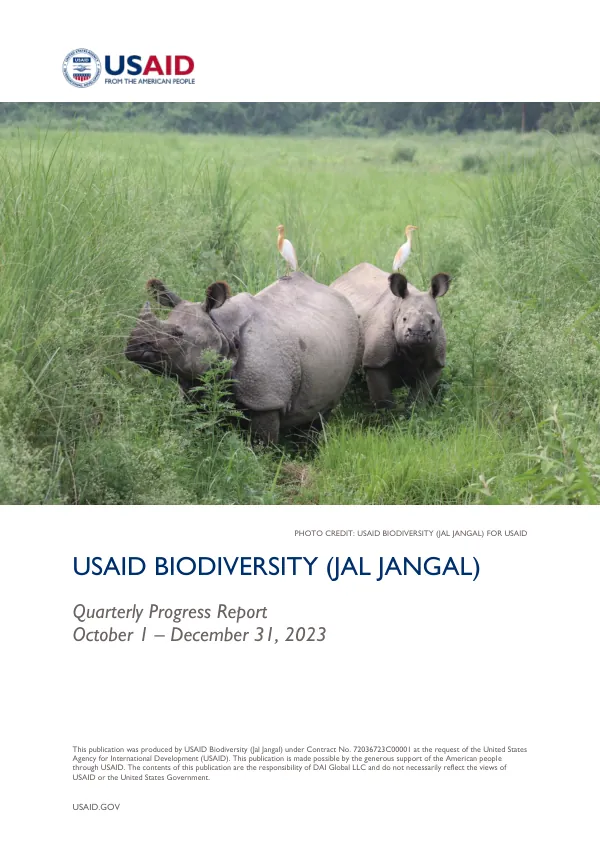
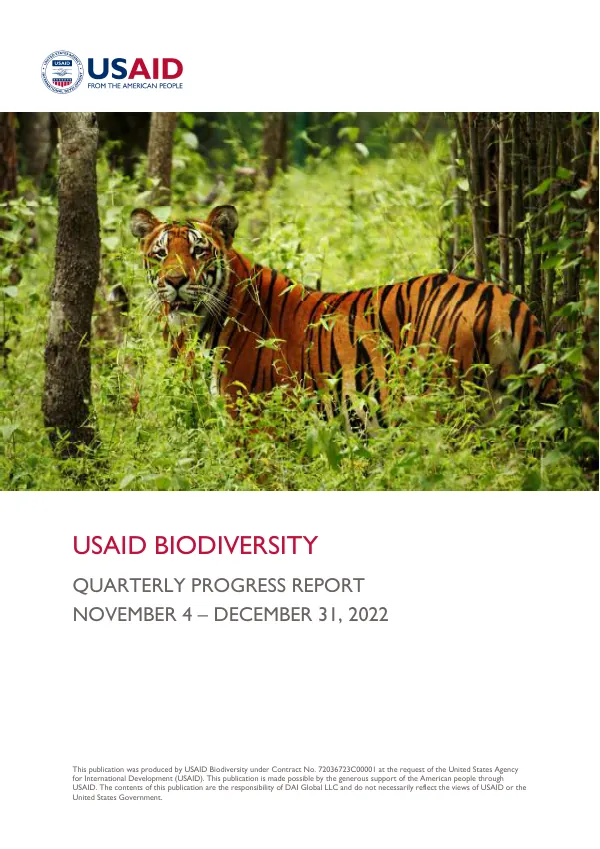
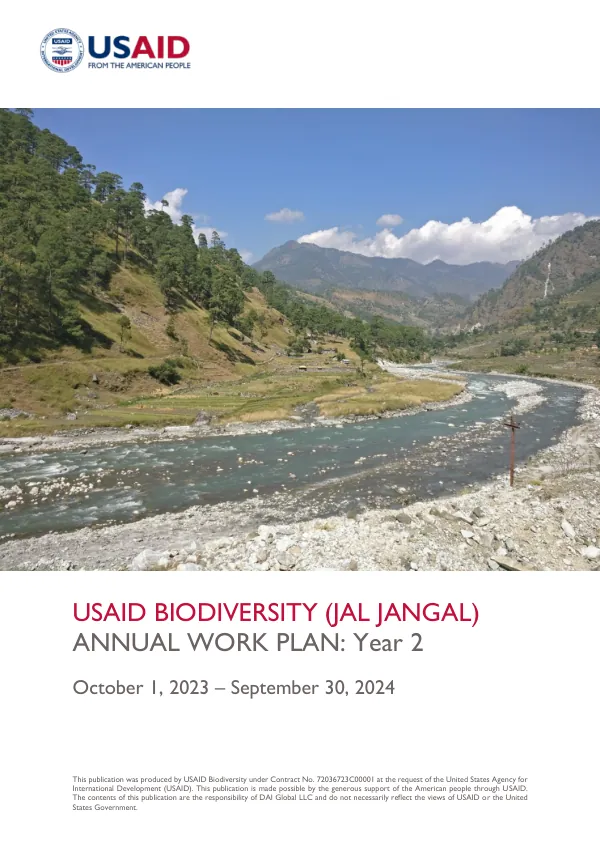
USAID Biodiversity (Jal Jangal) Annual Work Plan: Year 2
The USAID Biodiversity program in Nepal aims to improve the health of ecosystems in targeted landscapes, strengthen environmental crime control and natural resource safeguards, and enhance the climate resilience of natural and human ecosystems.
2023 · 82 pages
Sign in to readA free account is required to download.
Abstract
The program will achieve this through a four-pronged approach: Partner, Empower; Integrate, and Innovate. This approach will involve partnering with local counterparts to lead design, implementation, and learning, empowering women, vulnerable groups, and traditionally overlooked communities in decision-making, integrating across landscapes, government units, and stakeholders, and innovating through evidence-based decision-making and piloting and scaling conservation technologies. The program will focus on four priority landscapes: the Chitwan-Annapurna Landscape, the Kailash Sacred Landscape, the Terai Arc Landscape, and the proposed Karnali Conservation Landscape. The program will implement activities to reduce threats to biodiversity, conserve nature, enhance human well-being, and safeguard the future. The program will achieve measurable targets within biodiversity-rich ecosystems in and around the Government of Nepal demarcated landscapes. The program will implement activities aligned with three mutually interrelated objectives: improving the health of ecosystems, strengthening environmental crime control and natural resource safeguards, and enhancing the climate resilience of natural and human ecosystems. The program will reduce multiple threats to ecosystem and wildlife species, conserve nature, enhance human well-being, and safeguard the future. The program will achieve this through a range of activities, including: * Implementing sustainable agriculture practices to reduce deforestation and habitat fragmentation * Strengthening community-led conservation efforts to conserve biodiversity and ecosystem services * Enhancing the capacity of provincial and municipal governments to manage natural resources sustainably * Supporting the development of climate-resilient infrastructure and green infrastructure * Promoting sustainable land-use planning and management practices * Enhancing the resilience of human ecosystems to climate change The program will also focus on empowering women, vulnerable groups, and traditionally overlooked communities in decision-making, and integrating across landscapes, government units, and stakeholders. The program will innovate through evidence-based decision-making, piloting and scaling conservation technologies, and promoting sustainable land-use planning and management practices. The program will be implemented by DAI Global, LLC, with an effective contract of $32.9 million, from November 4, 2022, to November 3, 2025, with option years extending the program to November 3, 2028. The program will be implemented in collaboration with local counterparts, including government agencies, community groups, and private sector organizations. The program will achieve its objectives through a range of indicators, including: * Improved health of ecosystems in targeted landscapes * Strengthened environmental crime control and natural resource safeguards * Enhanced climate resilience of natural and human ecosystems * Reduced threats to biodiversity and ecosystem services * Conserved nature and enhanced human well-being * Safeguarded the future The program will be monitored and evaluated through a range of indicators, including: * Progress towards achieving program objectives * Impact on biodiversity and ecosystem services * Effectiveness of program activities * Efficiency of program implementation * Sustainability of program outcomes The program will also be evaluated through a range of assessments, including: * Mid-term evaluation * Final evaluation * Impact assessment * Sustainability assessment The program will also provide a range of benefits to the Government of Nepal, including: * Improved capacity to manage natural resources sustainably * Enhanced resilience to climate change The program will also provide a range of benefits to local communities, including: * Improved livelihoods and livelihood security * Enhanced access to natural resources and ecosystem services * Improved health and well-being * Reduced poverty and inequality The program will also provide a range of benefits to the private sector, including: * Improved access to natural resources and ecosystem services * Enhanced opportunities for sustainable business development * Improved reputation and brand reputation * Enhanced competitiveness and market competitiveness * Improved access to new markets and customers. The program will also provide a range of benefits to the environment, including: * Enhanced
Related documents