USAID DEC
Pastoralism in Transition: Evolving Economic and Social Dynamics in South-Western Central African Republic
Sign inTETRA TECH
Pastoralism in Transition: Evolving Economic and Social Dynamics in South-Western Central African Republic
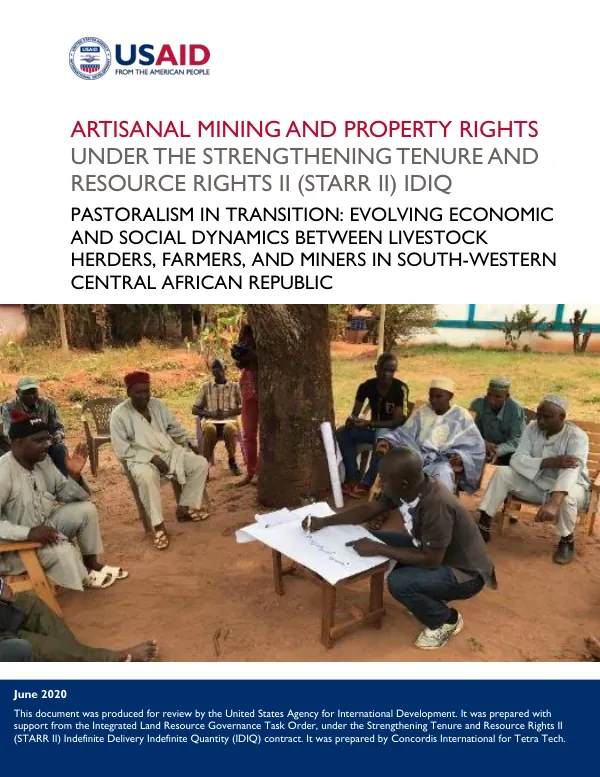
Pastoralism in Transition: Evolving Economic and Social Dynamics Between Livestock Herders, Farmers, and Miners in South-Western Central African Republic The research objectives of this study were to examine the evolving economic and social dynamics between livestock herders, farmers, and miners in south-western Central African Republic.
2020 · 61 pages
Sign in to readA free account is required to download.
Abstract
The study aimed to identify the challenges faced by herders, their role in the diamond trade, and the communication networks that facilitate peaceful relations between different groups. Livestock ownership and herding patterns in the region are characterized by a mix of semi-settled and transhumant pastoralists. Semi-settled groups, such as the M'Baka and the Gbaya, have a more sedentary lifestyle, while transhumant pastoralists, such as the Fulani and the Hausa, migrate seasonally with their livestock. The ethnic origins of pastoralist groups in the region are diverse, with some groups having a long history of pastoralism, while others have adopted it more recently. Pastoralist transhumance routes in the region are complex and often overlap with those of farmers and miners. Female transhumants play a crucial role in the herding process, often taking on responsibilities such as milking, feeding, and caring for young animals. However, they also face unique challenges, including limited access to education and economic opportunities. The current challenges faced by herders in the region are numerous and varied. Attacks by armed groups, cattle rustling, illegal taxation, and occupation of returnees' homes by the settled population are all significant concerns. Herders also face challenges related to livestock health, access to technical services, crop damage from livestock, economic shocks, poor communication with settled communities, and unclear taxation rules. Despite these challenges, some herders have found ways to engage in the diamond trade, which has become a significant economic activity in the region. However, this trade is often characterized by hostile or predatory relationships between different groups, including herders, farmers, and miners. Examples of communication networks working well in the region include the Ardo in Beya and the FNEC representative in Carnot. These networks have facilitated peaceful relations between different groups and have helped to resolve conflicts related to land use and resource management. The study highlights the need for improved communication and cooperation between different groups in the region. It also emphasizes the importance of addressing the challenges faced by herders, including attacks by armed groups, cattle rustling, and illegal taxation. By promoting peaceful relations and addressing these challenges, it may be possible to reduce conflict and improve economic opportunities for all groups in the region. The research methodology used in this study included a combination of quantitative and qualitative data collection methods. The study team conducted surveys and interviews with herders, farmers, and miners in the region, as well as with local authorities and community leaders. The study also used participatory mapping to identify traditional and clandestine transhumance routes. The study's findings have significant implications for policymakers and practitioners working in the region. They highlight the need for a more nuanced understanding of the complex relationships between different groups in the region and the challenges they face. The study also emphasizes the importance of addressing these challenges through improved communication and cooperation between different groups.