CARE
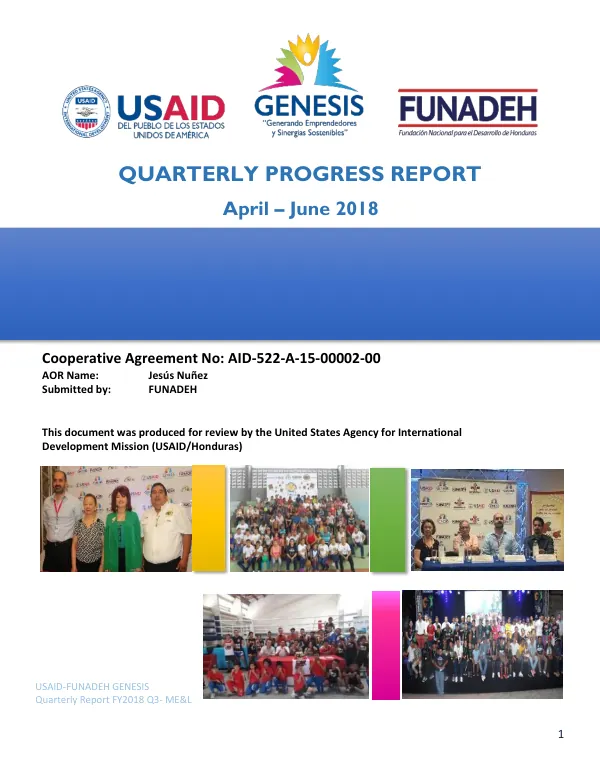
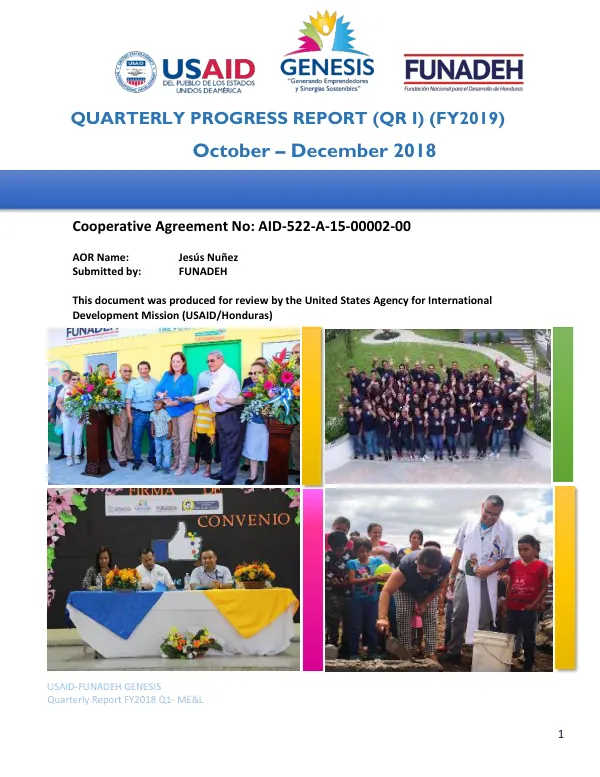
Quarterly Progress Report (QR I) (FY2019)
The agricultural development initiative in Honduras, known as USAID-FUNADEH GENESIS, aims to increase protective factors for at-risk youth and former gang members in selected municipalities.
2019 · 74 pages
Sign in to readA free account is required to download.
Abstract
The program also aimed to increase income generation opportunities for at-risk youth and former gang members through capacity building and mentorship. The program's institutional capacities were strengthened through standardization and consolidation of organizational processes. FUNADEH's leadership was enhanced, and the organization improved its adoption and implementation of ISO and PMO standards. The program's monitoring and evaluation plan was also implemented, with results showing progress towards the program's objectives. The program collaborated with other USAID and USG implementing partners, including the Honduran government, to achieve its objectives. Challenges were overcome through a mitigation plan, and the program's earned value analysis showed progress towards its goals. The program's next steps planning for January to March 2019 included continued implementation of the program's interventions and monitoring of progress towards the program's objectives. The program's results were reported in the quarterly report, which included data on the program's performance, challenges, and mitigation plan. The report also included a table index and figures index, which provided additional information on the program's progress. The program's acronyms and abbreviations were also listed in the report, providing a reference for readers. The program's geographic focus was on selected municipalities in Honduras, and the program's context was the country's agricultural sector and the challenges faced by at-risk youth and former gang members. The program's timeframes were from 2018 to 2020, and the program's recommendations were based on the results of the program's interventions and monitoring and evaluation activities.
Related documents