UNFPA
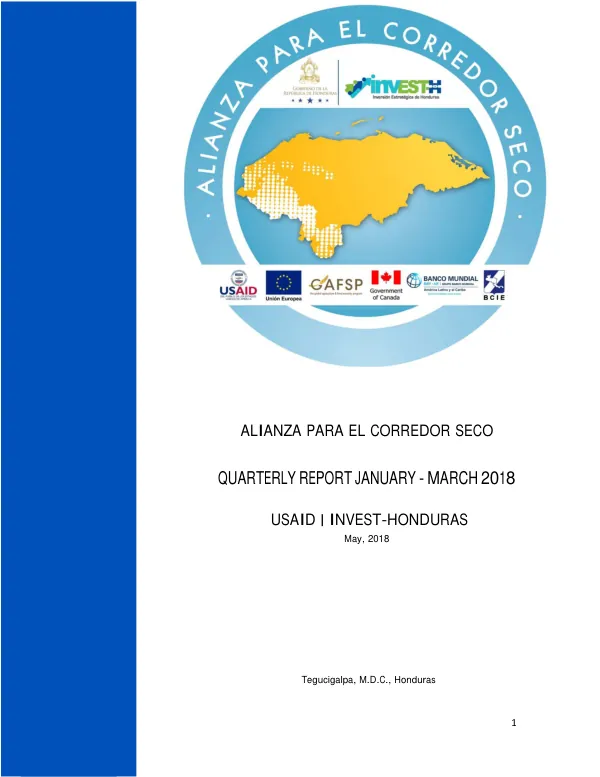
Quarterly Report: January - March 2018
The Alliance for the Dry Corridor Activity (ACS-USAID) is a five-year initiative implemented by Inversión Estratégica de Honduras (INVEST-H) in partnership with the United States Agency for International Development (USAID).
2018 · 90 pages
Sign in to readA free account is required to download.
Abstract
The activity aims to improve agricultural productivity, access to markets, and nutritional status, particularly for women and children, in the Dry Corridor region of Honduras. The activity began on January 9, 2014, and is scheduled to conclude on December 31, 2020. The primary objective of the initiative is to increase inclusive agricultural sector growth, improve nutritional status, and enhance access to markets for smallholder farmers in the Dry Corridor. The activity focuses on three main components: access to production, health, and nutrition; micro watersheds management and conservation; and rural roads. The access to production, health, and nutrition component aims to increase agricultural productivity, improve access to markets, and enhance nutritional status. This component includes enrollment of farmers in training programs, provision of inputs, and facilitation of market linkages. The micro watersheds management and conservation component focuses on improving water management practices and conserving natural resources. The rural roads component aims to improve access to markets and services for rural communities. The activity has made significant progress in achieving its objectives. Enrollment of farmers in training programs has been successful, with over 2,500 farmers receiving training in sustainable agriculture techniques. The activity has also established linkages with other partner entities, including the ACS-GAFSP (World Bank), ACS-COMRURAL Rural Competitiveness Project, ACS-Credit Access for farmers (ACA), and ACS-UNFPA-Teenagers pregnancy prevention project. Coordination with other USAID-funded activities in the ZOI has also been established. The activity has also made progress in addressing cross-cutting issues, including gender, environmental-natural resource management, and climate change. The activity has implemented a gender strategy to ensure that women and men have equal opportunities to participate in and benefit from the activity. The activity has also implemented environmental management and mitigation plans to minimize its impact on the environment. Financial information for the quarter indicates that the activity has made significant progress in achieving its financial objectives. The activity has also made progress in branding, communications, and dissemination, with a strong focus on sustainability and exit strategy. The activity has also established a system for tracking indicators, including enrollment, training, and market access. The activity has also established a system for monitoring and evaluating its progress, including quarterly reports and annual evaluations. Overall, the Alliance for the Dry Corridor Activity has made significant progress in achieving its objectives, with a strong focus on improving agricultural productivity, access to markets, and nutritional status in the Dry Corridor region of Honduras.
Related documents