CARE
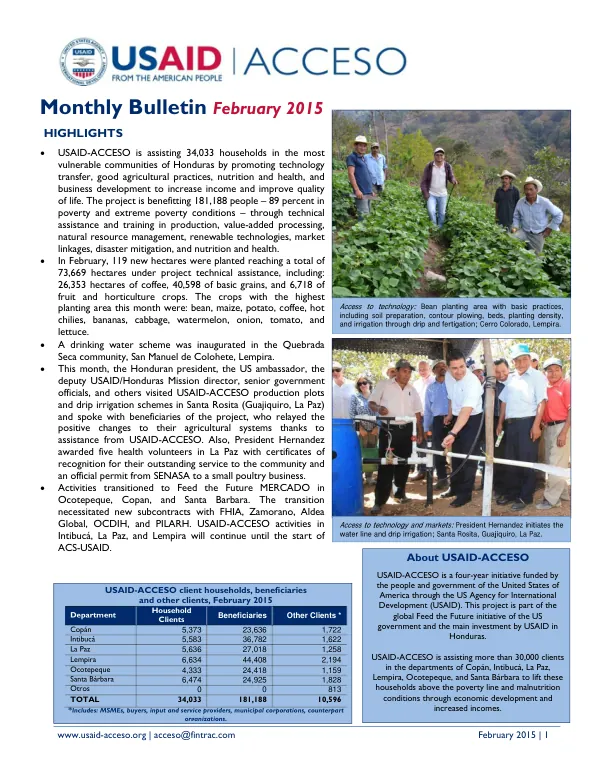
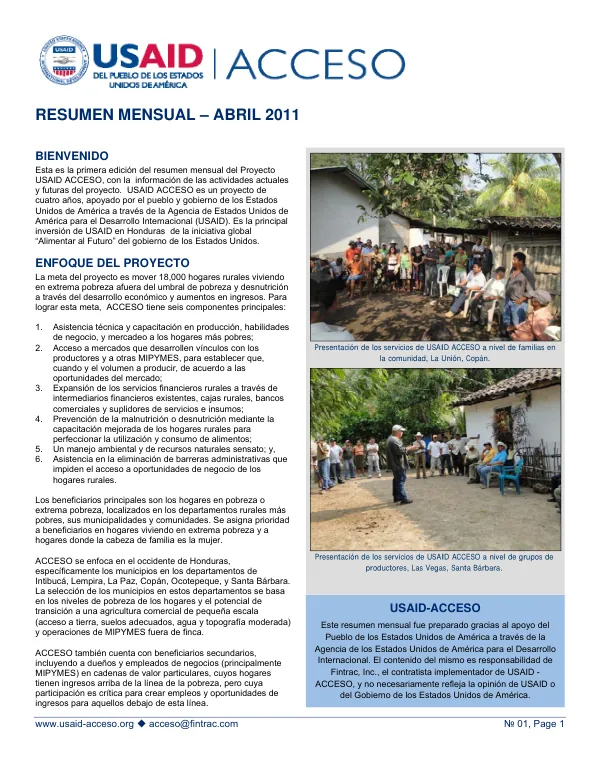
Monthly Bulletin September 2013: USAID-ACCESO
The USAID-ACCESO initiative is a four-year project funded by the US Agency for International Development (USAID) to support economic development and poverty reduction in western Honduras.
2013 · 3 pages
Sign in to readA free account is required to download.
Abstract
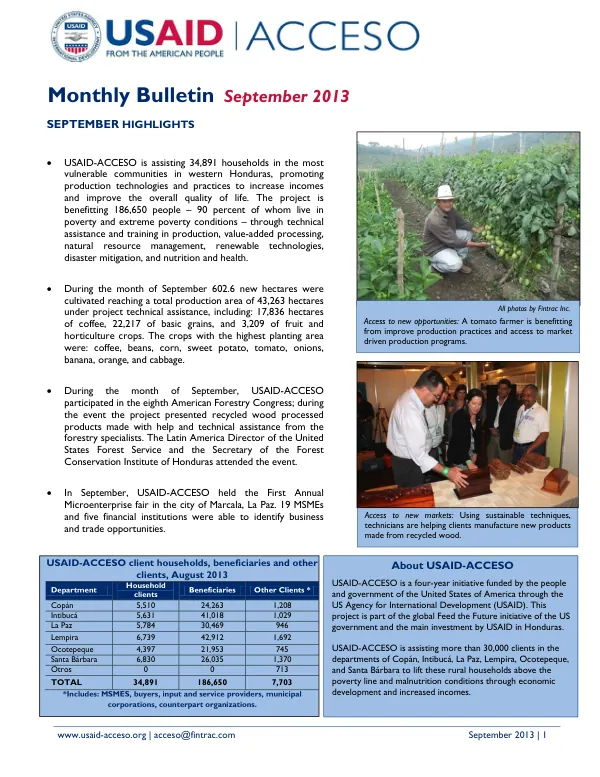
The project focuses on assisting rural households in the departments of Copán, Intibucá, La Paz, Lempira, Ocotepeque, and Santa Bárbara to improve their livelihoods through increased incomes and access to markets. In September 2013, the project reached 34,891 households, benefiting 186,650 people, with 90% living in poverty and extreme poverty conditions. Technical assistance and training were provided in production, value-added processing, natural resource management, renewable technologies, disaster mitigation, and nutrition and health. The project also promoted the creation of new products from locally available resources to generate off-farm employment opportunities. During the month of September, 602.6 new hectares were cultivated, bringing the total production area under project technical assistance to 43,263 hectares. The crops with the highest planting area were coffee, beans, corn, sweet potato, tomato, onions, banana, orange, and cabbage. The project also participated in the eighth American Forestry Congress, presenting recycled wood processed products made with technical assistance from forestry specialists. The project organized the First Annual Microenterprise fair in Marcala, La Paz, where 19 MSMEs and five financial institutions identified business and trade opportunities. Marketing specialists coordinated tours of producers' plots to increase market exposure for small-scale farmers and deliver information about market routes and formal buyer requirements. USAID-ACCESO carried out 32,587 technical assistance visits in September, with 24,425 strengthening farmers' knowledge in agricultural production topics, including basic practices for coffee and horticulture crops. The project also provided training in childhood nutrition, improving personal and home hygiene, processing, business skills, animal production, natural resource management, and postharvest and certification. The nutrition and health team held 215 training events, giving 3,348 parents the opportunity to strengthen basic nutrition and health practices. Participants learned about nutritious food preparation, family planning, and "healthy household" practices to prevent diseases and improve hygiene practices. The project also worked with 44 MSMEs in Lempira and Santa Barbara in legalization and training activities, resulting in 128 MSMEs being legally registered with the help of USAID-ACCESO.
Related documents