USAID
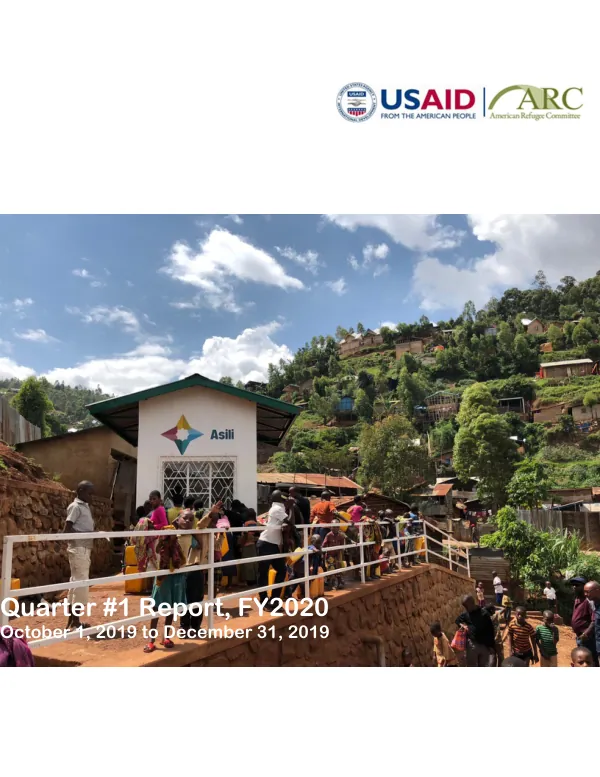
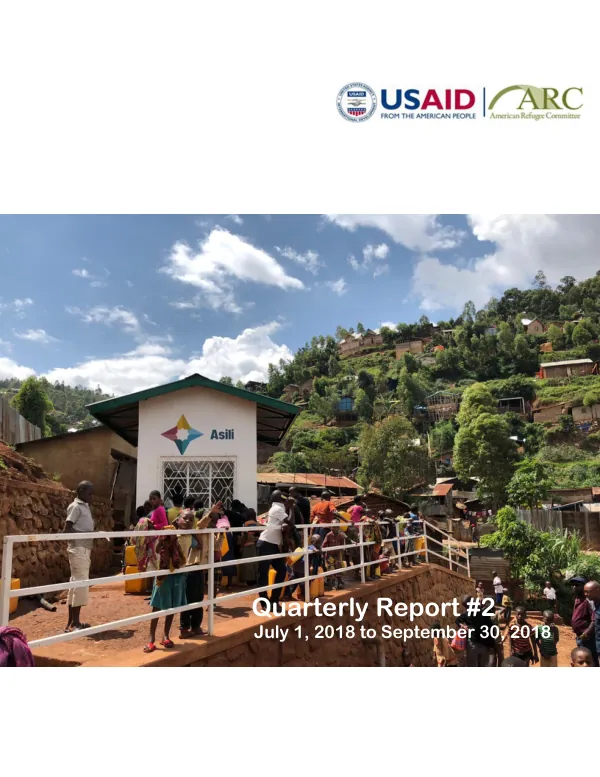
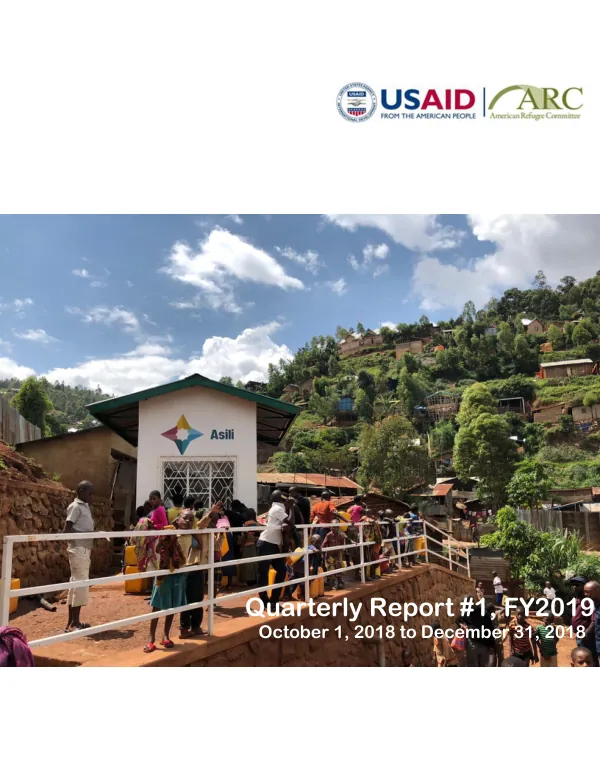
Quarterly Report #1, FY2019
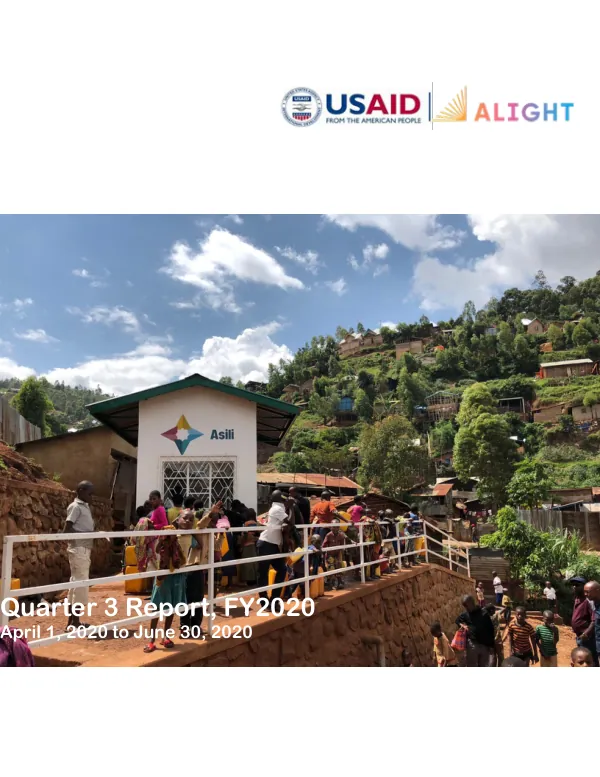
The Asili 2.0: Scaling for Sustainability in the Kivus project is a co-creation of USAID, private sector partners, communities of eastern Congo, and the American Refugee Committee (ARC).
2018 · 14 pages
Sign in to readA free account is required to download.
Abstract
The project aims to create empowered communities through the provisioning of meaningful, high-quality services. Asili was designed to address the needs of communities in eastern Congo, where state institutions are unable to provide adequate support. The project's goal is to scale a sustainable social enterprise platform to create healthier, more resilient, economically empowered, and functional communities in South Kivu. The objectives of the project include developing viable business models for the delivery of bundled social services through a platform at scale, improving access to clean water and health services in target communities, and maintaining quality standards of clean water and health services. Asili is a member-driven hub of complementary social businesses located within zones of approximately 25,000 people. The initial businesses – agriculture, health care, and clean water – were selected due to their potential to immediately contribute to healthier, more resilient, and economically empowered communities. The project will continue to expand and grow using the frameworks and tools developed within the initial pilot phase. During the first quarter of FY2019, the project completed the purchase of land on which the water points will be built and started the administrative procedures to secure titles. The marketing campaign for Asili's enterprises in the area was also initiated, targeting local governments, women's groups, churches, and schools. The construction of the water system for Zone 1 (Ciriri) and Zone 2 (Camp TV) began, with the reservoir being a key component. Some installations related to the reservoir were finished and tested, and the water source was secured. The project also made progress in acquiring SOS health centers in Zone Camp TV. Conversations with SOS are progressing well, and documentation describing the state of their health clinic building, the dimensions of the land, and the various equipment that belongs to the SOS clinic has been received. Asili is excited about this opportunity due to the strategic advantages of the location and the potential to leverage existing capital to improve health outcomes in a dignified manner in the DRC. In addition, the project identified and purchased six water points for Zone Ciriri and three water points for Zone Camp TV. Four additional water points for Zone Camp TV are currently in negotiation. By the end of the next quarter, it is anticipated that there will be 13 water points between Zone Ciriri and Zone Camp TV. The project also made progress in developing partnerships for further agricultural and economic development opportunities. The overall goal is to grow the demand for complementary social services/goods such as healthcare and water through increasing the economic output of an Asili Zone. This will be achieved through site-specific strategies that fall into three broad categories: growing through partnership, integrating tools and services that have a wide scope/appeal, and innovation. The project's implementation challenges include securing titles for the land, negotiating with SOS for the acquisition of their health clinic, and identifying and purchasing additional water points. The project's management and administration are also being strengthened, with a focus on ensuring that Asili responds to the needs of the communities in which it works with dignity and brings the value they deserve. The project's upcoming plans for the next quarter include the preparation of handwashing activities, the launch of the clean energy business line, and the identification and purchase of additional water points. The project's performance will be closely monitored and evaluated to ensure that it meets its objectives and contributes to the creation of empowered communities in South Kivu.