USAID DEC
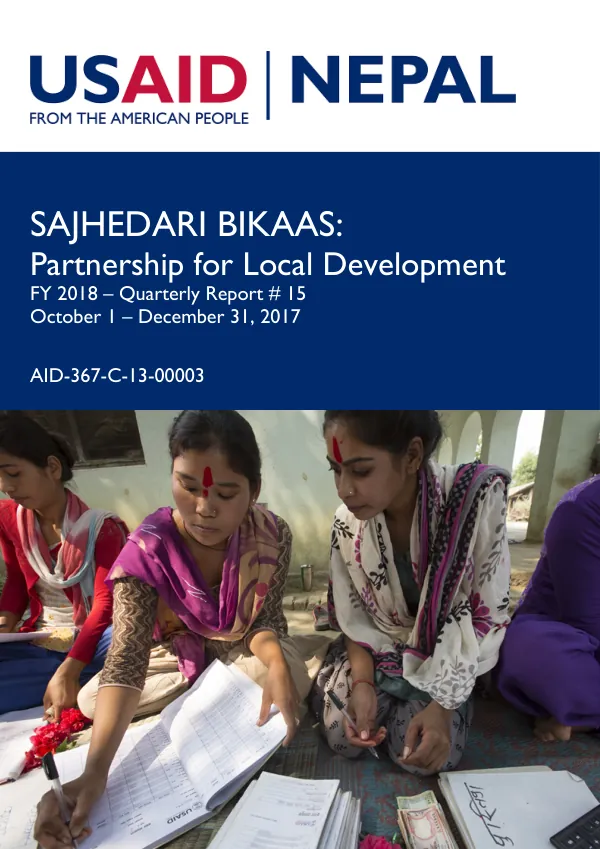
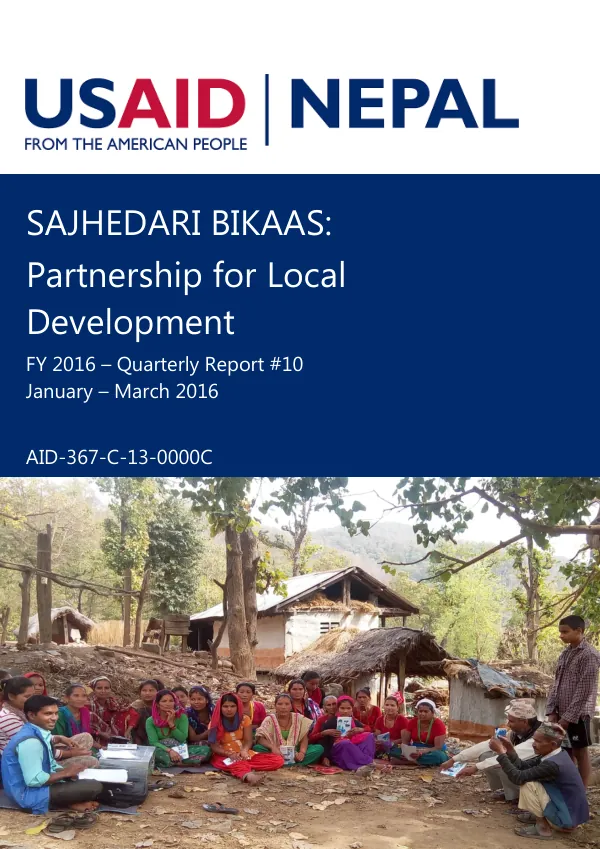
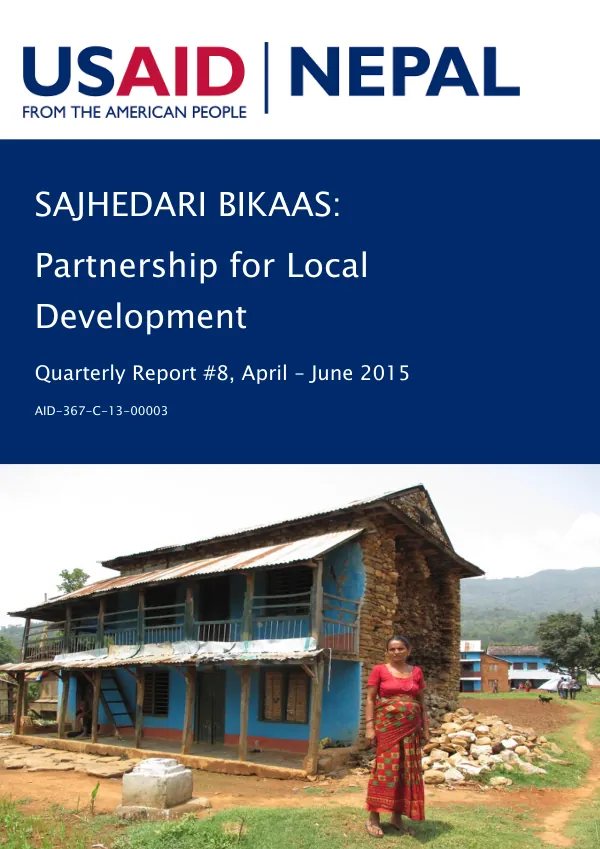
Quarterly Report #8, April – June 2015: SAJHEDARI BIKAAS: Partnership for Local Development
Sign inUSAID
Quarterly Report #8, April – June 2015: SAJHEDARI BIKAAS: Partnership for Local Development
The Partnership for Local Development, a quarterly report for April – June 2015, highlights the progress and challenges faced by the organization in achieving its objectives.
2015 · 67 pages
Sign in to readA free account is required to download.
Abstract
The report is divided into several sections, including the political and development environment, actual versus planned accomplishments, challenges and constraints, and financial report. The political and development environment in the region is characterized by national trends, operational space, and the impact of external factors such as earthquakes, political disturbances, and heat waves. The report notes that the integration of activities among sub-partners and the institutional capacity of these partners are critical challenges that need to be addressed. The report highlights the progress made in achieving the objectives of the partnership, which include establishing and improving the enabling environment for community development, improving communities' ability to access resources for development, improving communities' ability to effectively implement inclusive development projects, and increasing the ability of existing and new government units to function effectively. Under Objective A, the report notes that early responses to instability are being institutionalized, and enduring solutions to the problems that drive conflict are being adopted. The report also highlights the progress made in establishing inclusive community strategic planning processes, strategic community development plans, and community-based organizations that advocate for needed resources. The report also notes that mechanisms for transparent administration of funds are being institutionalized, inclusive management systems are being adopted, and systems for sustainability are being established. Additionally, local government officials are effectively carrying out their mandated roles, and local government units and community-based organizations/civil society organizations are collaborating to identify local development priorities. The report also highlights the challenges faced by the partnership, including the integration of activities among sub-partners and the institutional capacity of these partners. The report notes that the earthquakes, political disturbances, and heat waves have had a significant impact on the region and have affected the progress made by the partnership. The financial report highlights the major category expenditures, the status of expenditure funds towards monitoring and evaluation purposes, and the LOE utilization summary status. The report also includes a staffing matrix and annexes that provide additional information on the progress made by the partnership. The partnership has made significant progress in achieving its objectives, including the establishment of inclusive community strategic planning processes, the adoption of enduring solutions to the problems that drive conflict, and the institutionalization of mechanisms for transparent administration of funds. However, the partnership still faces significant challenges, including the integration of activities among sub-partners and the institutional capacity of these partners. The partnership has also made significant progress in improving communities' ability to access resources for development, including the establishment of community-based organizations that advocate for needed resources. Additionally, the partnership has made progress in improving communities' ability to effectively implement inclusive development projects, including the adoption of inclusive management systems and the establishment of systems for sustainability. The partnership has also increased the ability of existing and new government units to function effectively, including the effective carrying out of mandated roles by local government officials and the collaboration between local government units and community-based organizations/civil society organizations to identify local development priorities. Overall, the partnership has made significant progress in achieving its objectives, but still faces significant challenges that need to be addressed. The partnership will continue to work towards achieving its objectives and improving the lives of the communities it serves.