USAID DEC
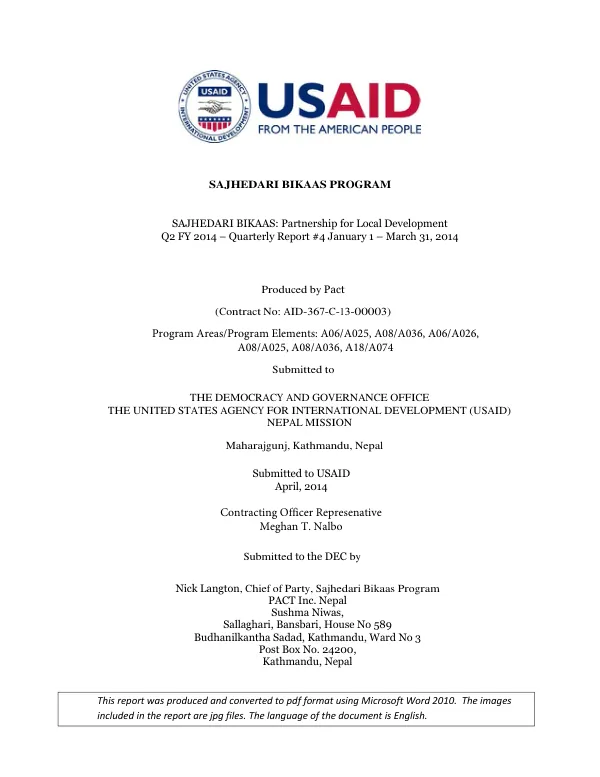
Sajhedari Bikaas: Partnership for Local Development Q2 FY 2014 – Quarterly Report #4
Sign inPACT
Sajhedari Bikaas: Partnership for Local Development Q2 FY 2014 – Quarterly Report #4
Sajhedari Bikaas is a partnership for local development in Nepal, implemented by Pact Inc.
2014 · 37 pages
Sign in to readA free account is required to download.
Abstract
under contract AID-367-C-13-00003 with the United States Agency for International Development (USAID) Nepal Mission. The program aims to establish and improve the enabling environment for community development, improve communities' ability to access resources for development, enhance their ability to effectively implement inclusive development projects, and increase the ability of existing and new government units to function effectively. The program's activities during the second quarter of fiscal year 2014 focused on building the capacity of local partners, including 12 new district NGO partners who received orientation, training, and developed their first-year action plans. The program also initiated new project activities, including the setup of a server for the Short Message Service (SMS)/Geospatial Information System (GIS) reporting system, which will enable SMS reporters to transmit conflict incidents to the system's server and integrate them into the GIS system. The Second Quarterly Conflict Assessment was completed, which noted a decrease in identity-based tensions and conflicts over the past few months. However, petty crime, gender-based violence (GBV), suicide, and drug abuse continue to be areas of concern. The assessment also examined views and perceptions related to the November 2013 Constitutional Assembly (CA) elections, which respondents perceived as largely peaceful and fair. The program's financial report for the second quarter of fiscal year 2014 shows major category expenditures, including personnel costs, travel, and training. The report also highlights the status of expenditure funds towards monitoring and evaluation purposes and the level of effort utilization summary status. The program's implementation is focused on several key objectives, including establishing and improving the enabling environment for community development, improving communities' ability to access resources for development, enhancing their ability to effectively implement inclusive development projects, and increasing the ability of existing and new government units to function effectively. The program's activities are being implemented in several districts in Nepal, including Banke, Dang, and others. The program's monitoring and evaluation (M&E) system is being implemented to track progress towards the program's objectives. The system includes the use of SMS reporters to transmit conflict incidents to the system's server and integrate them into the GIS system. The program's M&E system also includes the use of indicators to track progress towards the program's objectives, including the number of conflict incidents reported, the number of communities involved in the program, and the level of participation in community development activities. The program's staff recruitment matrix shows the number of staff recruited for the program, including local partners, Pact Inc. staff, and other implementing partners. The matrix also highlights the skills and qualifications of the staff recruited for the program. The program's success stories highlight the impact of the program's activities on the communities involved. The stories include examples of communities that have benefited from the program's activities, including improved access to resources for development, enhanced ability to effectively implement inclusive development projects, and increased ability of existing and new government units to function effectively. The program's challenges and constraints include staffing, local partners, and external factors such as protests and political campaigns, security and safety concerns, and petty crime, GBV, suicide, and drug abuse. The program's financial report highlights the major category expenditures, including personnel costs, travel, and training, and the status of expenditure funds towards M&E purposes and the level of effort utilization summary status.