BANYAN GLOBAL
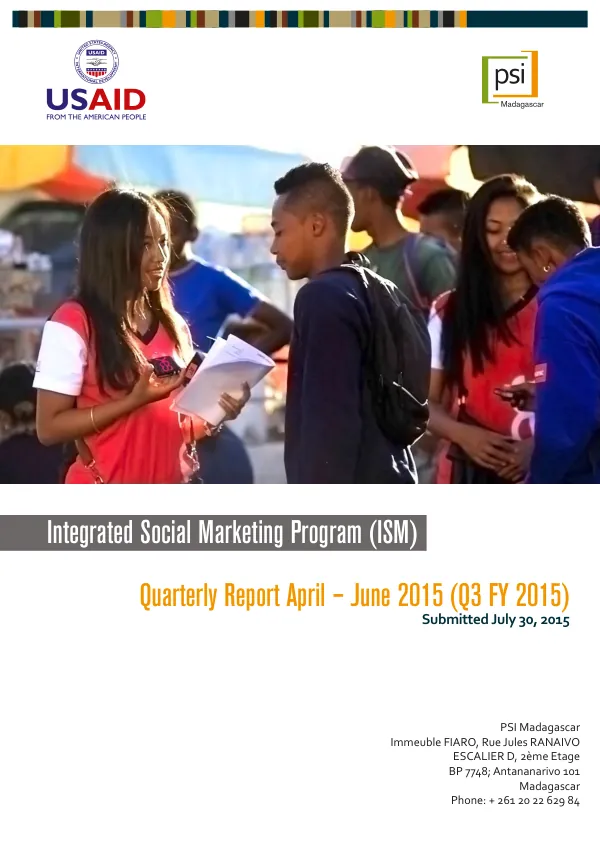
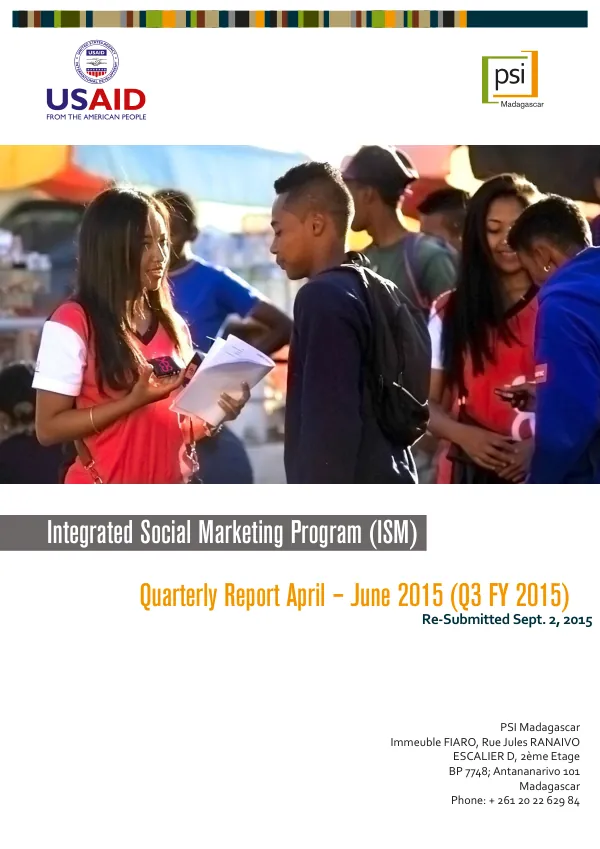
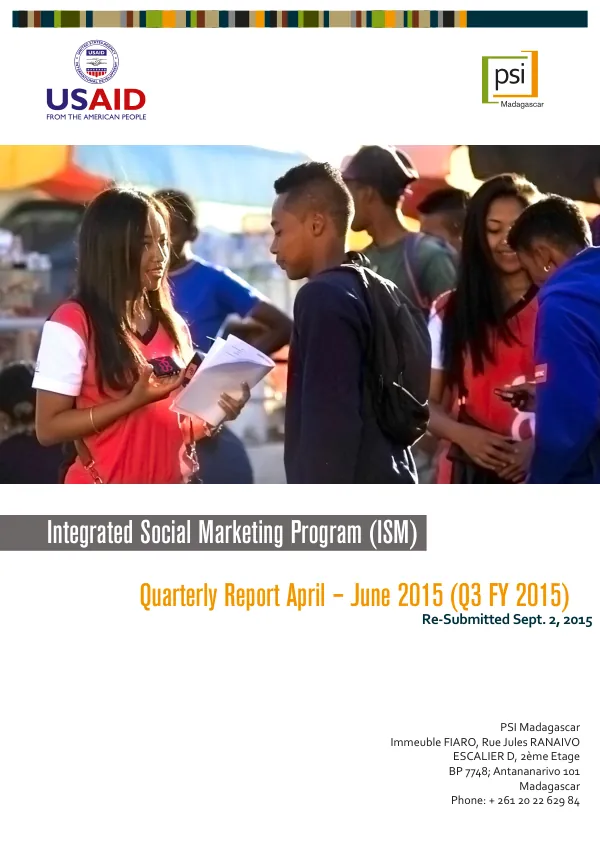
Quarterly Report April – June 2015 (Q3 FY 2015)
The Integrated Social Marketing Program (ISM) in Madagascar aims to improve the health of the Malagasy people, particularly women of reproductive age, children under five, youth, and those living in rural and underserved areas.
2015 · 89 pages
Sign in to readA free account is required to download.
Abstract
The program, funded by USAID, has a total budget of $36,823,053 and runs from January 1, 2013, to December 31, 2017. The main strategic objective is to use an integrated social marketing approach to increase the use of lifesaving health products and services, particularly in the areas of Family Planning/Reproductive Health, Maternal and Child Health (MCH), and Malaria. The ISM Team, consisting of PSI, IntraHealth, Banyan Global, Human Network International (HNI), SAF, and SALFA, applies its combined expertise in social marketing, health clinic social franchising, and behavior change communication to bring more users into the Malagasy health market. The team works in partnership with USAID's integrated health programs, MIKOLO and MAHEFA, to expand community distribution of products and services. Three primary intermediate results (IR) are expected as outcomes of the ISM Program: IR1, IR2, and IR3. IR1 focuses on increased adoption and maintenance of health behaviors. The "Healthy Family" behavior change communication (BCC) campaign aims to increase knowledge and adoption of preventative behaviors, and utilization of commodities related to family planning, water, sanitation and hygiene practices, diarrhea, pneumonia, and malaria prevention and treatment, nutrition, reproductive health, and others. Radio, TV, mobile video units, innovative interpersonal communication techniques, and various IEC materials and activities combine to positively influence health behavior. IR2 aims to improve the quality of selected health services in the private sector. The program works to strengthen the capacity of private health providers to deliver high-quality services, particularly in the areas of family planning, maternal and child health, and malaria. This is achieved through training, technical assistance, and quality assurance mechanisms. IR3 focuses on increasing the availability of life-saving health products and services. The program works to increase access to essential health commodities, particularly in rural and underserved areas. This is achieved through community distribution, social franchising, and other innovative approaches. The ISM Program also places emphasis on cross-cutting issues such as research, monitoring and evaluation, gender, environment, and partnerships. The program works to ensure that its activities are evidence-based, gender-sensitive, and environmentally sustainable. Partnerships with local organizations, government agencies, and international partners are critical to the program's success. Implementation of the ISM Program is ongoing, with various activities and interventions being implemented across the country. The program's progress is monitored and evaluated regularly to ensure that it is meeting its objectives and making a positive impact on the health of the Malagasy people.