POPULATION SERVICES INTERNATIONAL/DKT INTERNATIONAL
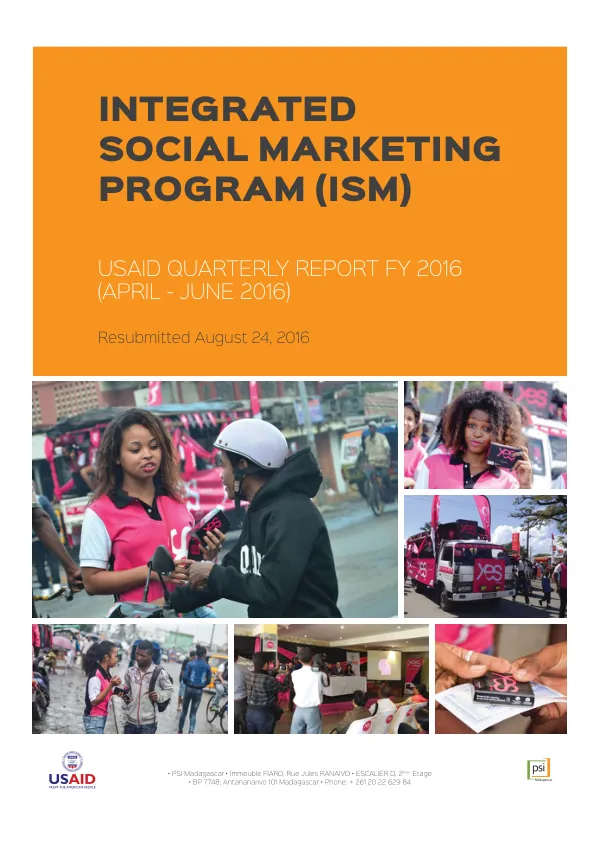
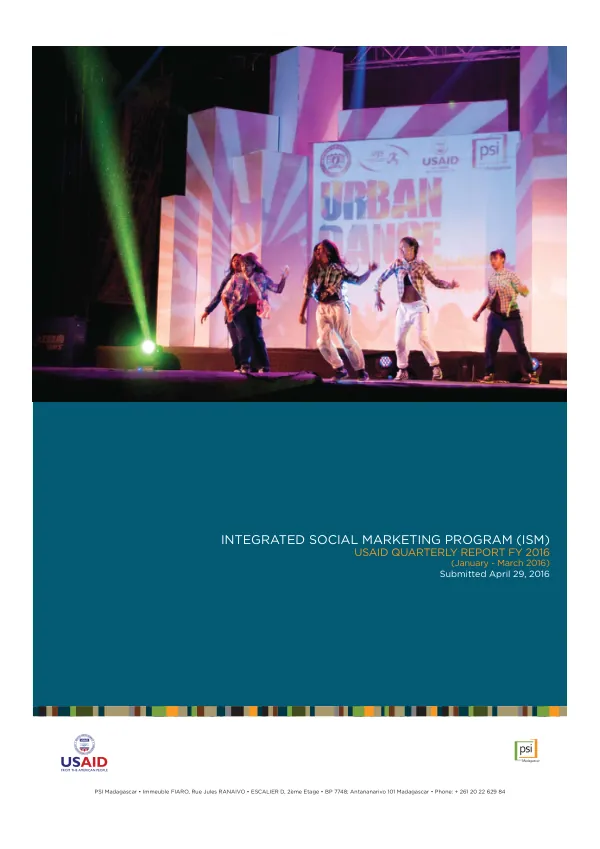
USAID Quarterly Report FY 2016
The Integrated Social Marketing Program (ISM) in Madagascar aims to improve the health of the Malagasy people, particularly women of reproductive age, children under five, youth 15-24 years old, and those living in rural and underserved areas.
2016 · 112 pages
Sign in to readA free account is required to download.
Abstract
The program is funded by the United States Agency for International Development (USAID) and runs from January 1, 2013, through December 31, 2017. The total award amount is $36,823,053. The program's main strategic objective is to use an integrated social marketing approach to increase the use of lifesaving health products and services. This is achieved through a range of activities, including family planning, maternal and neonatal health, child health, malaria control, and cross-cutting activities such as behavior change communication and social marketing. The program's focus areas include family planning, maternal and neonatal health, child health, and malaria control. The program aims to increase the use of modern family planning methods, improve maternal and neonatal health outcomes, reduce child mortality, and control malaria. The program also focuses on behavior change communication and social marketing to promote healthy behaviors and increase access to health services. The program's implementation is led by Population Services International (PSI) in partnership with local organizations, including the Ministry of Health, the National Malaria Control Program, and other non-governmental organizations. The program's activities are implemented at the national, regional, and community levels, with a focus on rural and underserved areas. The program's progress is monitored and evaluated through a range of indicators, including the use of modern family planning methods, maternal and neonatal health outcomes, child mortality rates, and malaria incidence rates. The program's results are reported quarterly to USAID, with a comprehensive annual report submitted at the end of each fiscal year. The program's budget is managed through a range of mechanisms, including the USAID Cooperative Agreement, the PSI/Madagascar budget, and local partner budgets. The program's financial management is overseen by the PSI/Madagascar finance team, with regular audits and reviews conducted to ensure compliance with USAID and PSI/Madagascar financial regulations. The program's geographic focus is on the entire country of Madagascar, with a particular emphasis on rural and underserved areas. The program's activities are implemented in all 22 regions of Madagascar, with a focus on the most vulnerable populations, including women of reproductive age, children under five, youth 15-24 years old, and those living in poverty. The program's timeframes are aligned with the USAID fiscal year, with quarterly reports submitted to USAID and a comprehensive annual report submitted at the end of each fiscal year. The program's recommendations are based on the results of the program's monitoring and evaluation activities, with a focus on improving the health outcomes of the Malagasy people.