BANYAN GLOBAL
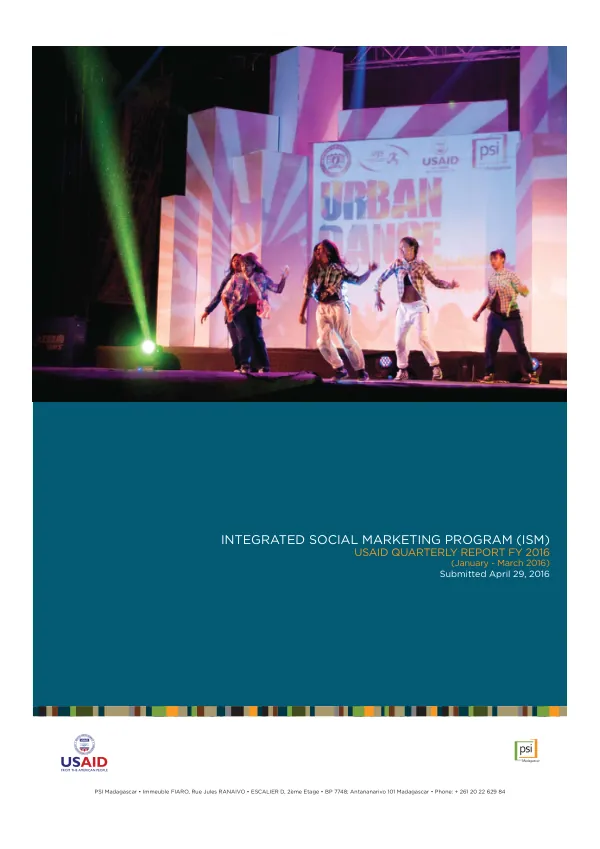
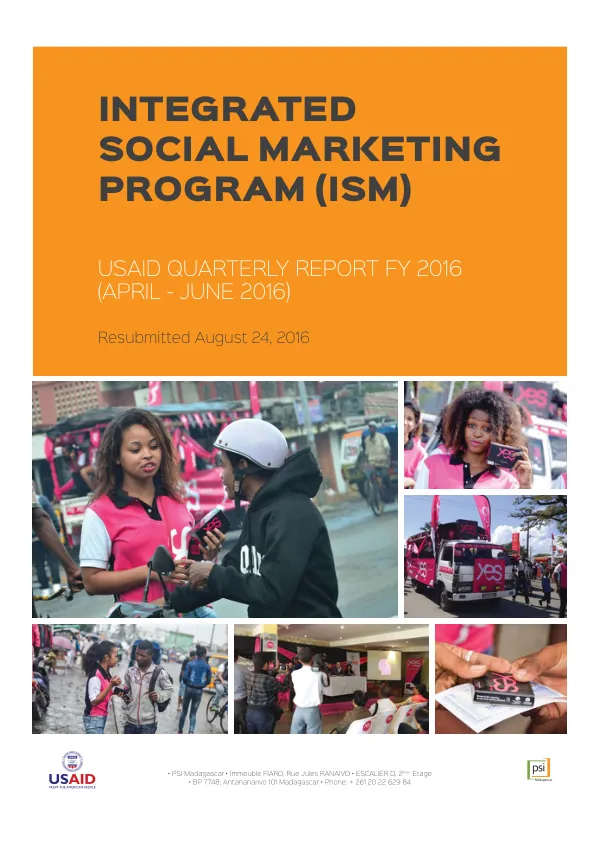
Revised ISM FY16 Q3 Report & Annexes- Updated
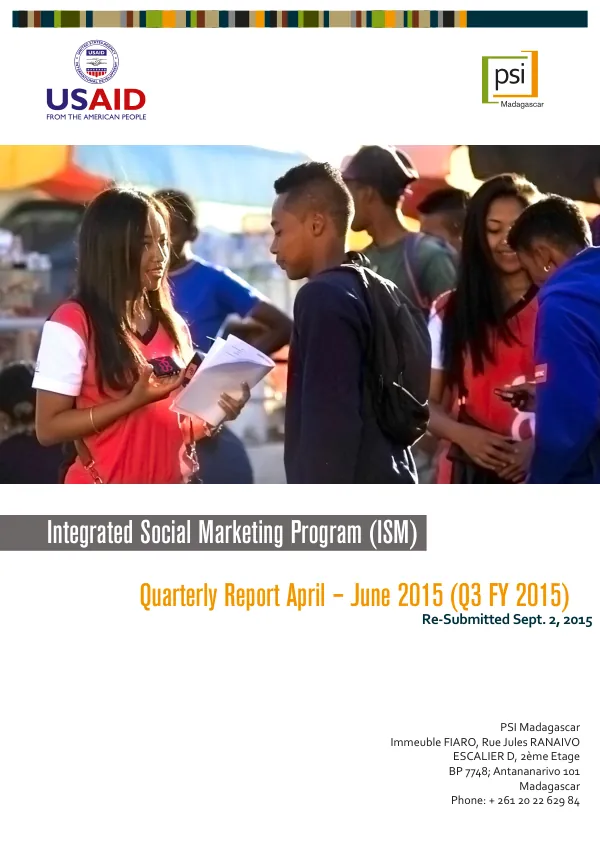
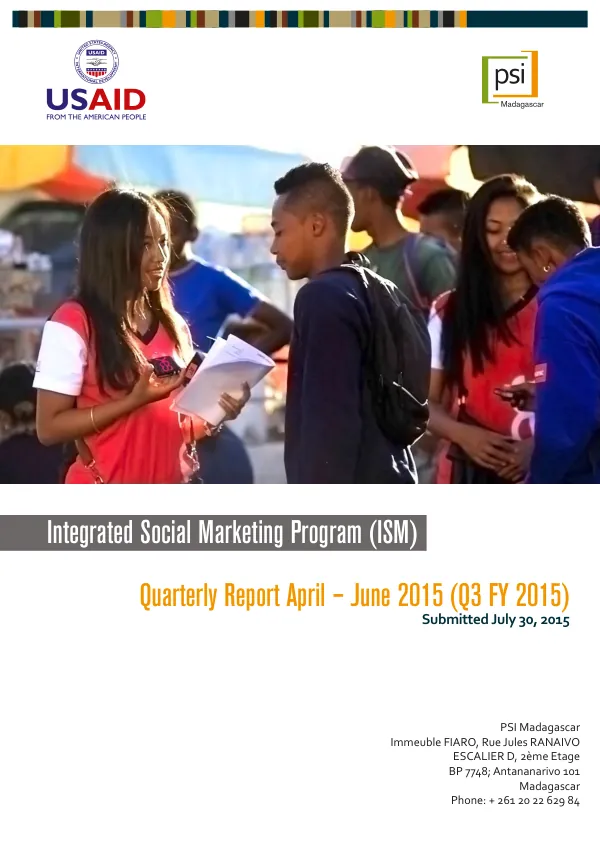
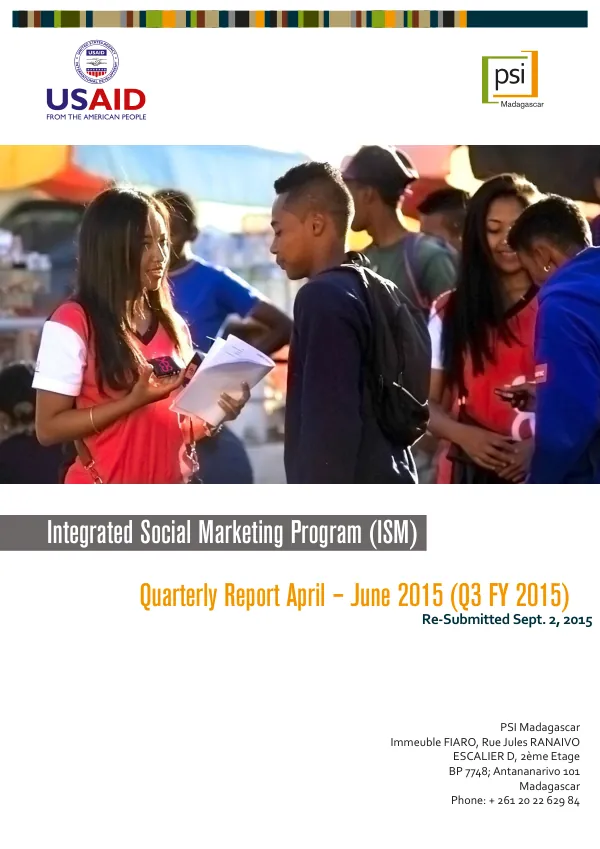
The Integrated Social Marketing Program (ISM) in Madagascar aims to improve the health of the Malagasy people, particularly women of reproductive age, children under five, youth 15-24 years old, and those living in rural and underserved areas.
2016 · 176 pages
Sign in to readA free account is required to download.
Abstract
The program is funded by USAID and runs from January 1, 2013, through December 31, 2017, with a total budget of $36,823,053. The main strategic objective is to use an integrated social marketing approach to increase the use of lifesaving health products and services, particularly in the areas of family planning/reproductive health, maternal and child health, and malaria. The program focuses on three primary intermediate results: increased adoption and maintenance of health behaviors, improved quality of selected health services in the private sector, and increased access to quality health care services. To achieve these results, PSI and its partners IntraHealth, Banyan Global, Human Network International (HNI), SAF, and SALFA apply their combined expertise in social marketing, health clinic social franchising, and behavior change communication. The program also works in partnership with USAID's integrated health programs, MIKOLO and MAHEFA, to expand community distribution of products and services. The 'Healthy Family' behavior change communication campaign is a key component of the program, focusing on increased knowledge and adoption of preventative behaviors, and utilization of commodities related to family planning, water, sanitation and hygiene, diarrhea, pneumonia, and malaria prevention and treatment, nutrition, and reproductive health. Radio, TV, mobile video units, innovative interpersonal communication techniques, and a variety of additional information, education and communication materials and activities all combine to positively influence health behavior. Community health workers are trained and equipped to provide education and distribute critically important health products within isolated rural areas. PSI's network of nearly 250 private, franchised Top Réseau health clinics deliver a variety of health care services primarily in the areas of family planning/reproductive health, integrated management of childhood illnesses, youth services, and malaria. The program focuses on expanding access to quality health care services through training, social franchising, and behavior change communication. PSI also works with the private sector to increase the availability and accessibility of health products and services, particularly in rural and underserved areas. The program's geographic focus is on Madagascar, with a particular emphasis on rural and underserved areas. The program's timeframes are from January 1, 2013, through December 31, 2017, with quarterly reports submitted to USAID. The program's recommendations include continued support for the 'Healthy Family' behavior change communication campaign, expansion of community distribution of products and services, and continued training and social franchising of private health clinics. The program's implementation details include the establishment of a network of community health workers, training of private health clinic staff, and expansion of community distribution of health products and services. The program's geographic focus is on Madagascar, with a particular emphasis on rural and underserved areas. The program's timeframes are from January 1, 2013, through December 31, 2017, with quarterly reports submitted to USAID. The program's key findings include increased adoption and maintenance of health behaviors, improved quality of selected health services in the private sector, and increased access to quality health care services. The program's methodologies include social marketing, health clinic social franchising, and behavior change communication. The program's conclusions include the effectiveness of the 'Healthy Family' behavior change communication campaign, the importance of community distribution of health products and services, and the need for continued support for the program.