USAID DEC
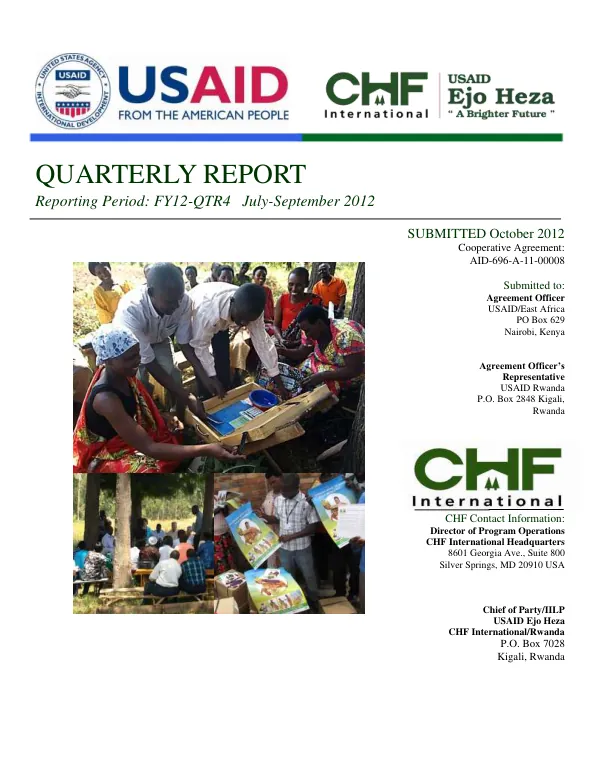
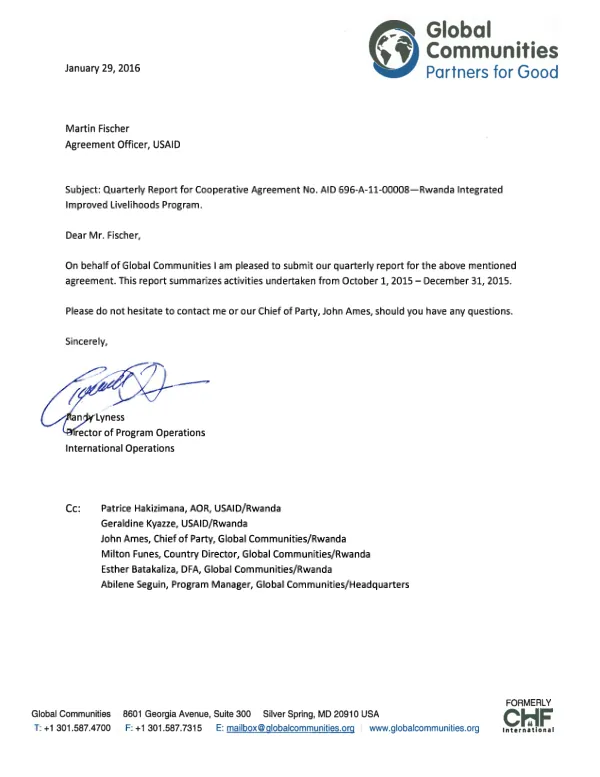
Quarterly Report for Cooperative Agreement No. AID 696-A-11-00008—Rwanda Integrated Improved Livelihoods Program
Sign inGLOBAL COMMUNITIES
Quarterly Report for Cooperative Agreement No. AID 696-A-11-00008—Rwanda Integrated Improved Livelihoods Program
The Integrated Improved Livelihoods Program (IILP) in Rwanda is a cooperative agreement between USAID and Global Communities.
2016 · 41 pages
Sign in to readA free account is required to download.
Abstract
The program aims to improve the livelihoods of rural communities in Rwanda through various interventions. The program is funded by USAID's Feed the Future initiative and has a total estimated federal funding of $13.95 million. The program has four main program elements: increased demand for financial services, increased supply of financial services, behavior change communication and social marketing (BCCSM), and health and nutrition. The program element on increased demand for financial services includes promoting integrated savings and lending groups (ISLGs), increasing financial literacy, and expanding economic opportunities through business development and extension services. During the first quarter of fiscal year 2016, the program continued to deliver financial trainings using the Community Finance Initiative (CFI) approach. The program helped ISLGs to comply with the ISLGs methodology and organized share out activities for the mature groups. The share out events were attended by ISLG beneficiaries who testified how ISLGs helped them build household resiliency and participation in social activities. The program also provided mentorship to Micro, Small, and Medium Enterprises (MSMEs) and organized a savings campaign. In addition, the program provided small livestock to poor families and supported water harvesting and trainings on food recipes. The program's technical team conducted a Savings Campaign and launched a fourth financial product called the "youth saving product". The adult literacy program element is also making progress, with intake six being the last intake before the phase out of USAID Ejo Heza. The literacy learners passed the final examination, with a passing rate of 87%. As a post-literacy service, the program provided business development services to the literacy learners. The program has also made progress in terms of integration of the Gender Action Learning System (GALS) in program implementation and partnerships with government, public, and private institutions. The program has also supported the expansion of mobile money and facilitated financial sector innovation. The program's progress is reflected in the improvement of food production, post-harvest storage, and handling, as well as the incorporation of nutrition into adult literacy education. The program has also established kitchen gardens and promoted better food utilization. The program's messaging has also been effective in promoting the benefits of the program to the community. Overall, the IILP in Rwanda is making significant progress in improving the livelihoods of rural communities in Rwanda. The program's interventions are having a positive impact on the community, and the program is expected to continue making progress in the coming quarters.