JOHN SNOW INTERNATIONAL
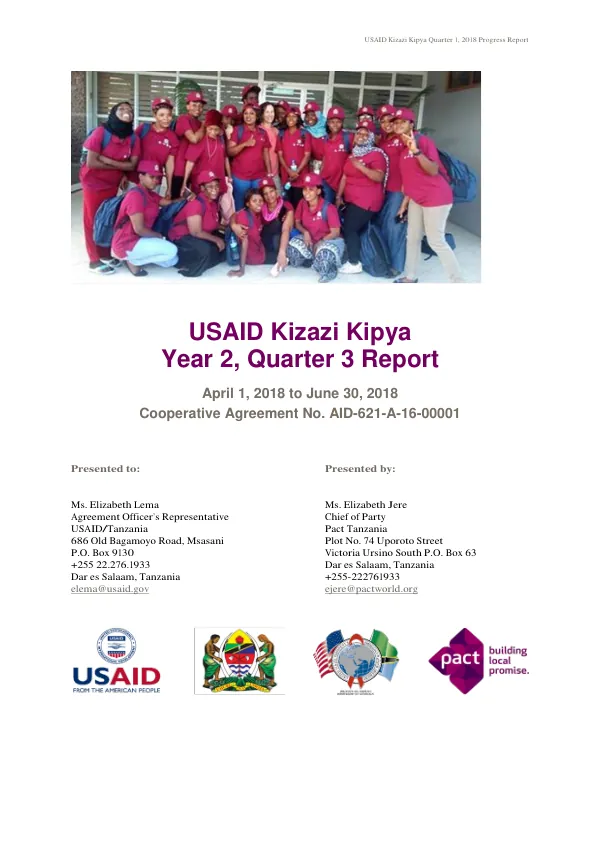
USAID Kizazi Kipya Quarter 1, 2018 Progress Report
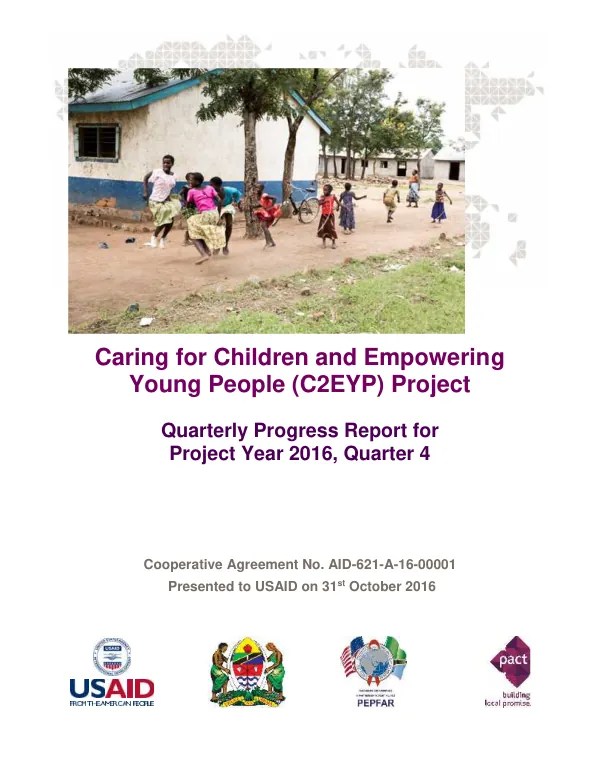
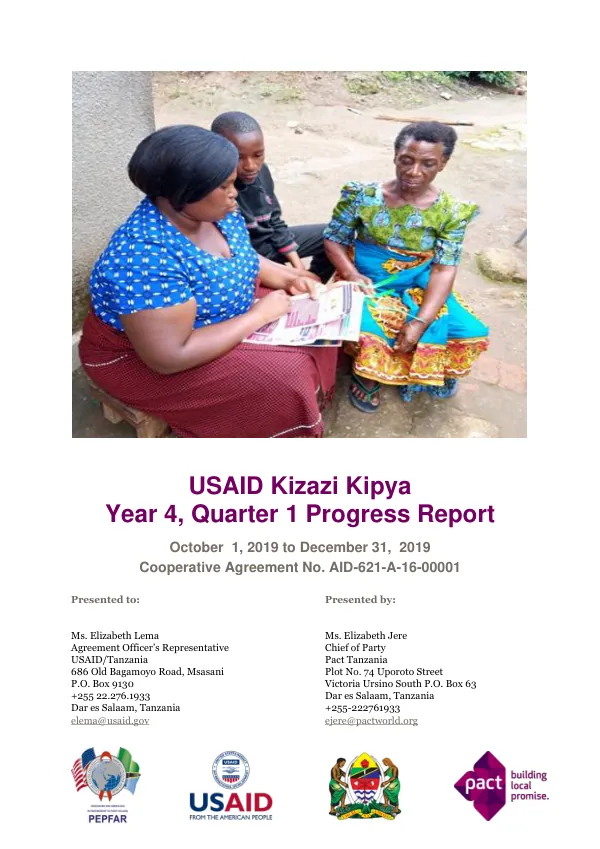
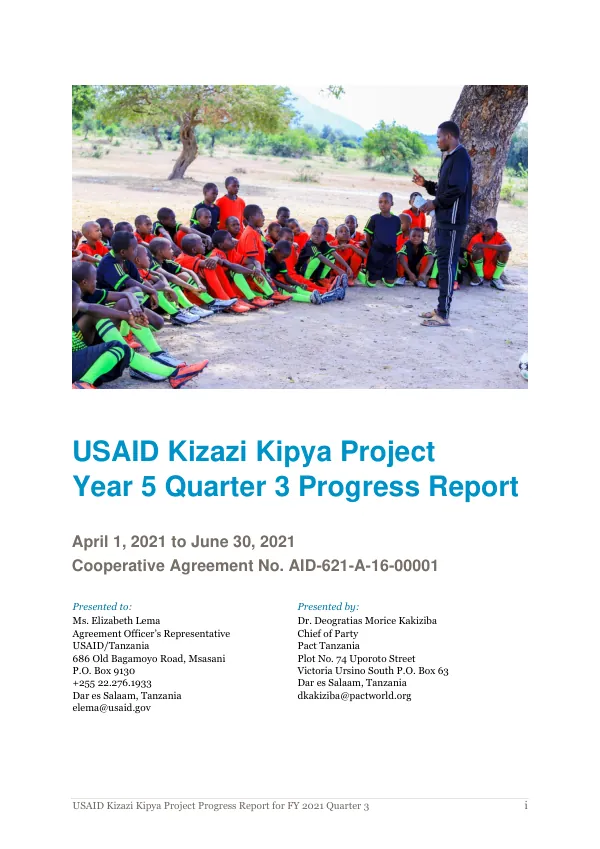
The USAID Kizazi Kipya program aims to improve the lives of Tanzanian orphans and vulnerable children (OVC) by providing them with age-appropriate HIV and AIDS-related services, as well as other essential services such as care, health, nutrition, education, protection, livelihoods, and psycho-social wellbeing.
2018 · 39 pages
Sign in to readA free account is required to download.
Abstract
The program is implemented by Pact, a nonprofit organization that works to build systemic solutions in partnership with local organizations, businesses, and governments to create sustainable and resilient communities. The program focuses on four key results: parents and caregivers have the financial resources to meet the needs of vulnerable children and adolescents, parents and caregivers have the skills to meet the needs of HIV-infected and vulnerable children and adolescents, high-quality services are available to HIV-infected and vulnerable children and adolescents, and high-quality services are available to "hard-to-reach" HIV-infected and vulnerable children and adolescents. To achieve these results, the program implements various interventions, including temporary consumption support and social protection, parent education and support services, case management services, education services, health and HIV services, and livelihoods and employment skills development. In Quarter 1 of 2018, the program made significant progress towards achieving its goals. The number of OVC, adolescents, and caregivers served increased, with a total of 12,500 individuals reached. The program also completed 1,500 referrals to other services, such as healthcare and education. In terms of financial resources, the program provided temporary consumption support to 2,500 households, and 1,000 households participated in savings and credit opportunities. The program also implemented diversified opportunities for increasing income and assets, such as entrepreneurship training and microfinance services. The program's case management services were improved, with 500 households receiving support. Education services were also expanded, with 1,000 children enrolled in school. Health and HIV services were improved, with 2,000 individuals receiving HIV testing and counseling. The program also implemented livelihoods and employment skills development activities, with 500 individuals participating in vocational training. In addition, the program provided child protection services to 1,000 children, and 500 children received support for their education and health needs. The program's geographic coverage includes 15 districts in Tanzania, with a focus on the regions of Dar es Salaam, Morogoro, and Pwani. The program targets a total of 50,000 OVC, adolescents, and caregivers, with a focus on the most vulnerable populations, including children living or working on the streets, and those affected by HIV and AIDS. The program's budget for Quarter 1 of 2018 was $1.5 million, with a total budget of $6 million for the year. The program's implementation is led by Pact, with support from local implementing partners, including the Aga Khan Foundation and the Ifakara Health Institute.