GOVERNMENT OF SENEGAL
Quarterly Report Format for MCHIP Country Programs (2011)
The MCHIP Nepal program is a health initiative aimed at improving the health of mothers and newborns in Nepal.
2013 · 10 pages
Sign in to readA free account is required to download.
Abstract
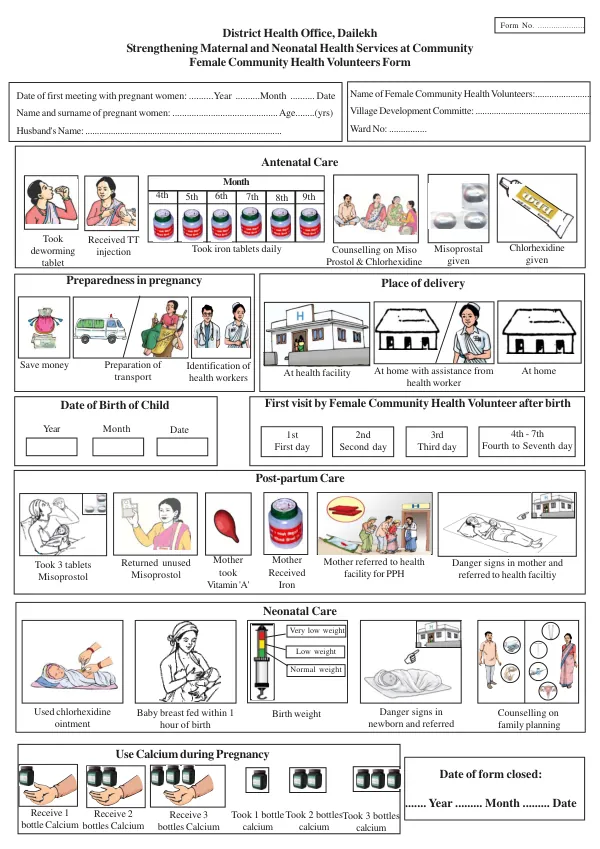
The program began in January 2010 and is supported by the Government of Nepal (GoN) policies and priorities. MCHIP/Nepal continued some of the work initiated during the ACCESS program and added new initiatives. The program's activities contributed to the global MCHIP results framework, which focuses on innovative, effective, and scalable community-oriented strategies that deliver integrated high-impact interventions to vulnerable populations and build in-country capacity of GoN staff and key partners. Nepal has made significant progress in reducing maternal mortality over the years due to collaborative efforts between the GoN and other partner agencies. However, the latest estimate of maternal mortality is still high at 229 deaths per 100,000 live births. The leading cause of maternal mortality in Nepal is eclampsia, accounting for 21% of maternal deaths. The program has implemented various initiatives to address these challenges, including the calcium supplementation pilot to prevent pre-eclampsia and eclampsia among pregnant women. During the reporting period (January – March 2013), MCHIP provided technical and financial assistance to the GoN to implement the calcium supplementation pilot in Dailekh district. The program also facilitated the finalization of the community-based newborn care package (CBNCP) assessment report and initiated the printing process. Additionally, MCHIP strengthened local research capacity by strengthening the capacity of the Nepal Health Research Council and other research institutions in both qualitative and quantitative research design. The program's key activities during this reporting period included providing technical assistance on calcium supplementation, supporting implementing partners for advocacy, evaluation, documentation, and dissemination of evidence-based maternal and newborn health (MNCH) and family planning (FP) interventions, and strengthening local research capacity. The program distributed calcium to a reasonably high number of pregnant women as part of the calcium supplementation pilot, and contributed to the finalization of the CBNCP assessment report and the initiation of the printing process. The program's results for the quarter included distributing calcium to 1463 pregnant women and a total of 4039 bottles of calcium was distributed during the period January-mid March 2013. The program also conducted 169 technical support visits to Female Community Health Volunteers (FCHVs) and 101 technical support visits to health facilities since the pilot initiation till the mid of March 2013. The program secured funding from the Jhpiego general fund to procure additional 10,000 bottles of calcium and purchased extra calcium bags, leaflets, and registers. The program's plan for the next period includes continuing calcium supplementation up to July 2013, followed by an end-line survey among recently delivered women to assess coverage and compliance. The program will also initiate the hiring process for a research agency to conduct the end-line survey and prepare the scope of work for the research agency.