GOVERNMENT OF SENEGAL
Quarterly Report Format for MCHIP Country Programs (2011)
The MCHIP Nepal program aims to improve the health of mothers and newborns in Nepal, in support of the Government of Nepal's policies and priorities.
2012 · 6 pages
Sign in to readA free account is required to download.
Abstract
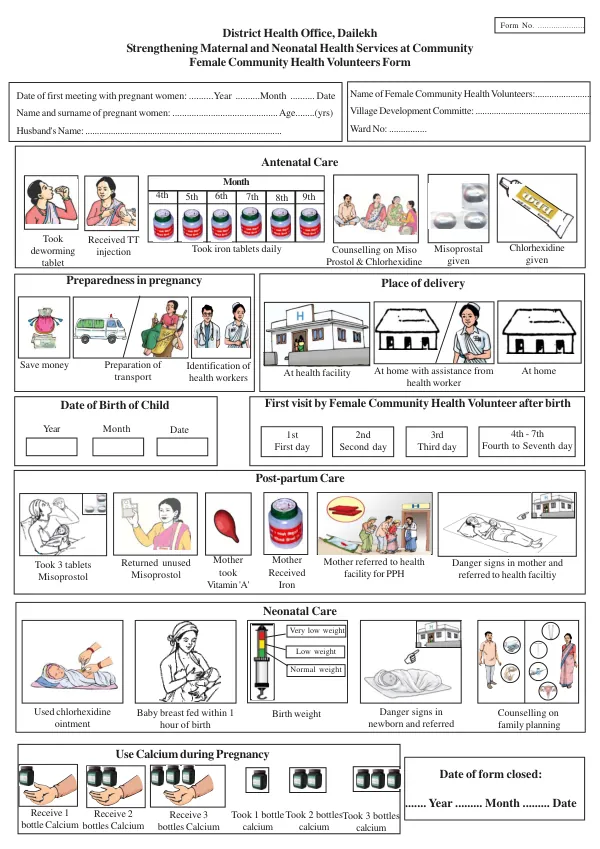
The program began in January 2010 and continued some of the work initiated during the ACCESS program, with added new initiatives. MCHIP/Nepal activities contributed to the global MCHIP results framework, which focuses on innovative, effective, and scalable community-oriented strategies that deliver integrated high-impact interventions to vulnerable populations and build in-country capacity of Government of Nepal staff and key partners. Nepal has made significant progress in reducing maternal mortality over the years, with the latest estimate given by the maternal mortality and morbidity study being 229, which is still high. The leading cause of maternal mortality in Nepal is now eclampsia, accounting for 21% of maternal deaths, with antepartum and postpartum hemorrhage being disaggregated. The MCHIP program has provided technical and financial assistance to the Government of Nepal to start a calcium pilot for the prevention of pre-eclampsia and eclampsia among pregnant women in Dailekh district. During the previous reporting year, MCHIP provided technical and financial assistance to the Government of Nepal to support the implementation of the calcium supplementation pilot, as well as to conduct a national assessment of the community-based newborn care package. The program also facilitated a research workshop on "Evidence-based policy and program in public health" led by the Nepal Health Research Council and provided technical assistance to Health Right International to introduce performance improvement of maternal and newborn health services in all health facilities in Argankanchi district. The MCHIP program has several objectives, including providing technical assistance on calcium supplementation for the prevention of pre-eclampsia and eclampsia, supporting implementing partners for advocacy, evaluation, documentation, and dissemination of evidence-based maternal and newborn health interventions, and strengthening local research capacity by strengthening capacity at the Nepal Health Research Council and other research institutions. During the current reporting period, the program distributed calcium to a reasonably high number of pregnant women as part of the calcium supplementation pilot, conducted a mid-term review of the pilot, and contributed to finalizing the community-based newborn care package assessment report. The program plans to continue calcium supplementation, technical support visits, monitoring, data collection, entry, and analysis in the coming quarter. Additionally, the program will explore funding sources and procure additional calcium needed for the one-year pilot, as a major challenge faced during the reporting period was the anticipated shortfall of calcium to cover the one-year supplementation. The program also plans to organize a follow-on meeting of the research workshop in consultation with the Nepal Health Research Council and USAID.