INTRAHEALTH
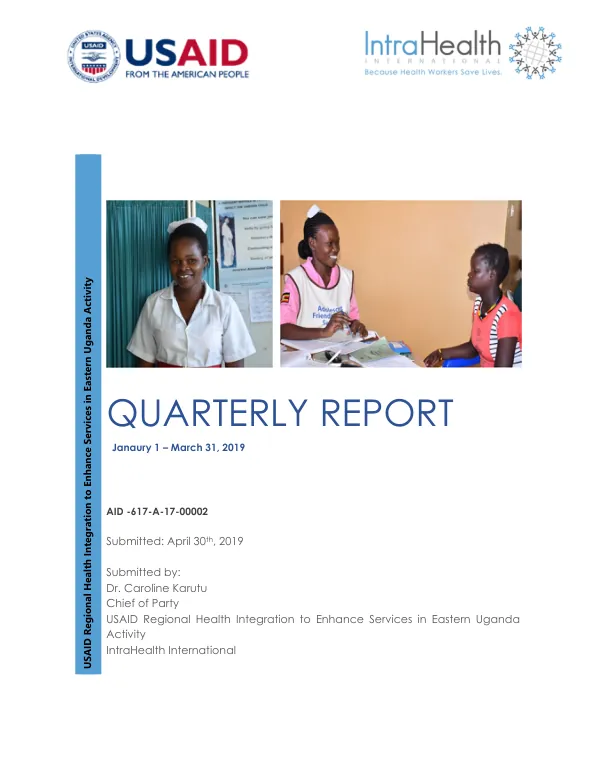
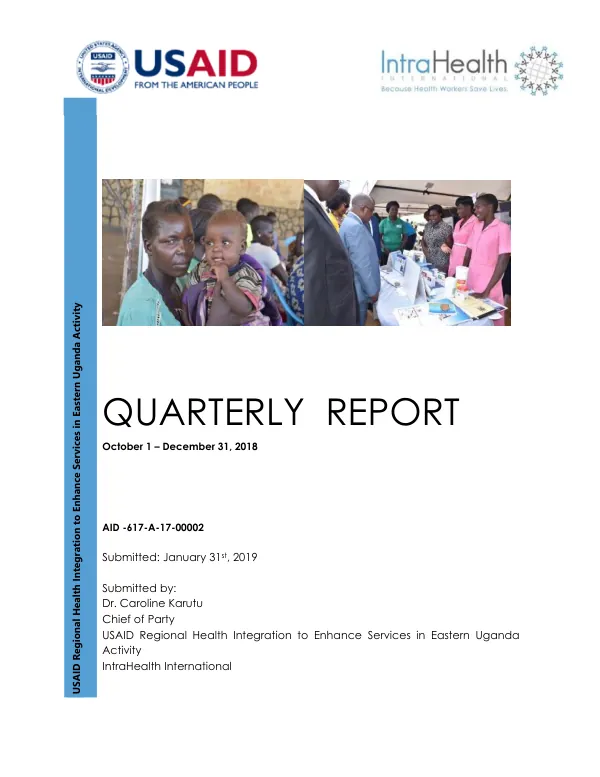
Quarterly Report: October 1 – December 31, 2018
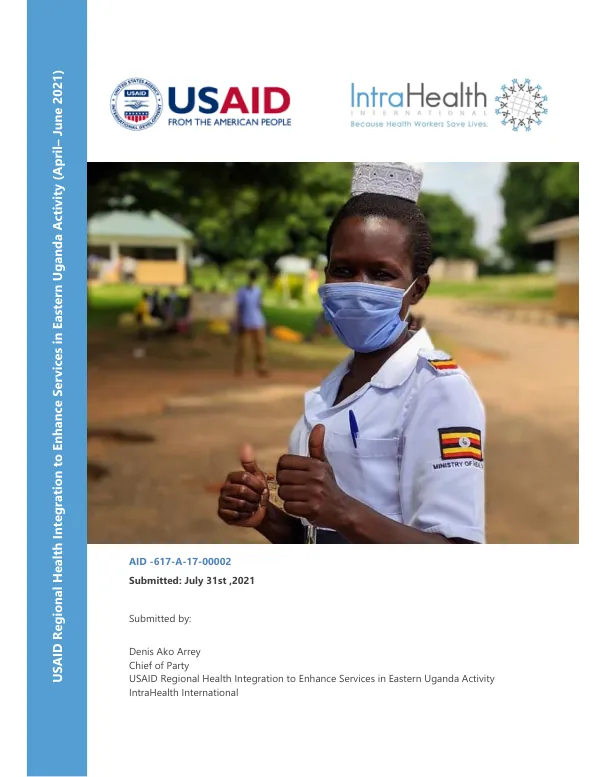
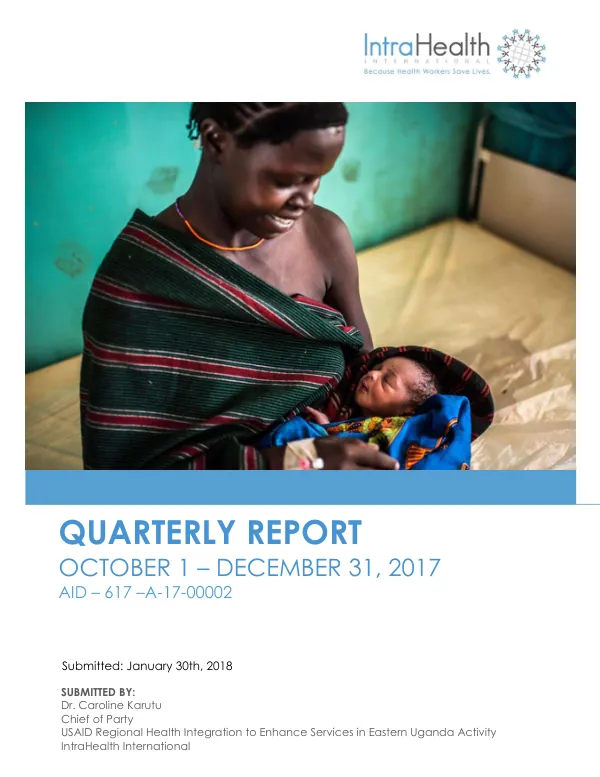
The USAID Regional Health Integration to Enhance Services in Eastern Uganda Activity is a health program implemented in Eastern Uganda.
2019 · 80 pages
Sign in to readA free account is required to download.
Abstract
The program aims to increase the availability and access to health services, improve the quality of health services, increase the availability of resources for public sector health services, improve the organization and management of health service delivery, and increase the adoption of healthy behaviors and positive child development practices by households and communities. The program focuses on several key areas, including family planning, maternal and child health services, newborn and child survival interventions, nutrition, child development, and HIV/AIDS. The program also addresses tuberculosis, laboratory services, and malaria. In terms of family planning, the program has seen an increase in the number of new users and revisits, with a quarterly trend uptake of LARCS FP methods. The program has also implemented nutrition interventions for children 0-59 months, with a trend in 2nd dose of deworming and vitamin A. In terms of maternal and child health services, the program has seen an increase in access to NACS at facilities, with a trend in nutrition interventions for children 0-59 months. The program has also implemented HIV testing services, with a cascade of HTS services from October to December 2018. The program has also seen an increase in ART initiation against target, with a trend in ART enrollment by DSDM approach at 36 sites across 14 districts. The program has also implemented quality improvement projects, with a focus on improving DHT capacity on integrated QI mentorships and coaching. The program has also implemented a human resource information system (IHRIS) to improve human resource management. The program has also seen an increase in the availability of quality, affordable essential medicines and health supplies. In terms of organization and management of health service delivery, the program has implemented monitoring, evaluation, and learning activities. The program has also participated in district planning, district-level coordination, and quarterly review processes. The program has also implemented environmental monitoring and mitigation plans to address environmental health concerns. The program has seen significant progress in several areas, including an increase in household income among program participants, improved food security indicators, and increased adoption of healthy behaviors and positive child development practices. The program has also seen an increase in the number of males circumcised, with a trend in post-violence care provided. The program has also seen an increase in the number of presumptive TB identification, with a trend in TB case notification in NTLP Mbale and Karamoja. Overall, the USAID Regional Health Integration to Enhance Services in Eastern Uganda Activity has made significant progress in improving the health outcomes of the people in Eastern Uganda. The program has implemented several key interventions, including family planning, maternal and child health services, newborn and child survival interventions, nutrition, child development, and HIV/AIDS. The program has also addressed tuberculosis, laboratory services, and malaria. The program has seen significant progress in several areas, including an increase in household income among program participants, improved food security indicators, and increased adoption of healthy behaviors and positive child development practices.