INTRAHEALTH
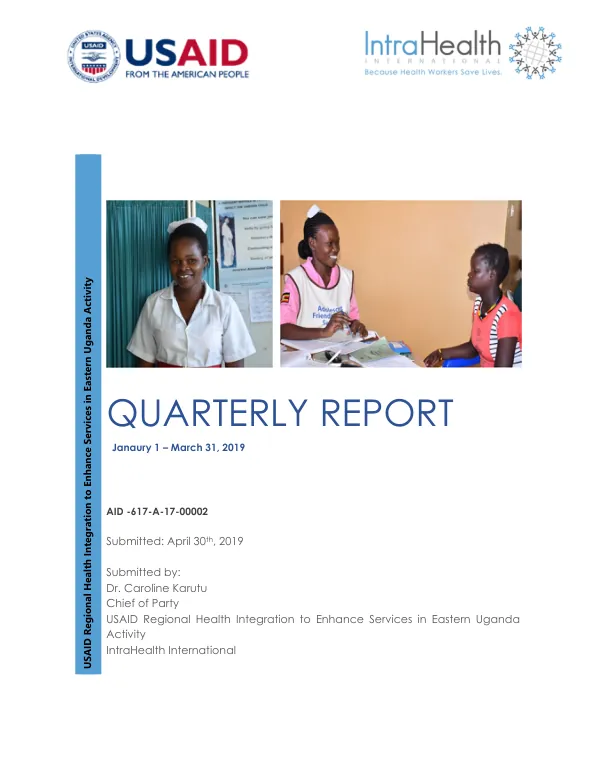
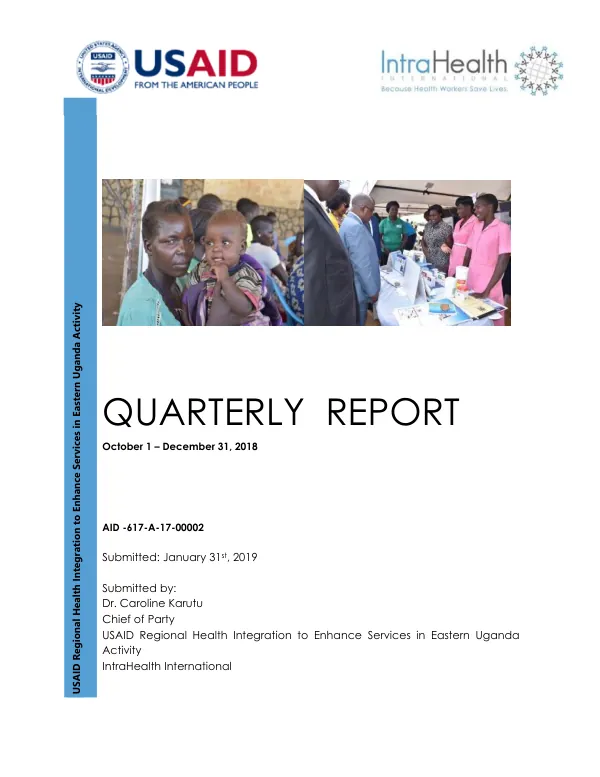
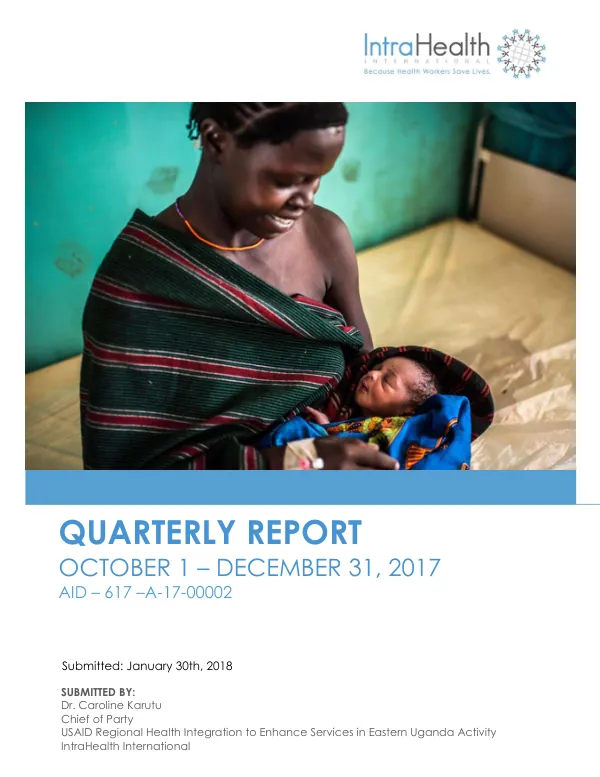
Quarterly Report: RHITES-E October to December 2017
The Regional Health Integration to Enhance Services in Eastern Uganda Activity, led by IntraHealth International, aimed to improve health outcomes in Eastern Uganda.
2018 · 191 pages
Sign in to readA free account is required to download.
Abstract
The activity, funded by USAID, focused on increasing availability and access to health services, improving quality of health services, increasing availability of resources for public sector health services, improving organization and management of health service delivery, and increasing adoption of healthy behaviors and positive child development practices by households and communities. Increased Availability and Access to Health Services was the primary outcome of the activity. Family planning services were a key component, with a focus on integrating FP services into HIV care. Access to FP services by people living with HIV (PLHIV) was a priority, with 23 RHITES-E districts reporting an increase in FP services. The SIMS assessment of Family planning integration into HIV services showed significant progress, with 90% of health facilities reporting integration. Maternal and Child Health Services were also a key focus, with integrated onsite MNCH quality improvement coaching and mentorships implemented in 15 districts. The proportion of first ANC visits by district increased, with 85% of districts reporting an increase. Institutional deliveries also increased, with 75% of districts reporting an increase in institutional deliveries. Newborn and Child Survival Interventions were another key component, with a focus on integration and partnerships. The integration of newborn and child survival interventions into community activities showed significant progress, with 80% of districts reporting integration. Partnerships and collaborations were also strengthened, with 90% of districts reporting increased partnerships. HIV and AIDS Interventions were also a key focus, with a focus on HTS SIMS assessment results, community linkages and referrals, care and treatment, elimination of mother to child transmission, VMMC, TB/TB-HIV co-infection and MDR TB, laboratory services, and malaria. The SIMS assessment of TB service delivery at health facilities showed significant progress, with 85% of facilities reporting improved TB service delivery. Outcome 2, Improved Quality of Health Services, focused on follow-up on USAID-led SIMS recommendations. The activity implemented quality improvement coaching and mentorships in 15 districts, with significant progress reported in 80% of districts. Outcome 3, Increased Availability of Resources for Public Sector Health Services, focused on human resources for health, strengthening supply chain management, and collaboration with implementing partners. The activity strengthened supply chain management in 80% of districts, with significant progress reported in 90% of districts. Outcome 4, Improved Organization and Management of Health Service Delivery, focused on partnership and collaboration, collaboration and learning, communications and knowledge management. The activity strengthened partnerships and collaborations in 90% of districts, with significant progress reported in 80% of districts. Outcome 5, Increased adoption of healthy behaviors and positive child development practices by households and communities, focused on environmental monitoring and mitigation plan, financial report, and annex. The activity implemented an environmental monitoring and mitigation plan in 80% of districts, with significant progress reported in 90% of districts. The activity reported significant progress in all outcomes, with 80-90% of districts reporting significant progress in each outcome. The activity strengthened partnerships and collaborations, improved quality of health services, increased availability of resources for public sector health services, improved organization and management of health service delivery, and increased adoption of healthy behaviors and positive child development practices by households and communities.
Related documents