USAID DEC
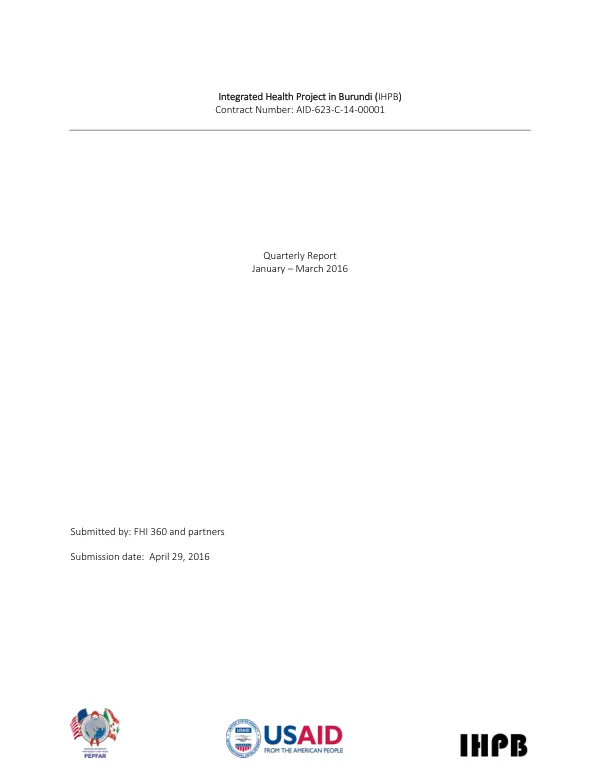
Quarterly Report: January – March 2016 for the Integrated Health Project in Burundi (IHPB)
Sign inFHI 360
Quarterly Report: January – March 2016 for the Integrated Health Project in Burundi (IHPB)
The Integrated Health Project in Burundi (IHPB) aims to improve the health outcomes of the Burundian population, particularly in the areas of maternal and child health, HIV/AIDS, and HIV/AIDS prevention and treatment.
2016 · 55 pages
Sign in to readA free account is required to download.
Abstract
The project focuses on increasing access to quality health services, improving the capacity of healthcare providers, and strengthening the health system. The project's main objectives include: 1. Increased Positive Behaviors at the Individual, Household, and Community Levels: This objective aims to improve key health behaviors, such as the use of family planning methods, the practice of exclusive breastfeeding, and the adoption of healthy diets. 2. Increased Use of Quality Health and Support Services: This objective seeks to increase access to quality health services, including antenatal care, delivery care, and HIV/AIDS testing and counseling. 3. Strengthened Health Systems and Capacity: This objective aims to improve the capacity of healthcare providers, strengthen the health system, and increase the availability of essential medicines and equipment. The project has made significant progress in achieving its objectives. For example, the number of women receiving antenatal care has increased, and the number of children under the age of five receiving vaccinations has also increased. Additionally, the project has established a network of community health workers who provide health education and provide support to pregnant women and new mothers. The project has also implemented various interventions to prevent and treat HIV/AIDS. These interventions include: 1. Prevention of Mother-to-Child Transmission (PMTCT) of HIV: The project has established a network of healthcare providers who provide HIV testing and counseling to pregnant women and provide antiretroviral therapy to those who test positive. 2. Early Infant Diagnosis (EID) of HIV: The project has established a system for diagnosing HIV in infants and providing antiretroviral therapy to those who test positive. 3. HIV/AIDS Treatment and Care: The project has established a network of healthcare providers who provide antiretroviral therapy and other forms of treatment and care to people living with HIV/AIDS. The project has also implemented various strategies to improve the health outcomes of the Burundian population. These strategies include: 1. Health Education and Promotion: The project has established a network of community health workers who provide health education and provide support to pregnant women and new mothers. 2. Community-Based Interventions: The project has established a network of community-based interventions, including home-based care, home-based care for people living with HIV/AIDS, and community-based treatment and care for people living with HIV/AIDS. 3. Health System Strengthening: The project has strengthened the health system by improving the capacity of healthcare providers, increasing the availability of essential medicines and equipment, and improving the management of health services. The project has also established partnerships with various stakeholders, including the Government of Burundi, the World Health Organization, and other international organizations. These partnerships have helped to improve the project's effectiveness and sustainability. In conclusion, the Integrated Health Project in Burundi (IHPB) has made significant progress in improving the health outcomes of the Burundian population. The project's main objectives include increasing positive behaviors at the individual, household, and community levels, increasing the use of quality health and support services, and strengthening the health system. The project has implemented various interventions to prevent and treat HIV/AIDS, including PMTCT, EID, and HIV/AIDS treatment and care. The project has also established partnerships with various stakeholders, including the Government of Burundi, the World Health Organization, and other international organizations.