USAID DEC
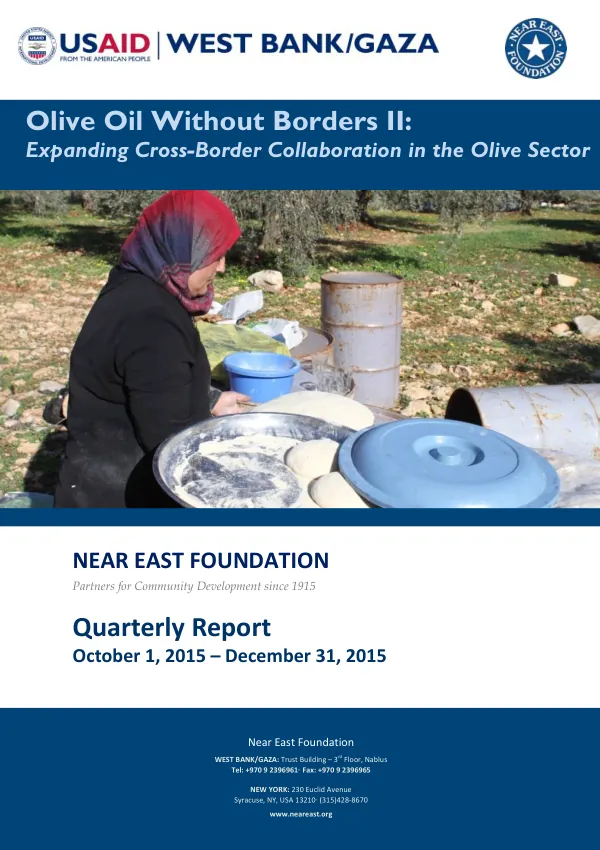
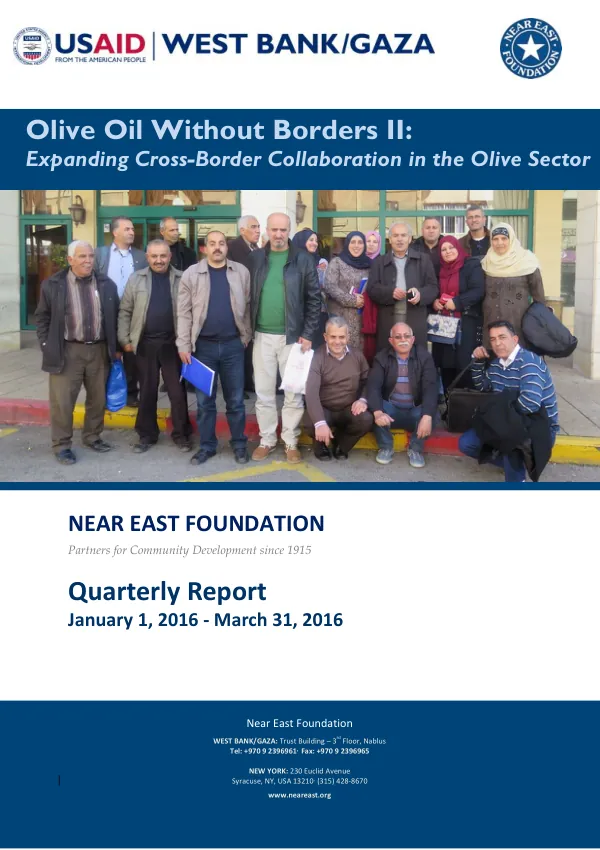
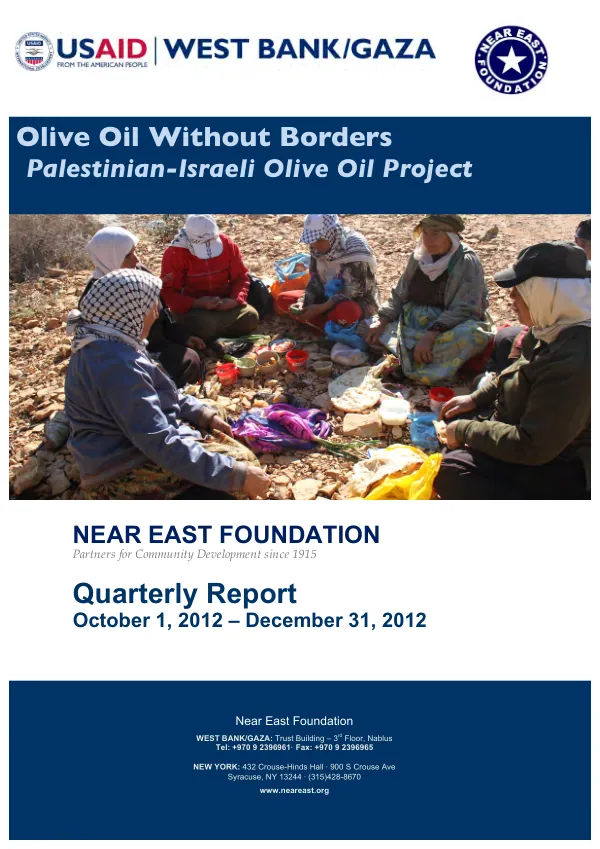
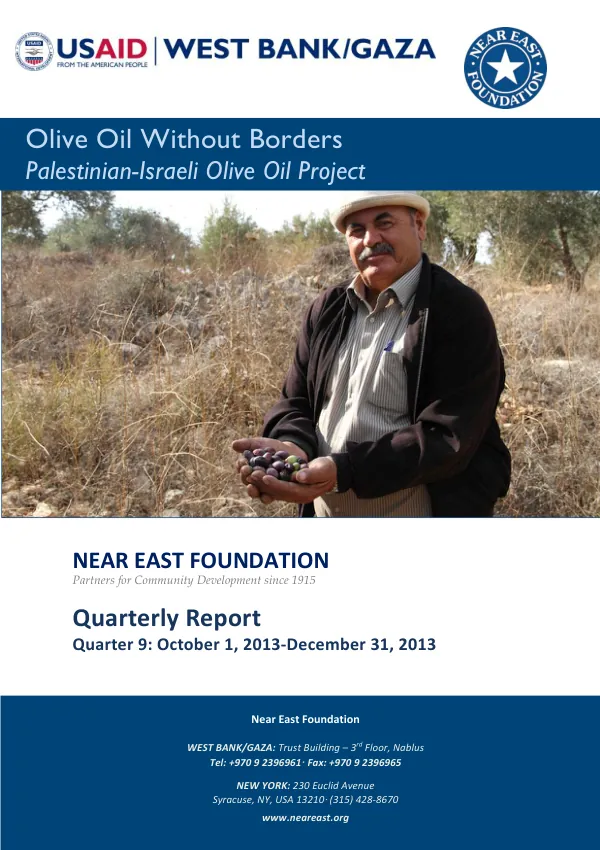
Quarterly Report: October – December 2013 for Olive Oil Without Borders: Palestinian-Israeli Olive Oil Project
Sign inNEAR EAST FOUNDATION
Quarterly Report: October – December 2013 for Olive Oil Without Borders: Palestinian-Israeli Olive Oil Project
The Olive Oil Without Borders: Palestinian-Israeli Olive Oil Project is a collaborative initiative aimed at strengthening economic cooperation between Israelis and Palestinians through the olive oil sector.
2013 · 20 pages
Sign in to readA free account is required to download.
Abstract
The project targets six clusters of villages in Israel and the West Bank, focusing on areas where established relationships exist between the Near East Foundation (NEF) and local stakeholders. The project's objective is to increase income, profitability, and cross-border trade while promoting higher levels of trust and collaboration among olive producers, mill operators, and distributors. During the ninth quarter (October 1st to December 31st 2013), activities focused on supporting participants during the 2013 olive harvest. Key accomplishments include the Second Palestinian Olive Oil Festival, which brought together 40 Palestinian community leaders, farmers, and representatives from local municipalities and NGOs. The festival also featured USAID representatives, Palestinian business groups, and lead farmers and villagers. Farmer field schools in the West Bank and Israel demonstrated new farming techniques, testing their impact on olive production quality and quantity. Tests conducted on these sites showed marked improvements in olive weight and yield using new techniques and practices. Additionally, 465 farmers received in-kind harvesting equipment grants, reporting increased quality and quantity of olive fruit and oil. Agreements were reached with the Palestinian Technical University and the National Center for Agricultural Research to dedicate land for the demonstration of 28 new olive varieties. Two mill renovations were completed in Beit Furik and Yasid, contributing to improved oil quality. USAID Administrator Dr. Rajiv Shah met with local Palestinian producers to discuss the agricultural sector, and information about the Olive Oil Without Borders project was shared at the event. The project's person-to-person approach, based on Value Chain Analysis and Development (VCAD), aims to create dialogue within and among seemingly disparate social and economic groups. The project will work directly with at least 1428 olive producers, 12 mill operators, and 12 olive oil distributors in the targeted areas. The project's activities include participatory Value Chain Assessment, Whole-System-in-a-Room (WSR) workshops, stakeholder-led action planning, training, technical assistance, and material support for implementation of the action plan. The Olive Oil Without Borders project has established relationships with key stakeholders, including the Peres Center for Peace and the Palestinian Center for Agriculture Researches and Development. The project's focus on the olive oil sector is critical to local rural economies, and its success will contribute to increased income, profitability, and cross-border trade while promoting higher levels of trust and collaboration among olive producers, mill operators, and distributors. The project's geographic focus is on six clusters of villages in Israel and the West Bank, where established relationships exist between the NEF and local stakeholders. The project's timeframes are not explicitly stated, but the ninth quarter report covers the period from October 1st to December 31st 2013. Recommendations for the project's future direction are not provided in this report, but the project's ongoing activities and accomplishments suggest a continued focus on promoting economic cooperation and collaboration between Israelis and Palestinians through the olive oil sector.
Related documents