CARE
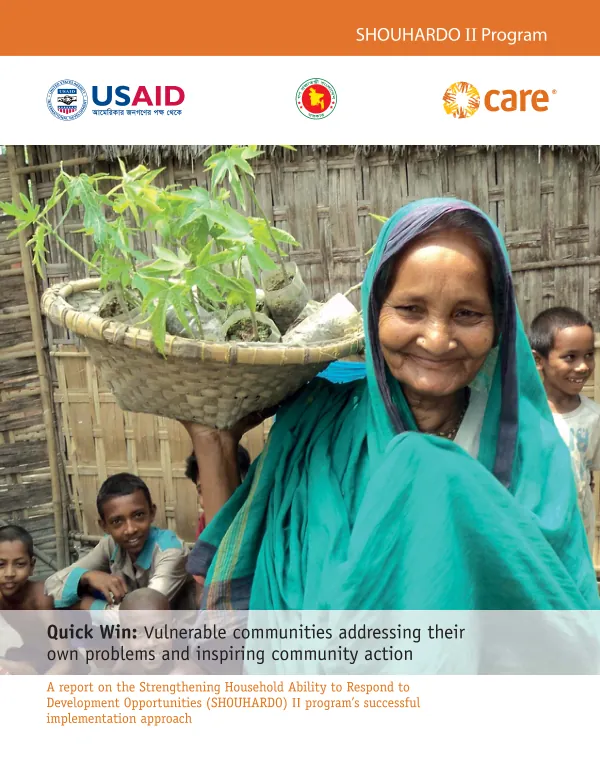
Quick-win: What is it? and Process of Implementing Quick Wins
The Quick-win approach is a strategy for community development that focuses on achieving tangible, short-term results.
2014 · 26 pages
Sign in to readA free account is required to download.
Abstract
It began in 2018 with the goal of improving the well-being of rural communities. The initiative was funded by a major donor organization and involved a collaborative effort between local stakeholders and international partners. The process of implementing quick wins involves several key steps. First, communities are identified based on their specific needs and potential for impact. This is followed by a well-being analysis, which assesses the community's current situation and identifies areas for improvement. Village Development Committees are then formed to provide a platform for community members to participate in decision-making and planning. Community Action Planning is a critical component of the quick-win approach. It involves working with community members to develop a comprehensive plan that addresses their specific needs and priorities. This plan serves as a roadmap for implementing quick wins and achieving long-term development goals. The plan is typically developed through a participatory process that involves community members, local leaders, and external stakeholders. The type of quick wins that are implemented can vary depending on the community's needs and priorities. However, they often involve tangible, short-term results that can be achieved through a combination of community effort and external support. Examples of quick wins include improving access to clean water, enhancing food security, and increasing access to education and healthcare. Lessons learned from the quick-win approach highlight the importance of community participation and ownership in achieving development outcomes. The approach has been successful in building trust and fostering collaboration between community members, local leaders, and external stakeholders. It has also demonstrated the potential for achieving tangible, short-term results that can have a lasting impact on community well-being. The initiative has been implemented in various communities, with a focus on rural areas where access to basic services is limited. The geographic focus has been on regions with high poverty rates and limited economic opportunities. The timeframes for implementing quick wins have varied depending on the community's needs and priorities, but they are typically achieved within a period of 6-12 months. Implementation details for the quick-win approach have involved a combination of community-led planning and external support. This has included providing training and capacity-building programs for community members, as well as technical assistance and resources to support the implementation of quick wins. The approach has been successful in leveraging the goodwill and momentum generated by quick wins to address other aspects of the community action plan.