USAID DEC
RATIN End User Survey
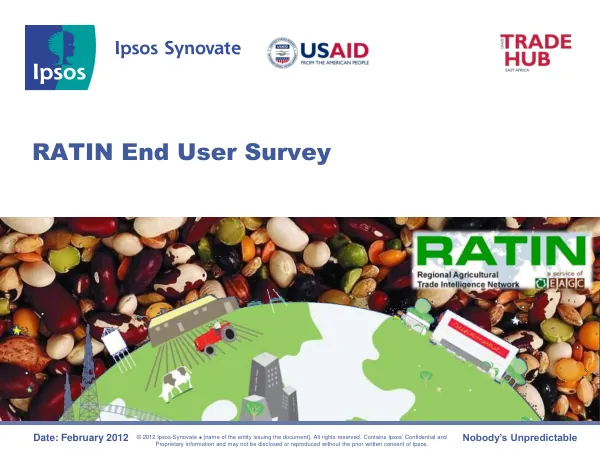
The Eastern Africa Grain Council (EAGC) and USAID/COMPETE commissioned a study to assess the market information needs of current and potential users of EAGC's web-based marketing information systems, the Regional Agricultural Trade Intelligence Network (RATIN).
2012 · 87 pages
Sign in to readA free account is required to download.
Abstract
The study aimed to understand the diverse information requirements of regional stakeholders and RATIN users, who have expressed the need for a more responsive regional market information system that provides accurate, timely, and relevant market intelligence. The main objective of the study was to understand the RATIN end-users' market information needs and preferences. Specific objectives included identifying the current needs and sources of information for different RATIN stakeholders, evaluating the current uses and value attached to market information obtained from various sources, determining the channels used to access market information, and understanding the frequency of receiving information. The study also aimed to identify the profile and segment of end-users across three countries: Kenya, Uganda, and Tanzania. A total of 89 stakeholders in the grain sector were interviewed in the three countries. Respondents were selected from a pre-approved list provided by EAGC, and the same questionnaire was used across the three countries. Both EAGC members and non-members were sampled. The selected respondents played at least one of the following roles in the grain sector: producer, trader, processor, or support/advisory. Awareness of RATIN is high across the three countries, with Uganda scoring highest at 97% and Tanzania lowest at 62%. However, despite the high awareness, just about half the stakeholders claimed to access RATIN at least once a week or more frequently. The main reasons given for not accessing RATIN frequently were lack of reliable and current information, failure to be relevant to business, and reliance on other sources of information. In Tanzania, stakeholders who use RATIN do so more frequently than in any other country, with at least 39% accessing the site several times a week. The study also found that there is high awareness of the various information services offered by RATIN, but not all are considered relevant. The most relevant information services across the three countries were crops update, daily wholesale prices, weekly wholesale prices, and monthly price data. The least relevant information services were Southern Africa Cross Border Bulletin, regulatory requirements, food security information, and brochures.