USAID DEC
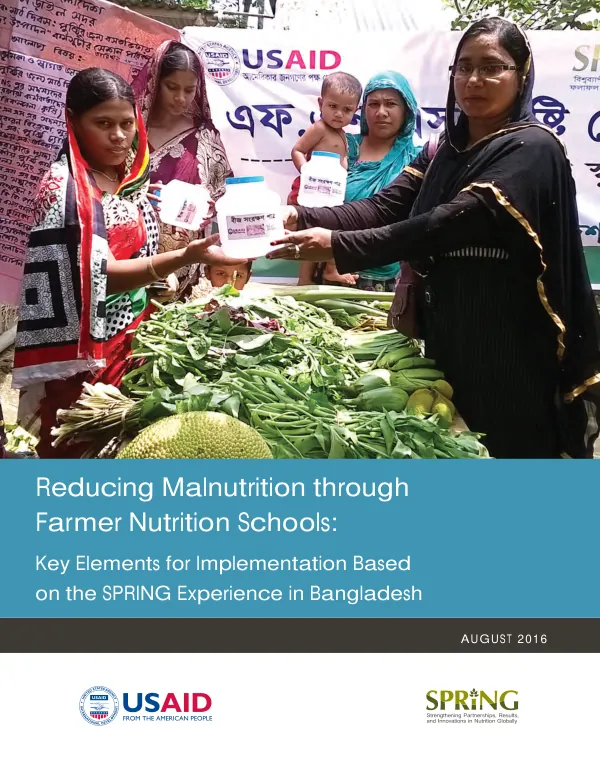
Reducing Malnutrition through Farmer Nutrition Schools: Key Elements for Implementation Based on the SPRING Experience in Bangladesh
Sign inHELLEN KELLER INTERNATIONAL
Reducing Malnutrition through Farmer Nutrition Schools: Key Elements for Implementation Based on the SPRING Experience in Bangladesh
The SPRING project in Bangladesh was established in 2012 to improve the nutritional status of pregnant and lactating women and children under the age of two years.
2016 · 4 pages
Sign in to readA free account is required to download.
Abstract
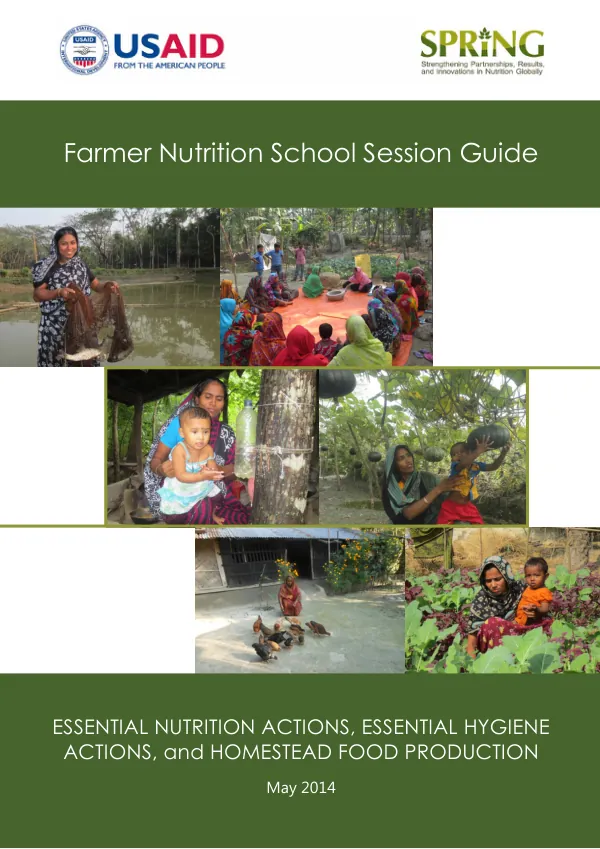
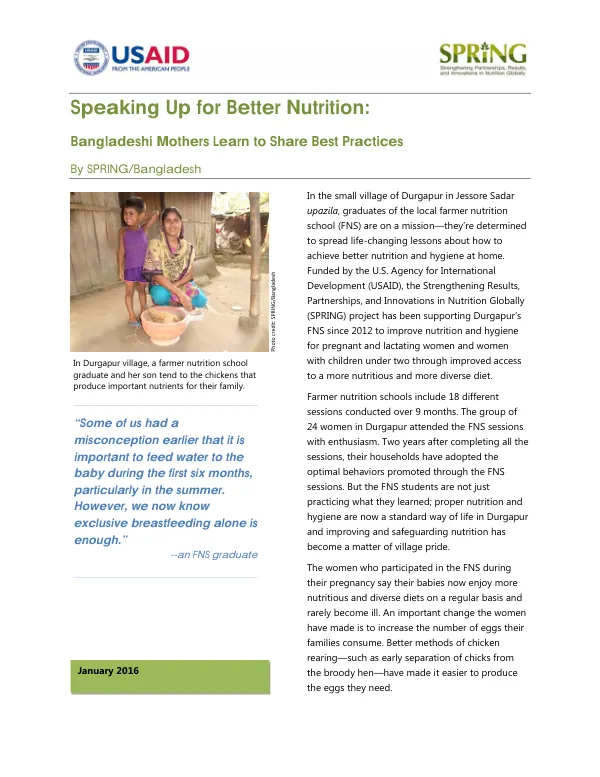
The project focused on promoting and supporting the adoption of Essential Nutrition Actions (ENA) and Essential Hygiene Actions (EHA) through a multichannel and integrated approach. The goal was to reduce and prevent stunting in young children by targeting the 1,000-day window of opportunity. As of 2016, the SPRING project had implemented farmer nutrition schools (FNS) in 40 upazilas across Barisal and Khulna divisions, training over 126,000 pregnant and lactating women since May 2012. The FNS program aimed to equip community members with practical knowledge and skills to produce nutrient-dense fruits, vegetables, and animal source foods at the household level. The program also promoted improved hygiene practices and linked food production with improved nutrition and hygiene practices. The FNS program was based on three well-established strategies: the Essential Nutrition Actions and Essential Hygiene Actions (ENA/EHA), homestead food production (HFP), and farmer field schools (FFS). The program conducted practical training sessions over nine months, teaching lessons on topics such as nutrition and hygiene practices, vegetable farming, and animal husbandry. The training methods included hands-on participatory sessions, participatory discussions, and observations on production. The FNS program showed significant improvements in dietary diversity, egg consumption, and dietary inadequacy among participants. Women who participated in the FNS program had a mean dietary diversity score increase from 3.9 to 6.0, and the consumption of animal source foods increased dramatically. The program also promoted improved hygiene practices, including handwashing and child feeding practices. The SPRING project identified 11 key elements necessary for a successful FNS program, including learning by doing, minimal inputs, no cost or low-cost solutions, year-round production of diversified foods, consistent and repeated messaging, simple evidence-based innovations, a whole family approach, proper enrollment and orientation for participants, clear guidelines and fixed curriculum, regular comprehensive and season-based lessons, and a trained cadre of staff to train and provide follow-up support. The SPRING project has continually improved and refined the FNS model since 2012, piloting, testing, refining, and publishing the FNS curriculum. The project has also developed various resources and tools, including the Farmer Nutrition School Technical Guide, the Farmer Nutrition School Session Guide, and monitoring and evaluation tools. These resources are available for download on the SPRING website. The SPRING project is managed by the JSI Research & Training Institute, Inc. (JSI), with partners Helen Keller International, the Manoff Group, Save the Children, and the International Food Policy Research Institute. The project is funded by the United States Agency for International Development (USAID) under the terms of the Cooperative Agreement AID-OAA-A-11-00031.