USAID DEC
Referral Checklist
Referral for Higher Level Care of Women and Newborns Referral for higher level care of women and newborns is a critical step in ensuring timely and effective management of obstetric complications.
2013 · 1 pages
Sign in to readA free account is required to download.
Abstract
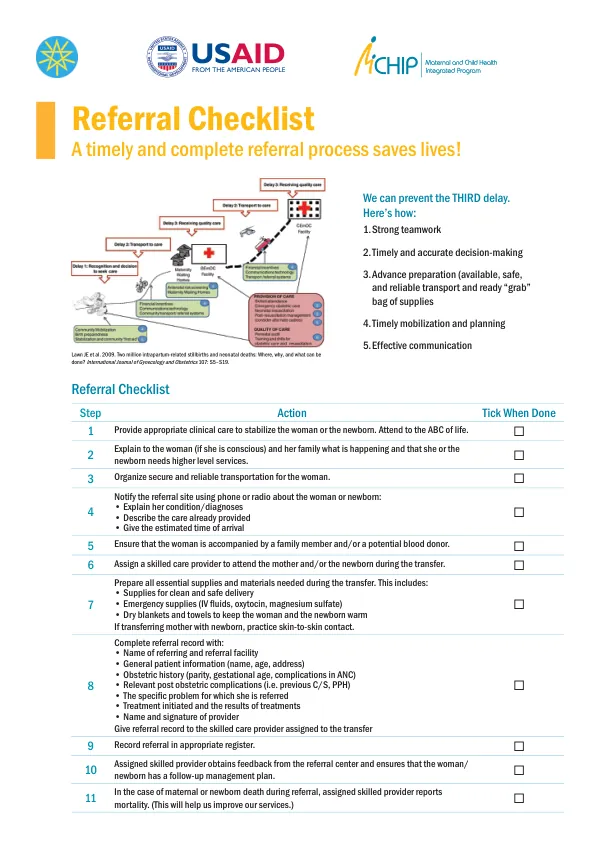
The process begins with providing appropriate clinical care to stabilize the woman or newborn, attending to the ABC of life, which includes airway, breathing, and circulation. The woman or her family is then informed about the need for higher level services, and arrangements are made for secure and reliable transportation. The referral site is notified using phone or radio, providing details about the woman's condition, care already provided, and estimated time of arrival. A skilled care provider is assigned to attend the mother and/or newborn during the transfer, and essential supplies and materials are prepared, including those for clean and safe delivery, emergency supplies, and dry blankets and towels. The referral record is completed with essential information, including the name of the referring and referral facility, patient information, obstetric history, relevant post-obstetric complications, and the specific problem for which the woman is being referred. The record is then given to the skilled care provider assigned to the transfer. The referral is also recorded in the appropriate register. Upon arrival at the referral center, the assigned skilled provider obtains feedback and ensures that the woman/newborn has a follow-up management plan. In the event of maternal or newborn death during referral, the assigned skilled provider reports the mortality to facilitate service improvement. Effective referral for higher level care requires strong teamwork, timely and accurate decision-making, advance preparation, timely mobilization and planning, and effective communication. These factors are critical in preventing the third delay, which can have devastating consequences for women and newborns.