AMHARA DEVELOPMENT ASSOCIATION
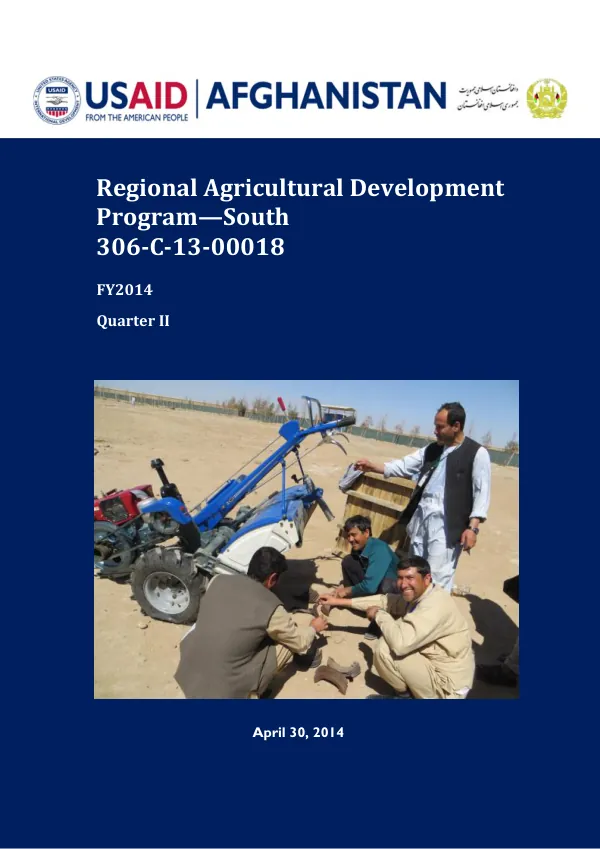
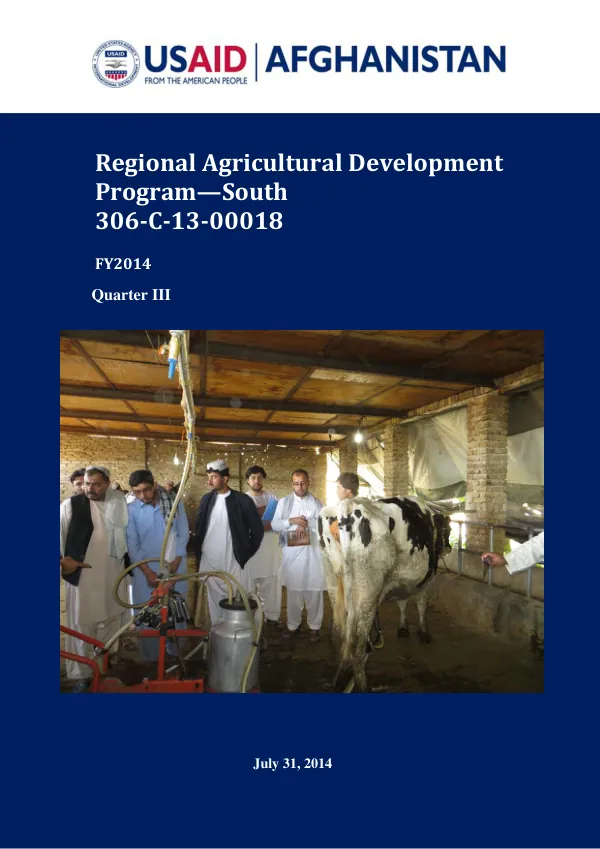
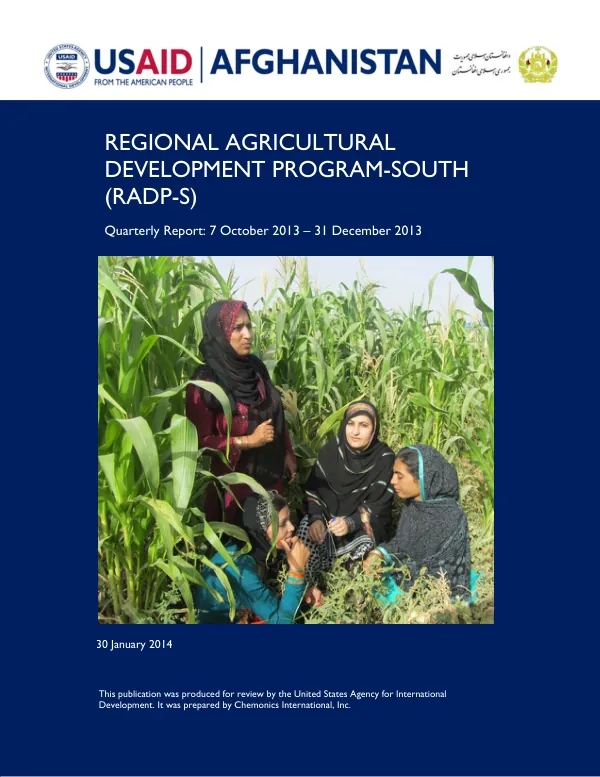
Regional Agricultural Development Program-South Quarterly Report – 30 January 2014
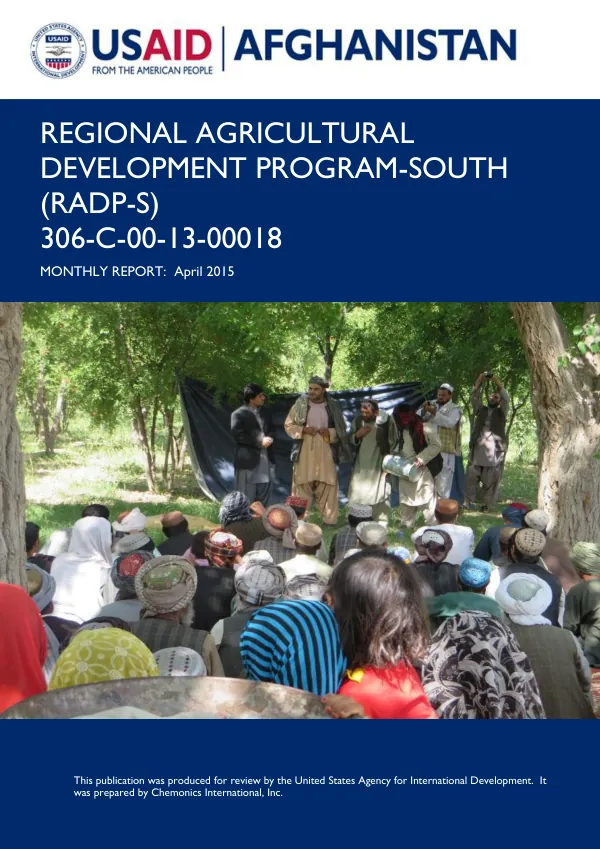
The Regional Agricultural Development Program-South (RADP-S) aims to improve food and economic security for rural Afghans in the provinces of Kandahar, Helmand, Zabul, and Uruzgan.
2014 · 32 pages
Sign in to readA free account is required to download.
Abstract
Agriculture plays a critical role in the lives of Afghan people, employing more than 80 percent of the population and contributing to one-third of the gross domestic product. However, agricultural productivity levels lag significantly behind neighboring countries and even those historically achieved in Afghanistan. The program focuses on improving the productivity and profitability of the wheat, high-value crops, and livestock value chains, while addressing policy, legal, and regulatory constraints affecting value chain development. RADP-S supports the consolidation of licit economies to fuel long-term economic growth, including providing alternatives to poppy cultivation. The implementation approach of RADP-S dovetails with Afghan and U.S. government strategies in its focus on advancing food security, regenerating agribusiness, and increasing agriculture sector jobs and incomes. RADP-S was awarded to Chemonics International on October 7, 2013. The program immediately deployed a start-up team to establish the administrative and operational infrastructure needed to recruit and manage expatriate and local staff, identify project office space in Kabul and Kandahar, and produce high-quality deliverables according to the contract schedule. Four of the original key personnel staff and ten short-term specialists were fielded during the reporting period to lay the groundwork for programmatic activities. The 4 Components of RADP-S are: I. Wheat Value Chain II. High Value Crops Value Chain III. Livestock Value Chain IV. Enabling Environment Over the course of the reporting period, RADP-S successfully positioned its key implementing partners (KIPs) – the Afghan Development Association (ADA), Coordination of Humanitarian Assistance (CHA), and the Dutch Committee for Afghanistan (DCA) – to begin technical implementation as soon as possible. RADP-S' Project Management Unit (PMU) requested consent from USAID and the Vetting Support Unit (VSU) to subcontract with ADA, CHA, and DCA. Between November 26 and December 22, USAID and the VSU both granted their approval for all three KIPs. RADP-S also focused on actively developing strategic partnerships with stakeholders to support the program's objectives. The program aims to strengthen the capacity of producers, associations, traders, and agribusinesses to respond to market demands; facilitate lasting market linkages between value chain actors; and support an enabling environment that allows the private sector to thrive. RADP-S places Afghan organizations at the forefront of implementation and addresses key cross-cutting issues of women's empowerment, agribusiness value chain facilitation, and alternative development in all facets of the program. The program has made significant progress in its first quarter, including the deployment of key personnel and short-term specialists, the establishment of project office space in Kabul and Kandahar, and the development of strategic partnerships with stakeholders. RADP-S is well-positioned to achieve its objectives and make a positive impact on the lives of rural Afghans in the provinces of Kandahar, Helmand, Zabul, and Uruzgan.