AMHARA DEVELOPMENT ASSOCIATION
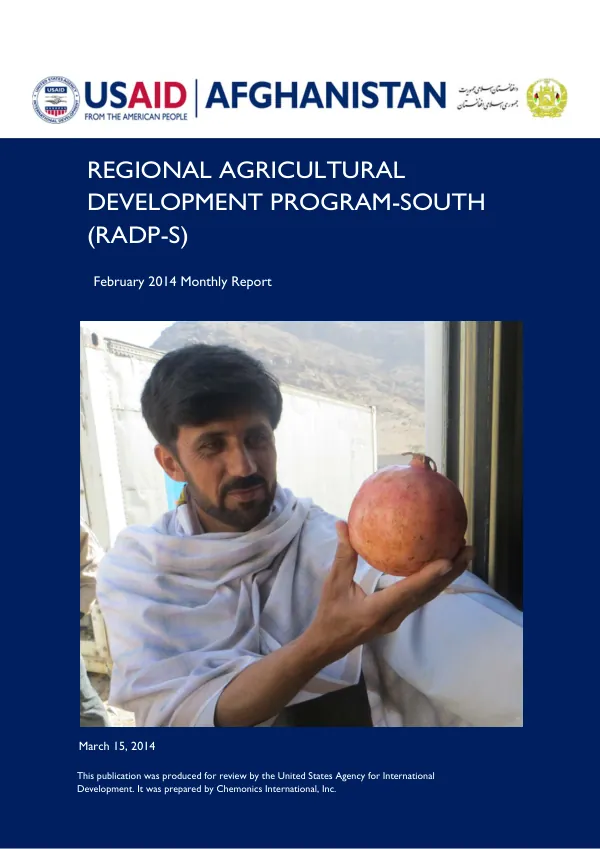
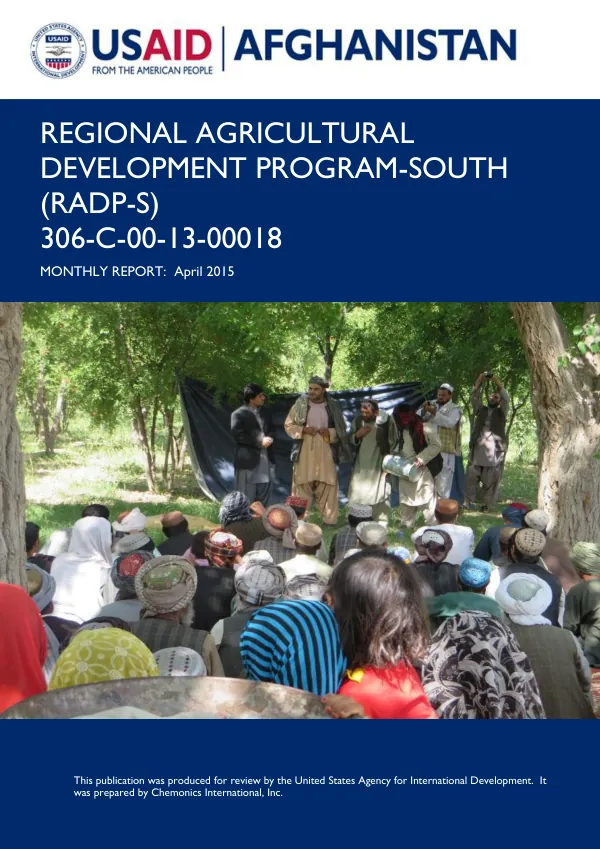
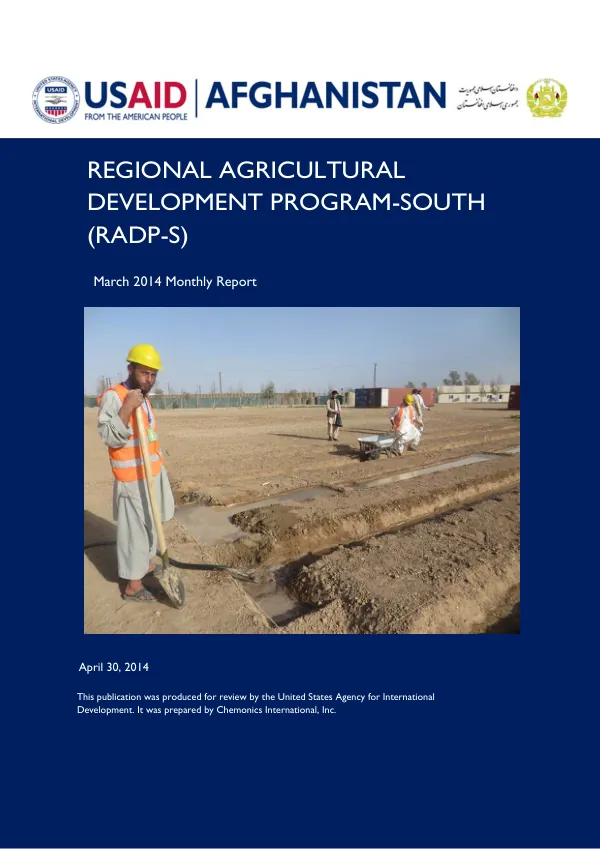
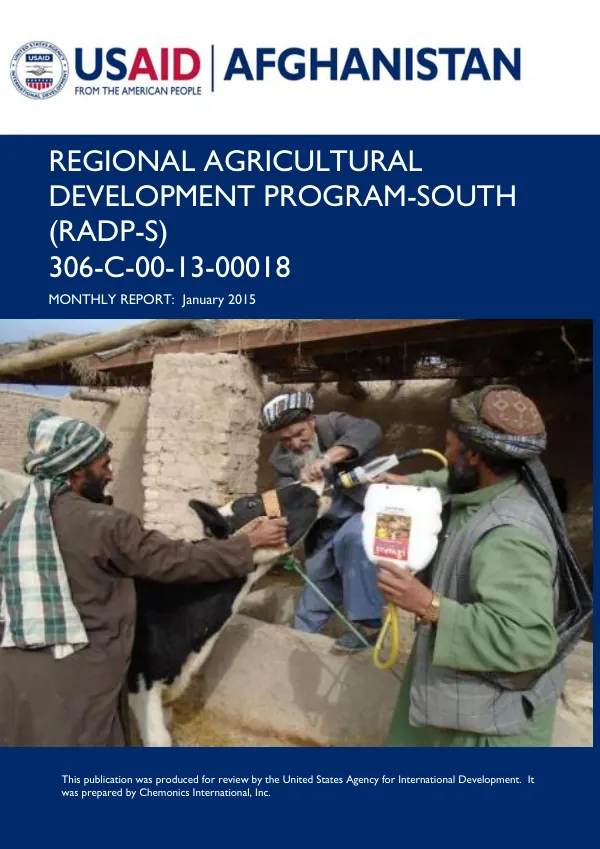
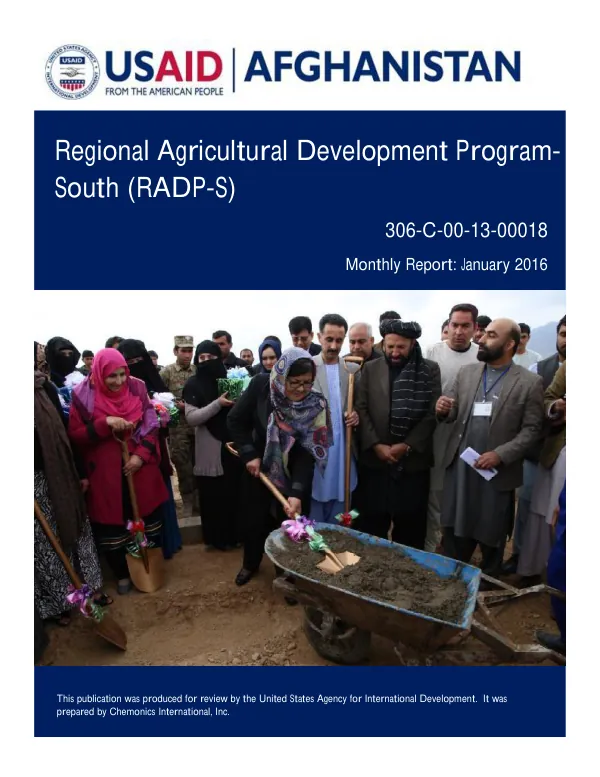
Regional Agricultural Development Program-South January 2016 Monthly Report
The Regional Agricultural Development Program-South (RADP-S) aims to improve food and economic security for rural Afghans in the provinces of Kandahar, Helmand, Zabul, and Uruzgan.
2016 · 32 pages
Sign in to readA free account is required to download.
Abstract
The program focuses on improving the productivity and profitability of the wheat, high value crops, and livestock value chains, while addressing policy, legal, and regulatory constraints affecting value chain development. RADP-S supports the consolidation of licit economies to fuel sustainable long-term economic growth, including providing alternatives to poppy cultivation. To achieve this goal, RADP-S has implemented various interventions. In the wheat value chain, the program has trained 5,319 farmers on wheat integrated pest management, weed control, and post-harvest techniques. Additionally, RADP-S has connected four wheat input supply companies to 135 wheat farmers in RADP-S demonstration farms in Kandahar province to showcase wheat seed samples and promote their products and services. The program has also linked the Da Waghaz Construction Company to 169 high value crop farmers in Kandahar, Uruzgan, and Helmand to promote the advantages of solar dehydrators. In the high value crops value chain, RADP-S has increased the capacity of 4,617 farmers in orchard establishment, vegetable integrated pest management, and weed control, vineyard establishment, and high value crop post-harvest techniques. The program has also promoted the use of T-trellises for grape productivity and showcased their T-trellising equipment installed on RADP-S demonstration farms. Furthermore, RADP-S has taught 139 farmers about low tunnel technology and availability from the Shahab Sameer Construction Company in Kandahar and Uruzgan provinces. In the livestock value chain, RADP-S has reported a total of 54,146 animals medicated, 56,470 animals vaccinated, and 671 animals provided other veterinary services. The program has also trained 1,037 farmers in small-scale poultry farming and poultry health. Additionally, RADP-S has brought together the Minister of MOWA, Kandahar DOWA Director, and provincial representatives to celebrate the beginning of construction activities on the DOWA Demonstration Farm. RADP-S has also addressed key cross-cutting issues, including women's empowerment, agribusiness value chain facilitation, and alternative development. The program has placed the Afghan private sector at the forefront of implementation and has strengthened the capacity of producers, associations, traders, and agribusinesses to respond to market demands. RADP-S has also facilitated lasting market linkages between value chain actors and has supported an enabling environment that allows the private sector to thrive. In terms of challenges, RADP-S has faced difficulties in documenting challenges in Uruzgan, where USAID shared information with RADP-S from their monitoring efforts that described unsatisfactory evaluations of livestock activities. RADP-S is working with Key Implementing Partners (KIPs) to create interaction logs to document the nature and substance of district level officer requests of KIPs going forward. Additionally, RADP-S has revisited indicator definition issues and indicator calculation issues, and has proposed an M&E working group to speed and unify M&E calculation issues in the future.