USAID DEC
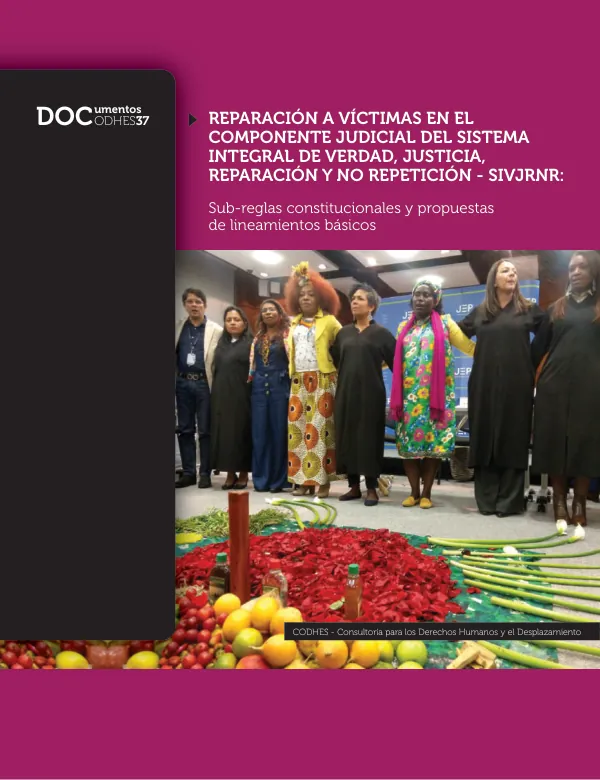
Reparación a víctimas en el componente judicial del Sistema Integral de Verdad, Justicia, Reparación y No Repetición - SIVJRNR: Sub-reglas constitucionales y propuestas de lineamientos básicos
Sign inCONSULTORÍA PARA LOS DERECHOS HUMANOS Y EL DESPLAZAMIENTO – CODHES
Reparación a víctimas en el componente judicial del Sistema Integral de Verdad, Justicia, Reparación y No Repetición - SIVJRNR: Sub-reglas constitucionales y propuestas de lineamientos básicos
The concept of reparación a víctimas in the context of the Sistema Integral de Verdad, Justicia, Reparación y No Repetición (SIVJRNR) is a critical aspect of the Acuerdo Final de Paz.
2020 · 78 pages
Sign in to readA free account is required to download.
Abstract
The SIVJRNR is a comprehensive system established to address the consequences of the conflict in Colombia, including the rights of victims to truth, justice, reparación, and non-repetition. The document "Reparación a víctimas en el componente judicial del SIVJRNR" is a contribution to the understanding of the content and scope of the derecho a la reparación in the context of the Acuerdo Final. The document aims to characterize the constitutional content and scope of the derecho a la reparación and identify some of the principles and lineamientos básicos that could contribute to the satisfaction of this right in the framework of the SIVJRNR. The document is divided into four parts. The first part presents an analysis of the Punto 5 del Acuerdo de Paz, which is a critical component of the SIVJRNR. The Punto 5 establishes the rights of victims to truth, justice, reparación, and non-repetition, and it is analyzed in the context of two constitutional categories: the Estado de Cosas Inconstitucional (ECI) and the Goce Efectivo de Derechos fundamentales (GED). The second part of the document presents a recorrido by the normativa de implementación del Punto 5 del Acuerdo de Paz. This part identifies and systematizes possible sub-reglas constitucionales that could govern the SIVJRNR in matters of reparación. The methodology used is based on the construction of an interpretative theory of the derecho a la reparación, which is grounded in the jurisprudence of the Corte Constitucional. The third part of the document addresses the filosofía política of the modelo de justicia restaurativa, which is a paradigm orientador of the GED to reparación in the component of justicia of the SIVJRNR. This part aims to contribute to the identification of some of the mínimos axiológicos that compose this paradigm, distinguishing between escenarios of justicia applicable to conductas susceptible of amnistía or indulto, and those escenarios where se juzgan violaciones a derechos humanos e infracciones al DIH. The final part of the document presents a propuesta deductiva and preliminary of enunciación of some of the principles rectores and lineamientos orientadores for the SIVJRNR, with emphasis on its judicial component, in the framework of satisfaction or garantía of the GED to reparación integral of the victims to which the Punto 5 del Acuerdo de Paz refers. Some of these principles and lineamientos are accompanied by recomendaciones of política pública. In this document, the reparación is understood as an obligación moral and as an obligación jurídica. In both cases, and in contexts of justicia transicional, the reparación also expresses itself as a decisión política that is estrechamente ligada to the legitimidad of the transición respectiva. The reparación is a fundamental aspect of the derecho a la reparación, which is grounded in a modelo of reconocimiento expreso of daños and of responsabilidades, with ocasión of the aprehensión of ciertas vidas considered dignas of duelo. The document concludes that the reparación supone the reconocimiento of the consecuencias of the acciones u omisiones dañinas emanadas by agents morales, and the surgimiento of deberes of compensación or resarcimiento that generate a vínculo moral between the agente dañino and the víctima or agente dañado, and establish a sentido u objetivo preciso for the acción racional actual of who in the past dañó to another(s).